The 2.5-hour AI-generated Odyssey movie is 2.5 hours too long
The Odyssey dominated theaters, and a new AI version is hoping to build off of that energy.
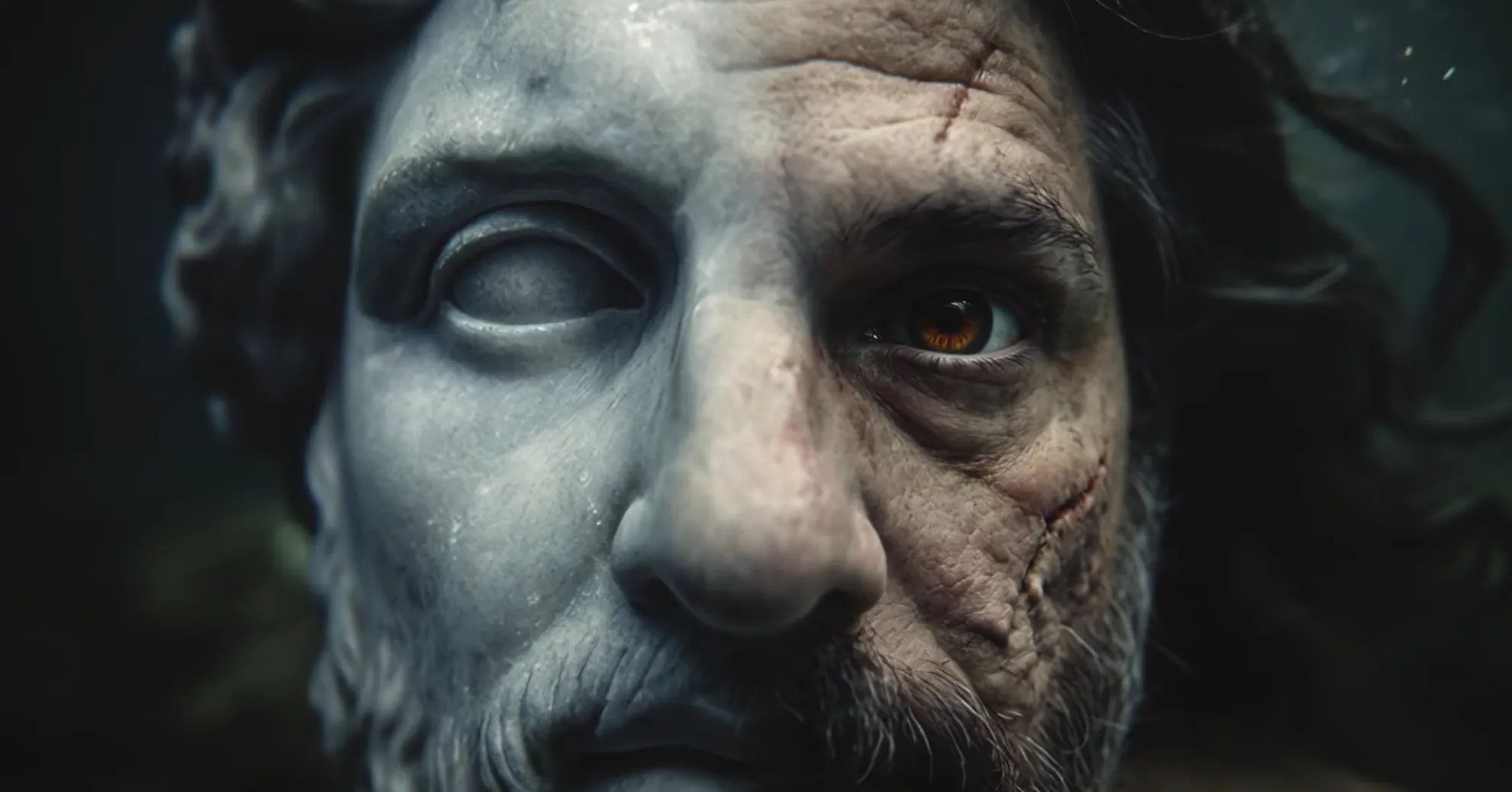
Christopher Nolan’s engrossing take on The Odyssey dominated at the box office and spurred a newfound interest in classic literature among filmgoers. But a new retelling of the story made entirely with AI is so bad that it might just make viewers hate the original tale altogether. The new film, called Odysseus: The Fall, comes via AI firm Fountain 0 and is written and directed by company cofounder Ash Koosha, who also lent his likeness to the title character and created all of the music. (The film’s credits are very short.) The studio’s only previous work is an AI film called Dreams of Violets that made it into Tribeca earlier this year. The Fall is, on its face, a much more ambitious project, billed as “the first completely AI generated film produced at the level of a Hollywood blockbuster.” In reality, it’s nothing close to “the level of a Hollywood blockbuster.” That may not necessarily be surprising, but after watching the entire 2.5-hour production I nonetheless found myself constantly surprised by just how much worse things could get. The Fall is the opposite of a glimpse at the future of AI filmmaking — it’ll make you wonder if there’s really any future in it at all. The movie is available to rent now for $9.99 and, as far as I can tell, you can only watch it via a web browser. In order to view it on my living room TV I had to mirror the screen from my phone, which is not exactly IMAX in 70mm. Things didn’t get much better once I pressed play. The Fall is plagued by two main issues. The first is consistency. The world of the film is constantly morphing, to the point that it’s incredibly distracting. The height of the cyclops that traps Odysseus and his men changes from shot to shot, waves move in the opposite direction of the wind, mouths don’t match the words spoken (and sometimes they move without producing a sound at all), and oars bend and twist as sailors row. In one scene a huge fleet of boats is racing through the ocean and one of them is inexplicably moving sideways. The AI-produced voice-overs can be incomprehensible, and at various points the names of both Odysseus and Zeus are pronounced wrong. If it were just the odd hiccup it might be understandable, but there are so many faults in The Fall that it can be hard to focus on anything else. I watched the movie with my 13-year-old kid and it basically became a game of finding the weirdest mistakes. I noticed that a sword magically turned into a dagger, and then she one-upped me by spotting an alien carcass roasting over a spit. The Fall seems like a film designed to prove why script supervisors exist. [Media: The thing is, while all of the AI-induced errors are distracting, they’re also the most entertaining part of the movie. There isn’t really much to distract from in The Fall because it is so dull. Because current AI models are really only capable of generating scenes that last a few seconds, the movie feels like a disjointed collection of moments from the odyssey that have been stitched together with little rhyme or reason. If you didn’t already know the story going into this, I don’t think you’d have any idea of what was going on, because the film explains very little. You don’t even learn about Penelope’s suitors until the movie is almost over. I also can’t think of a single aspect of The Fall that feels improved because of AI. The “acting” is bafflingly bad, with characters pausing for seconds at a time for no apparent reason and bursts of laughter that jolt you out of nowhere. There’s no weight to the action, as if this takes place in a world where things like physics and gravity are suggestions rather than constants. Similarly, there aren’t any cool or impressive effects that wouldn’t be possible without the technology. The monsters look like shabby stop-motion creatures from the 1930s, which is all the weirder when they’re put beside the smooth, hyperreal human characters that AI spews out. It’s not just jarring, it’s boring and ugly. Koosha claims that he adapted this story because he “always felt passionately about Homer’s epic tale since [he] originally read it years ago.” It seems much more likely that he’s trying to skate by on the hype and energy created by Nolan’s film, turning AI slop into a modern-day iteration of direct-to-video cash grabs. But this also puts the film at an incredible disadvantage from the very beginning, inviting comparisons to one of the most critically and commercially successful movies of the last few years, one that was especially beloved because of the director’s insistence on human craftsmanship. Nolan is someone who cares deeply about film, and his passion and enthusiasm is why stars want to work with him and viewers flock the theaters to see his movies. The existence of The Fall, meanwhile, shows utter contempt for the medium, attempting to boil the work of hundreds of skilled workers into slop produced by a tiny team. It’s so terrible it’ll make you appreciate human-made art all the more.
Topics in this story
Gathered from external sources. Rights to this text belong to whoever originally published it.