From 33 hours to 12, 14 to 6 and 8 to 30 minutes: How Vande Bharat trains, new expressways, bridges and tunnel projects are cutting travel time drastically across India
India’s infrastructure expansion has been continuing for several years now, with the fruits of the labour now visible in terms of less travel time between
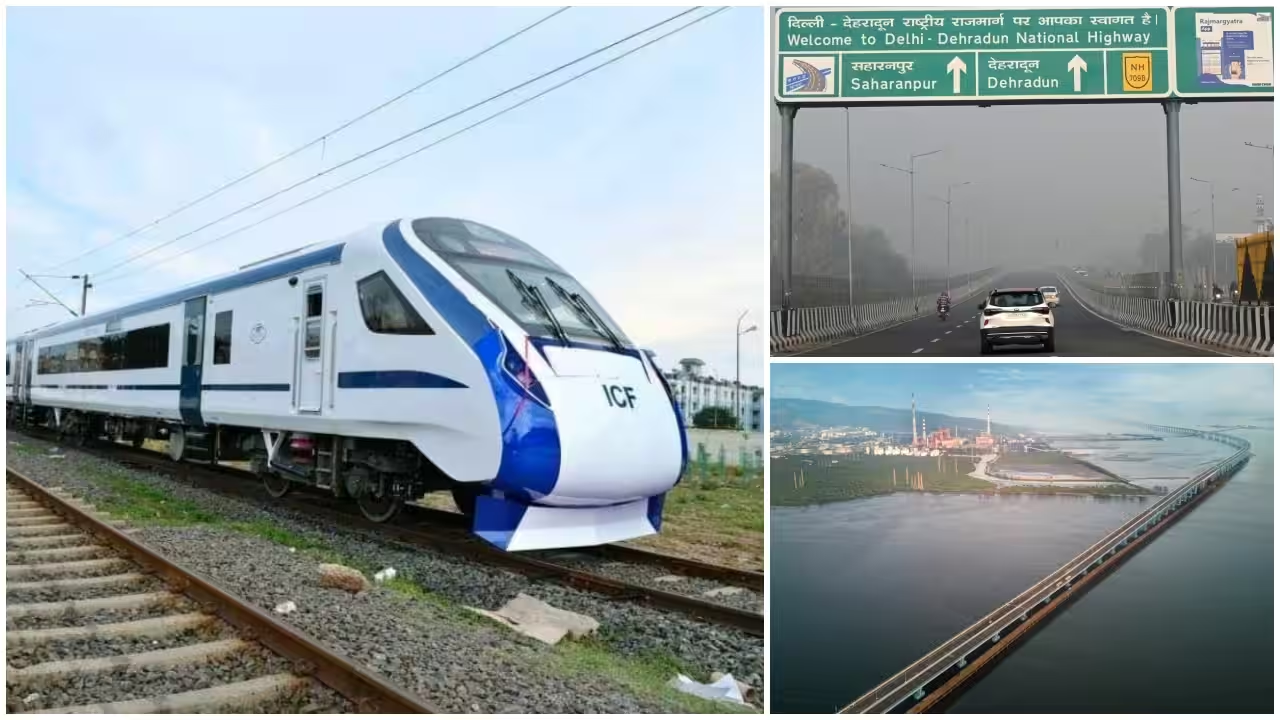
India’s infrastructure expansion has been continuing for several years now, with the fruits of the labour now visible in terms of less travel time between places. Across bridges, tunnels, expressways and railways, projects are replacing long detours, difficult terrain and slower routes with more direct connections.The latest government factsheet brings together examples of how these investments are changing journey times across the country.Bridges: Crossing barriers, cutting hoursBridges have made some of the biggest differences where rivers and difficult crossings once added hours to a journey. The Bhupen Hazarika Setu, or Dhola-Sadiya Bridge, reduced travel time between Rupai in Assam and Meka/Roing in Arunachal Pradesh from six hours to one hour. The Bogibeel Bridge brought the journey between Dhemaji and Dibrugarh down from almost an entire day to around one to two hours.The gains are equally striking elsewhere. The Atal Setu has cut the Mumbai-Navi Mumbai journey from about two hours to around 20 minutes, while the Kosi Rail Mahasetu reduced the Nirmali-Saraigarh rail journey from eight hours to 30 minutes and shortened the distance from around 300 km to 22 km.Tunnels: Taking the shorter route through mountainsTunnels are changing travel in areas where geography has traditionally been a major constraint. The 9.02-km Atal Tunnel bypasses Rohtang Pass, cuts 46 km from the Manali-Sarchu route and saves four to five hours. The Dr Syama Prasad Mookerjee Tunnel reduces the Jammu-Srinagar travel distance by about 30 km and saves nearly two hours.The Banihal-Qazigund twin-tube tunnel saves around one and a half hours, while the Sela Tunnel in Arunachal Pradesh has reduced travel time on the Tezpur-Tawang route by more than an hour and provides all-weather connectivity.Expressways: Compressing long road journeysAccess-controlled highways are producing similar reductions on major road routes. The Delhi-Meerut Expressway has brought the journey down from around two and a half hours to 50 minutes. Bengaluru-Mysuru has fallen from nearly three hours to about 75 minutes, while the Delhi-Dehradun Economic Corridor has reduced travel time from more than six hours to around two and a half hours.The Delhi-Amritsar-Katra Expressway aims to cut Delhi-Amritsar travel from eight hours to four hours and Delhi-Katra travel from 14 hours to six hours. The Delhi-Mumbai Expressway is being developed to bring the journey down from roughly 33 hours to about 12 hours.Railways: Making conventional trains fasterThe speed gains are not limited to new railway lines. The 2026 railway timetable has speeded up 549 trains across the network. Of these, 20 trains gained at least 60 minutes, 48 gained 31-59 minutes, 105 gained 16-30 minutes and another 376 were made five to 15 minutes faster.Vande Bharat services have added another layer to this effort. The New Delhi-Varanasi service is around 40-50% faster than earlier services on the route. The Katra-Srinagar service saves two to three hours, while the Banaras-Khajuraho train saves around two hours and 40 minutes. The Ernakulam-Bengaluru service saves more than two hours.The Vande Bharat Sleeper between Howrah and Guwahati has reduced the journey from around 17 hours to about 14 hours and has 16 air-conditioned coaches carrying around 823 passengers.High-speed rail: The next connectivity leapThe next stage is high-speed rail. The 508-km Mumbai-Ahmedabad High-Speed Rail Corridor is designed for an operational speed of 320 kmph and is expected to bring the journey down to around one hour and 58 minutes. It will have 12 stations and include India's first undersea rail tunnel, around 7 km beneath Thane Creek.The government has also announced seven high-speed rail corridors covering nearly 4,000 km, with estimated investment of Rs 16 lakh crore. The proposed routes include Delhi-Varanasi, Varanasi-Patna-Siliguri, Chennai-Bengaluru, Bengaluru-Hyderabad, Chennai-Hyderabad, Mumbai-Pune and Pune-Hyderabad.You use AI every day. Now get your AI Quotient. Take the AIQ test.
Topics in this story
Gathered from external sources. Rights to this text belong to whoever originally published it.