Environment minister Bhupender Yadav inaugurates the World Circular Economy Forum at Gandhinagar
India Business News: NEW DELHI: Union environment minister Bhupender Yadav on Tuesday said the true measure of a circular economy was not how much waste was recycled, but .
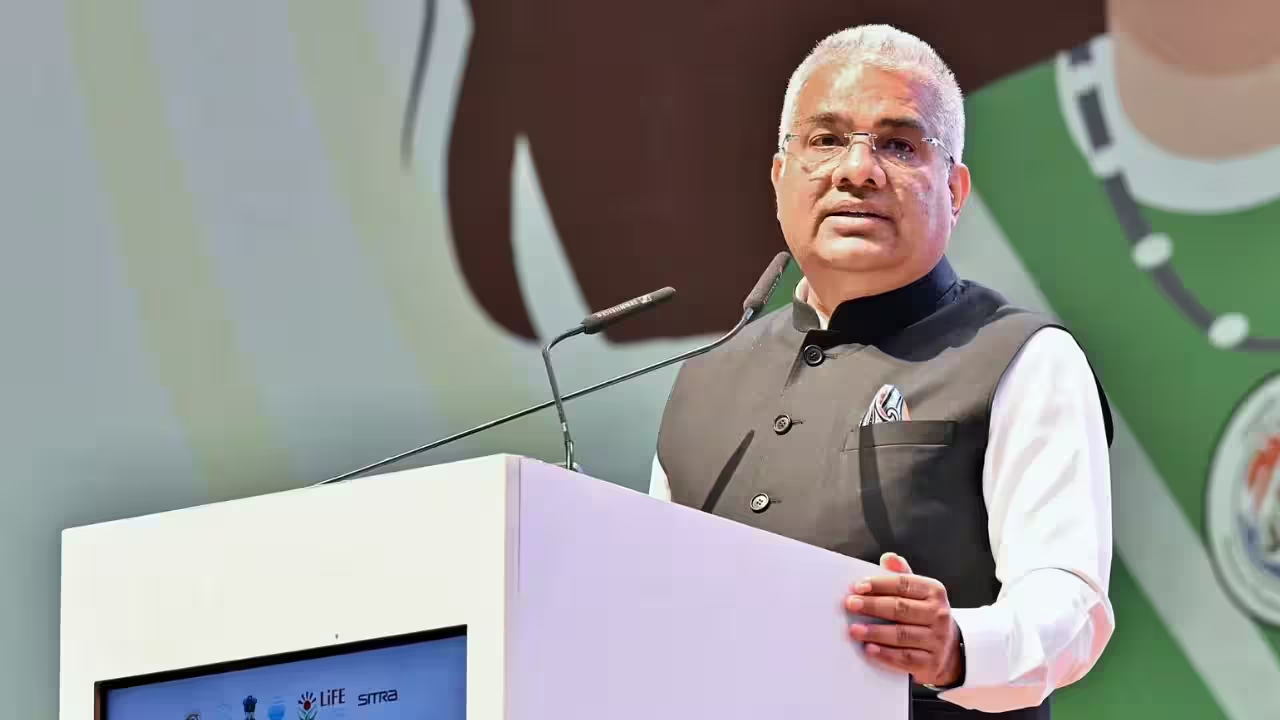
NEW DELHI: Union environment minister Bhupender Yadav on Tuesday said the true measure of a circular economy was not how much waste was recycled, but how little value was wasted. Inaugurating the World Circular Economy Forum in Gandhinagar, Gujarat, he said regulation alone could not create a circular economy and circularity must begin with how people consume.Calling , the minister said no country, company or community can close the loop alone, and emphasised the need for knowledge, technology, finance and responsibility to move across borders and sectors.As India has been focusing on circularity in a big way, Yadav highlighted that the country has shifted towards a circular economy through regulatory reforms and digital compliance systems, including strengthened sector-specific waste management rules and the introduction of Extended Producer Responsibility (EPR).India during its BRICS chairship has also placed the circular economy alongside sustainable lifestyles, ecosystem restoration and adaptation as interconnected priorities.As of August, more than 83,000 producers and 4,802 recyclers were registered under various EPR frameworks, with over 482 lakh metric tonnes of waste processed across regulated waste streams.Under the circular economy framework, Waste Management Rules have been notified for different waste categories such as plastic waste, battery waste, e-waste, waste tyre, used oil, end-of-life vehicles, construction and demolition waste, non-ferrous scrap metal and solid waste. The environment ministry has already notified a market-based EPR framework under the waste management rules with provisions for recycling and reuse, thus promoting a circular economy in the respective waste categories.As per the EPR framework, the producer, importer or brand owner, and original equipment manufacturers (OEMs) who introduce the product in the market are obligated for its environmentally sound management after the end of life of such products. Along with the EPR targets, the EPR framework also imposes mandatory annual targets for recycling and/or use of recycled content.Get the latest Business News and Live updates. Download the TOI app.
Topics in this story
Gathered from external sources. Rights to this text belong to whoever originally published it.