Mahjong mania: What’s behind the rise of a centuries-old Chinese game in the US
Mahjong, a four-person game similar to rummy, skyrocketed in popularity in the past year. And it’s turned into a pricey consumer ecosystem.
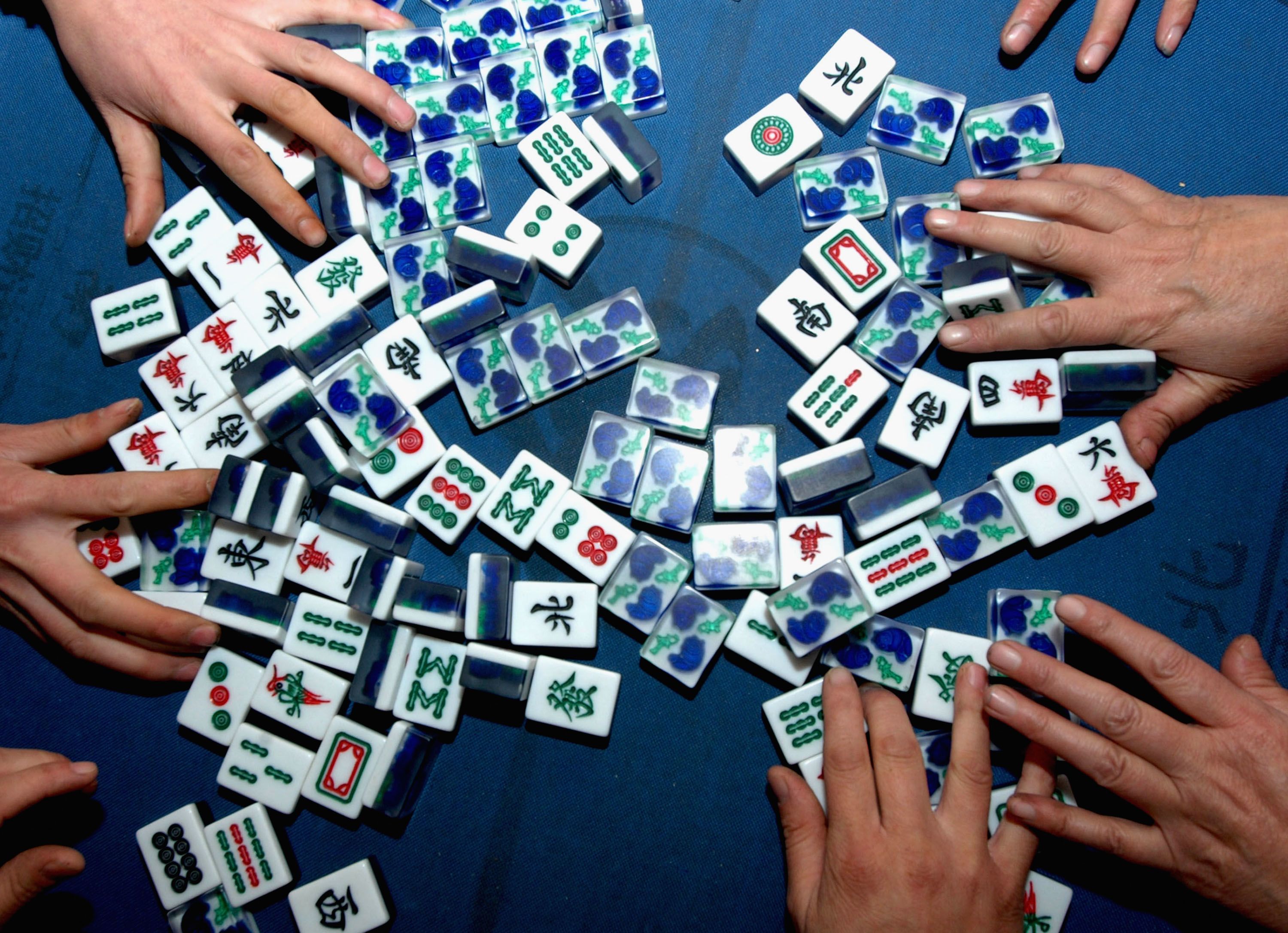
Mahj is life. The mantra refers to mahjong, a 19th century Chinese tile game that has long been popular in the Asian diaspora, along with an American version established in Jewish communities. But in 2026, American mahjong social clubs, leagues and tile designers are sweeping through suburbs in the American South and beyond. Mahjong, a four-person game similar to rummy, skyrocketed in popularity in the past year following a spike in interest at the height of the Covid-19 pandemic. Yelp searches for mahjong clubs rose 4,467% in 2025, and searches for “mahjong store” and “mahjong club” reached an all-time high in August 2026. It’s turned into a pricey consumer ecosystem. On top of private social clubs, small, women-led businesses also sell ornate tile sets and monogrammed bags for the fanciest of game nights. But the mahjong boom has also sparked a fresh debate about cultural appropriation and who gets the profit. ‘Mahj’-mania In Charlotte, North Carolina, a boutique mahjong studio called Heron House opened this year, with a manicured garden spilling out from its brick exterior. Inside, its tables have purse hooks and places for wine glasses alongside custom wallpaper in its mahjong room. The aesthetics are everything for the clubs popping up around the country. House of Sweet Tea & MAHJ, a candle-shop-turned-mahjong-studio near Nashville, Tennessee, has been described as “Barbie’s Dreamhouse,” owner Jennifer Deaton said. The Mahj Clubs in Scottsdale, Arizona, is “kind of like a mini country club,” Julia Zastrow, the mahjong studio’s co-founder and manager, told CNN. At Heron House, members pay up to $179 a month and receive discounts on tile sets that can cost up to $475. The studio has 70 members, the company said. It also holds events where walk-ins can play for $15 to be donated to charity. “Mahj” can now be a noun, verb and somewhat of a personality trait: You can buy beverage napkins with the phrase “Mahjong with Mah-girls,” or a pouch to hold tiles that says: “Get Your Mahj On.” From Etsy to Hobby Lobby stores, the game’s newest converts rush to shop viral sets before they sell out. Oh My Mahjong, which was founded four years ago, sells tiles for every theme, from a colorful Palm Royale to cheetah print. (A different company called Peace Love Mahjong features a glittery Taylor Swift set for $290.) You’ll also need a printed mat, acrylic racks, a stylish storage bag and shufflers. In total, a set with all the accessories from Oh My Mahjong start at $660 and can cost up to $925. The biggest American mahjong fans can even own cabinets full of mats and tiles. Oh My Mahjong said it made $40 million last year and is on track to reach $100 million by year-end. (CNN wasn’t able to independently verify these numbers, since Oh My Mahjong’s financial documents are not publicly available.) The new American mahjong clubs often incorporate elevated Southern hosting. The need for an ornate space has expanded outside of living rooms to dozens of mahjong parlors throughout the country. As Megan Trottier, the founder of tile company Oh My Mahjong, told the New York Times for a story about home decor: “Mahjong is becoming this beautiful way of hosting — not just slapping a game on a table.” There’s another audience in the mahjong resurgence, too: young Asian Americans who are reconnecting with their roots at mahjong events. They’re largely pop-ups and community-based, and often have a retro, sexy feel — reminiscent of Hong Kong filmmaker Wong Kar-Kai’s vibrant movies. Taiwanese American Angie Lin has found success running in high-brow events and partnerships, all rooted in Asian culture. Her company, East Never Loses, hosted a full mahjong room at a star-studded Lunar New Year party hosted by Hennessey, Netflix and Gold House, with Heated Rivalry’s Hudson Williams, Bridgerton star Yerin Ha, and SNL alumnus Bowen Yang in attendance. “To see all these big celebrities playing this game and fighting to get into the mahjong room,” Lin said. “I felt so proud, even though I’m just as proud of the 10-person riichi mahjong lesson that I’m throwing tomorrow.” Jacob Chang, who’s half-Ecuadorian and half-Chinese, founded Red Eye, a mahjong social club in Tampa, Florida. At a beginner’s mahjong night at a local bar, tables largely full of young professionals engaged in friendly competition over Hong Kong-style sets as Chang emceed over a microphone. Chang went full-time this year with the club with the help of his family. It’s a stark contrast from his five-person mahjong group that played in a friend’s apartment two years ago. He said the latest wave of American mahjong clubs inspired him to sell trendy merchandise, along with tickets to the events, which usually cost around $15. He said members in his club typically don’t have as much disposable income as someone who can pay $800 for a mahjong set, a reason why his club has become popular. “I don’t have anything against American mahjong,” Chang, 26, told CNN when asked about emerging American businesses. “I’ll give them credit… they really know how to do capitalism with the mahjong stuff.” ‘More than just a game’ For the Asian American diaspora, mahjong is a cultural touchstone. The game originated in China and traditionally has Chinese characters on the pieces — and it’s often played at home or casual social gatherings. American mahjong was similarly played in middle-class Jewish families throughout the decades with a different set of rules than the Chinese version, Annelise Heinz wrote in her book, “Mahjong: A Chinese Game and the Making of Modern American Culture.” The lack of Asian representation in many of these new mahjong businesses, in particular, has garnered criticism. For Asian-run groups, the business of mahjong shakes out a little differently. “If I sell a mahjong set for $800 and have a $200 membership, that just doesn’t resonate within the culture because we grew up playing this game with our grandparents,” Lin said. Neither Lin nor Chang named specific American mahjong businesses in their interviews with CNN. But some American mahjong businesses, including Heron House and Oh My Mahjong, have received online comments about exclusivity and losing the game’s roots. Heron House founder Charolette Obringer said the club, designed as an inclusive space, has Chinese mahjong lessons and has reached out to local Asian groups for informal partnerships on events. She said she sees a future where American-style mahjong culture and traditional Chinese mahjong merge, as many members are interested in learning the latter. “The one thing that both forums have in common is that they understand people that really view it as more than just a game,” she said. “It’s a lifestyle.” Trottier, the CEO of Oh My Mahjong, told CNN it’s important that the company “always stayed true to the traditional Chinese elements of design,” and that many members of the design team are Asian American. Lin said she wants to communicate more with the American mahjong community. She calls herself a “cultural pusher,” emphasizing that education is a big part of her business. “I don’t think it’s about American versus Chinese or Asian mahjong,” she said. “It’s just that mahjong is not a monolith, and education is necessary for us to really understand the nuances of that.”
Topics in this story
Gathered from external sources. Rights to this text belong to whoever originally published it.