From the dark fleet to Russian diesel, there are no ‘silver bullets’ for bringing down fuel prices
Fuel prices are historically high and voters are taking out their anger on President Donald Trump and Republicans.
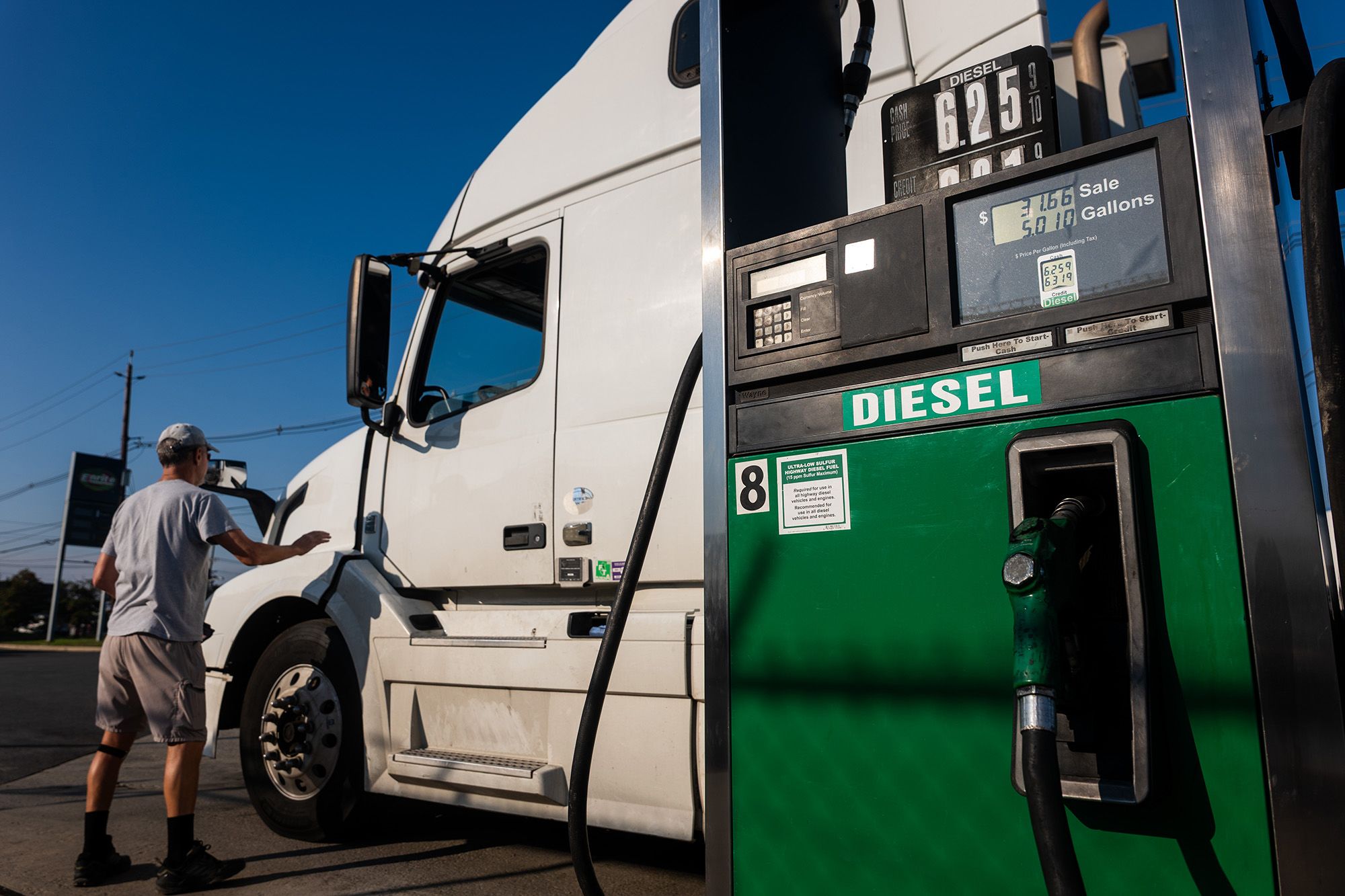
Fuel prices are historically high and voters are taking out their anger on President Donald Trump and Republicans. Trump is waging a campaign in the final moments of the midterm election to quell discontent among farmers, truckers and drivers exhausted by $4 gas and near-record diesel. In the past few weeks, Trump officials have unveiled a wide range of policy moves, including an $8 billion lifeline to farmers, a controversial plan to import diesel from Russia, allowing truckers to use red-dyed diesel and ways to rehab the aging armada of dark-fleet tankers. The last-minute scramble to contain the energy price fallout is an implicit acknowledgement of how the war with Iran has exacerbated the American public’s yearslong frustration with the high cost of living – a problem Trump promised to fix on Day One. “It looks and feels panicky because they’re panicked,” said Douglas Holtz-Eakin, president of the American Action Forum, a center-right think tank. “They can’t move the price of diesel in the next 14 days. They have to hope they can convince voters to give them another chance.” Some of the Trump administration’s actions could be helpful, but none of them will give voters what they crave: Cheap gas, diesel and jet fuel. “There are no silver bullets here. None of them will solve the underlying problem,” said Bob McNally, a former energy adviser to President George W. Bush. McNally, founder and president of Rapidan Energy Group, said Republicans and Democrats alike look under every rock for solutions. “Few things terrify a sitting president more than high and rising pump prices – especially in an election year,” he said. “I have to say, I give this administration credit. They are looking under more rocks than most.” A(nother) bailout for farmers The latest move came on Monday night on the campaign trail in Kansas where Trump announced an $8 billion lifeline for farmers. The US Department of Agriculture said the one-time payments for American farmers this harvest season will “provide relief during temporary market disruptions and increased input costs.” Diesel prices have skyrocketed from $3.76 a gallon nationally before the war to an all-time high of $6.53 a gallon in late September. The spike has been especially painful for farmers, who need diesel to power their tractors and other farm equipment and also rely on diesel-powered trucks to get their food to market. Consider that the typical farm in Kansas spent about $31,000 on diesel last year – a hefty cost that could double this year, according to Gregg Ibendahl, associate professor of agricultural economics at Kansas State University. “Farming has gotten a lot more expensive – and it was expensive to start with,” said Ibendahl. Beyond the diesel spike, farmers are grappling with surging costs for fertilizer, another critical input made pricier by the war with Iran. Details on the $8 billion farmer rescue are fuzzy – the USDA says it won’t announcement payment rates for farmers until next month – but experts say the aid appears to be meaningful. Gabriel Lade, a professor focusing on agricultural economics at The Ohio State University, said the $8 billion rescue will provide “a good amount of money” to farmers but cautioned that ad-hoc payments like this tend to be poorly targeted. “Some farmers may come out ahead, others will still be behind,” Lade said. The Trump administration’s fuel rescue for farmers comes less than a year after the federal government paid farmers $12 billion through the Farmer Bridge Assistance Program. Lade said these farmer rescues have become a feature of America’s farm economy. “We are stuck in a situation where trade wars are depressing output prices and now real wars are raising input prices,” Lade said. Diesel from Russia Trump’s plan to import diesel from Russia sparked a bipartisan backlash and skepticism from researchers who say it amounts to little more than a band-aid. The initial plan calls for importing about 2.2 million barrels of diesel, a drop in the bucket of the roughly 4 million barrels the United States consumes each day (including heating oil). “If we imported all those barrels in one day, it would only last us until about lunch,” said Robert Yawger, director of energy futures at Mizuho Securities. Diesel prices are a few pennies higher today than when Trump announced the plan, underscoring the skepticism that the war-hobbled Russian refinery system has the firepower to ramp up exports. Dyed diesel for truckers At a campaign event in Nebraska earlier this month, Trump signed an executive order allowing truckers to use cheaper red-dyed diesel normally reserved for farmers. Analysts said the move could be helpful for semi-truck drivers because it will temporarily shield them from the federal tax of 24.4 cents per gallon of diesel for highway use. However, they cautioned it won’t be a game-changer because states also tax diesel for highway use. Some states have paused their diesel taxes, while others have not. That creates complexity and risk for truckers crossing state lines. Dark fleet to the rescue? Trump officials are also pushing another out-of-the-box idea designed to address high fuel prices: Bringing the dark fleet of sanctioned tankers out of the shadows. Energy Secretary Chris Wright, speaking at an event in New York on Monday, said the Trump administration is working with investors to buy, clean up and deploy idled sanctioned tankers. “We’re going to move some of the ships from what I call the ‘bad-guy fleet’ to the ‘good-guy fleet,” Wright told Bloomberg News. The focus on the dark fleet is designed to address the skyrocketing cost of shipping. The daily rate to hire an oil supertanker to move crude from the Persian Gulf to China has exploded from about $65,000 last year to $1.4 million this week, according to Clarksons Research. But deploying dark fleet vessels is easier said than done. It will require navigating a legal maze, convincing insurers to get on board and, in many cases, expensive repairs to aging tankers. “This will likely only have a small impact because many of these vessels are already being used. The ones that aren’t are probably old and in bad condition,” McNally said. How to drive down fuel prices None of the energy policy moves on their own or collectively will make gas and diesel cheap again. The Iran war, along with the Russia-Ukraine war and Houthi attacks in the Red Sea, have created a supply chain nightmare that will take considerable time to fix. Global energy markets are likely more than a year away from returning to normal, the head of the International Energy Agency warned on Tuesday. “The only things that will cause an immediate decline in prices would be a recession – which is not the way anyone wants to do it – or a durable, credible peace deal,” McNally said. “And unfortunately, we don’t see that as likely.”
Topics in this story
Gathered from external sources. Rights to this text belong to whoever originally published it.