GOP campaign arms ask Supreme Court to intervene in TV ad rate case
The GOP’s campaign arms asked the Supreme Court on Friday to step in and allow them to buy television ads at the cheapest rate ahead of the midterms after a federal appeals court ruled that only candidates are entitled to the special rate. “In the midst of election season, a divided Fourth Circuit panel…
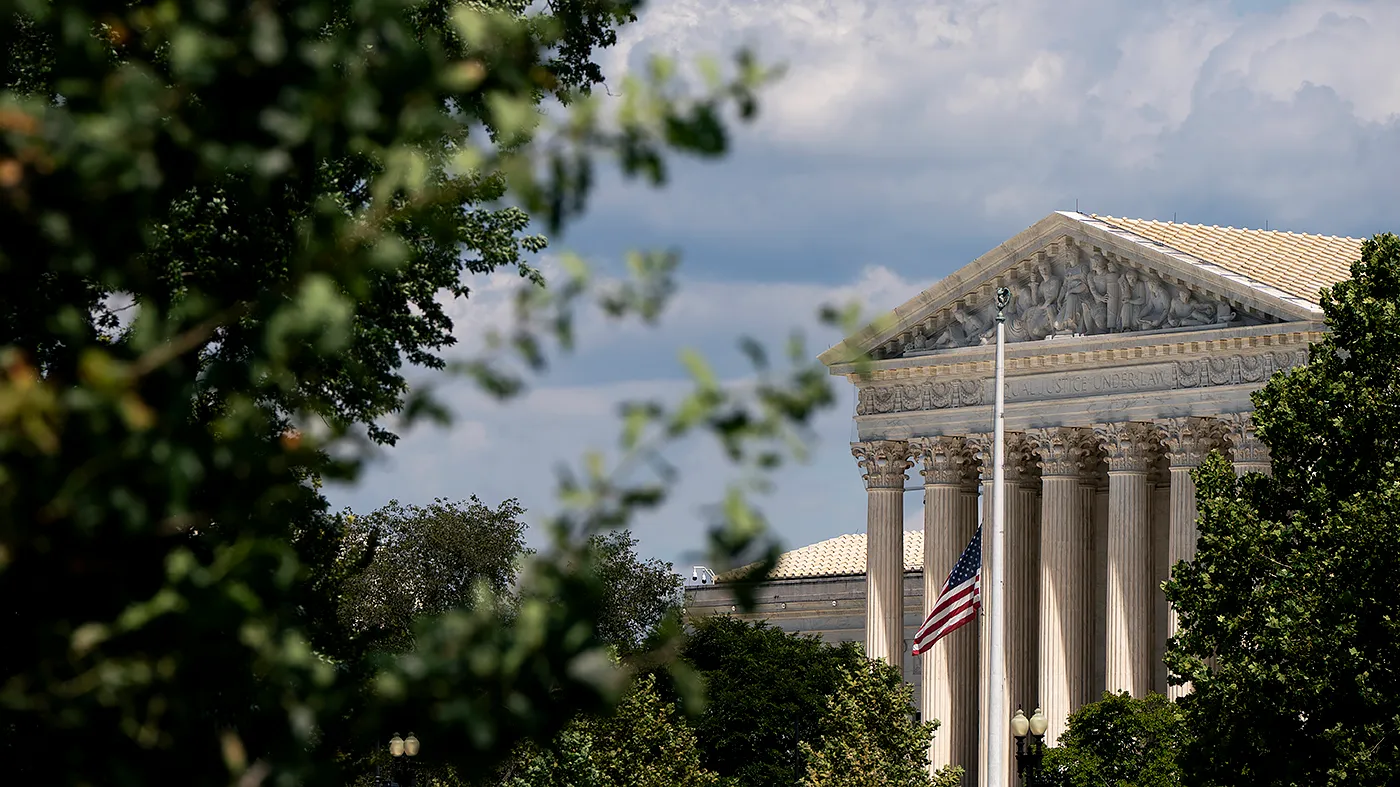
The GOP’s campaign arms asked the Supreme Court on Friday to step in and allow them to buy television ads at the cheapest rate ahead of the midterms after a federal appeals court ruled that only candidates are entitled to the special rate.
“In the midst of election season, a divided Fourth Circuit panel just rewrote longstanding rules about preferential broadcast rates for political ads,” lawyers for National Republican Senatorial Committee and its House counterpart wrote in an emergency appeal.
“Applicants have budgeted tens of millions of dollars in ad buys under these rules,” they added. “But because of the Fourth Circuit’s decision, broadcast stations are already rescinding those rates.”
A panel for the 4th Circuit U.S. Court of Appeals held in a 2-1 decision last week that super PACs and political parties must pay the same rates as any other advertiser, setting aside Federal Communications Commission guidance that extended the discount.
The decision sided with four Democratic Senate nominees — former Sen. Sherrod Brown (Ohio), Sen. Jon Ossoff (Ga.), former North Carolina Gov. Roy Cooper and Rep. Kristen McDonald Rivet (Mich.) — who argued the guidance was unlawful and put them at a competitive disadvantage.
It was a blow for Republicans, who are hoping to capitalize on their financial advantage after securing a victory at the Supreme Court in June that eliminated limits on coordinated spending between candidates and political parties.
The dispute centers around the lowest unit charge (LUC), a federal statute that requires television stations to sell advertisements to “legally qualified candidates” at the cheapest rate available in the 45 days preceding a primary election and the 60-day period before a general election.
“Simply put, the LUC requirement and pertinent campaign finance statutes are clear that neither political parties nor joint fundraising committees with non-candidate members can be entitled to the LUC,” Judge Robert King, an appointee of former President Clinton, wrote for the majority. “In asserting otherwise, the Public Notice is plainly contrary to law and cannot stand.”
The political parties’ lawyers argued in their emergency application that the appeals court lacked authority to set aside the guidance. They also said the ruling unconstitutionally restricts their political speech.
“Every day its judgment remains in effect means fewer voters they can reach,” the attorneys wrote. “And those lost opportunities to speak to voters before election day cannot be recovered after the election.”
The committees are urging the high court to intervene before the LUC window opens Sept. 4.
Republicans’ congressional campaign arms hold larger finance accounts than their Democratic counterparts heading into the midterms.
The GOP has a combined roughly $148.6 million cash-on-hand compared to Democrats’ roughly $120 million, according to federal campaign finance filings.
Topics in this story
Gathered from external sources. Rights to this text belong to whoever originally published it.