Crypto regulation bill faces key Senate test
A cryptocurrency regulation bill is poised to face a key test on the Senate floor this week, as lawmakers weigh whether to advance the measure after nearly a year of negotiations. Supporters of the Clarity Act are trying to get crypto-friendly Democrats and a handful of GOP holdouts on board to clear the procedural vote…
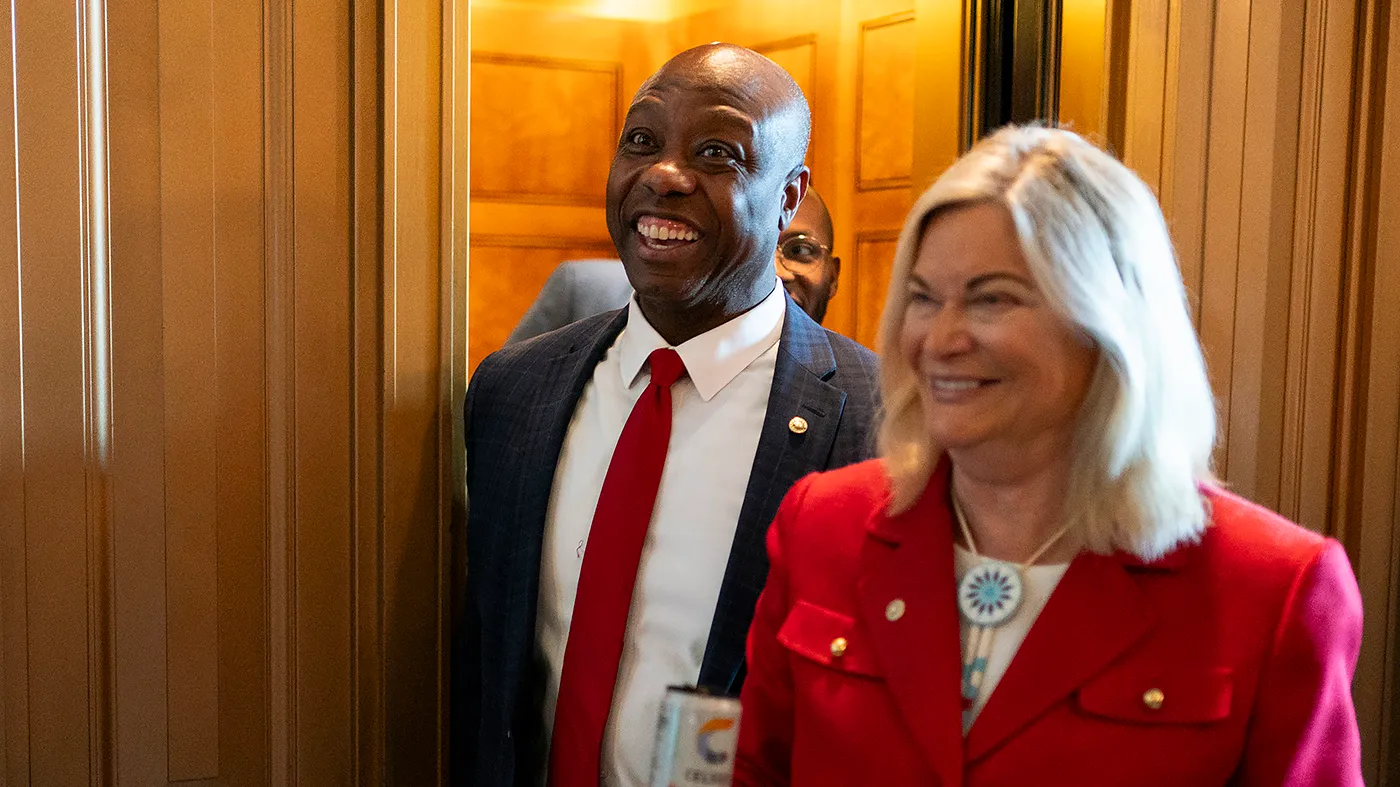
A cryptocurrency regulation bill is poised to face a key test on the Senate floor this week, as lawmakers weigh whether to advance the measure after nearly a year of negotiations.
Supporters of the Clarity Act are trying to get crypto-friendly Democrats and a handful of GOP holdouts on board to clear the procedural vote Tuesday.
Senate Republicans released updated bill text late Sunday, featuring a new White House-approved ethics provision and tweaks to several other sections that have plagued talks for months. But it’s unclear whether it will be enough to win over the needed votes.
“These changes might not be enough to gain sufficient Democratic support, but they open the door to attracting at least a few Democratic ‘yes’ votes,” Brian Gardner, chief Washington strategist at Stifel, wrote in a note Monday.
Sen. Cynthia Lummis (R-Wyo.), alongside Senate Banking Chair Tim Scott (R-S.C.) and Senate Agriculture Chair John Boozman (R-Ark.), unveiled new Clarity Act text over the weekend that an aide described as their “last, best and final offer.”
“Democrats got what they wanted; now they need to take yes for an answer,” Lummis said in a statement Sunday.
Most notably, the latest bill text included new ethics language approved by the White House — a central issue for Democrats. They have long pushed for restrictions on elected officials’ involvement in the industry amid concerns about President Trump and his family’s crypto ventures.
Trump agreed to some limitations in late July that would bar public officials and their spouses from issuing or sponsoring digital assets. But Democrats argued it fell short. They took issue with the decision to put the Department of Justice (DOJ) in charge of enforcement.
Democrats were dubious about how strongly the agency would enforce such restrictions under Trump and pushed to shift the task to state attorneys general instead.
The new ethics provision released Sunday would allow state attorneys general to bring cases against the DOJ or crypto companies over violations. It also removed language that would have caused the section to sunset at the end of Trump’s presidency.
A Senate GOP aide suggested that Trump agreed to about 80 percent of the proposal sent over by Sens. Ruben Gallego (D-Ariz.) and Thom Tillis (R-N.C.) in late July. The specific language of this proposal has not been made public.
One key demand from Democrats that did not make it into the latest ethics language was a requirement for public officials to fully divest crypto assets. The current provision allows public officials to either divest their assets or place them in a blind trust.
Staff for Sen. Elizabeth Warren (D-Mass.), the ranking member on the Senate Banking Committee and a longtime crypto critic, argued the latest language “gives Trump’s political appointees the power to turn off enforcement of the ethics provisions against public officials.”
They noted that state attorneys general cannot bring enforcement actions against the president or other public officials for ethics violations.
“The bill contains only an empty provision allowing states to sue the Attorney General to try to force him to act,” Warren’s staff said.
The Office of Government Ethics can also block any action against the DOJ if it determines the activity is not prohibited.
Beyond the ethics language, the new bill text also made slight changes on two issues that have been a source of disagreement for months — stablecoin rewards and developer protections.
Stablecoins, which are digital tokens tied to stable assets like the U.S. dollar, are regulated under the GENIUS Act. The measure was signed into law by Trump last July, marking a key early win for the crypto industry.
Shortly after the bill passed, the banking industry began raising concerns about a section barring stablecoin issuers from offering interest to customers simply for holding the tokens.
They argued that it left open a loophole allowing crypto firms to pay rewards to stablecoin holders through third parties, leaving banks at risk of deposit flight and reduced lending capacity.
After a months-long fight between the crypto and banking industries, Tillis and Sen. Angela Alsobrooks (D-Md.) struck a bipartisan deal in early May to add language to the Clarity Act further limiting stablecoin rewards.
But the banking trade groups argued this didn’t go far enough. They’ve found support from a handful of Republicans, such as Sens. Josh Hawley (Mo.) and Jerry Moran (Kan.), who have voiced concerns about the impact on community banks.
The bill text released Sunday added a new section referred to as a “regulatory circuit-breaker” that would allow the Treasury secretary to step in if he found the rewards structure had “resulted in substantial detrimental impact to those deposits held by community banks.”
This does not appear to have appeased industry concerns. In a letter to Senate leaders Monday, a group of eight banking trade groups argued that “a circuit breaker that activates only after substantial deposit flight has already occurred is not a safeguard at all.”
Another recent tweak to the Clarity Act comes in response to backlash from law enforcement groups, who have argued that protections for blockchain software developers were overly broad.
The measure shields developers from liability by declaring they are not considered money transmitters under the law. The latest version of the bill still exempts software developers from legal obligations under an anti-money laundering law but removes protections under a criminal money transmitting statute.
Jason Somensatto, policy director at Coin Center, called this a “tough pill to swallow” in a blog post Monday. He argued the new language “stops short of resolving the essential criminal-law question that has led to the indictment of software developers.”
However, he added this version of the bill “would still represent meaningful progress.”
“Congress would, for the first time, put into statute the principle that developers who do not control user funds should not be regulated as money transmitters simply because they build the tools that allow people to transact,” Somensatto wrote.
House Majority Whip Tom Emmer (R-Minn.), who championed the developer protections in the lower chamber, also raised concerns Monday but appeared keen to move forward with the bill.
“Generally, I don’t like it. I don’t like the fact that you literally are digging up that safe harbor on the criminal side,” he said at a Solana Policy Institute summit. “I do worry about local states’ attorneys general making this more of a weaponization type thing.”
“But I’m glad that we move to a place where we can get this thing done if the Senate can do this now and start to move it forward,” he continued.
The House, which passed its own version of the bill last July, poses its own set of potential obstacles. The lower chamber would need to approve the updated Senate measure.
But the timeline is complicated by the House’s decision to leave town two weeks earlier than initially planned. This means Speaker Mike Johnson (R-La.) would need to call lawmakers back for a vote or wait until after the midterm elections if the upper chamber sends them the bill.
Several analysts see a relatively slim chance that the Clarity Act ultimately clears Congress this year.
Gardner suggested the bill’s prospects have “improved marginally,” saying they believe there is about a 20 percent chance it will pass by the end of the year. Ian Katz, managing director at Capital Alpha, said they place the odds at less than 20 percent.
Katz added in a note Monday that the latest revisions to the bill appear to boost the odds of the bill clearing Tuesday’s procedural vote but cautioned against “reading too much into Clarity getting 60 or more votes.”
“Some senators want to be seen publicly as being willing to consider the bill,” he wrote, adding, “Voting no could make some senators – mainly Democrats but also some Republicans – appear inflexible, especially since the revisions were just released. They could be accused of not giving Clarity a chance.”
“We wouldn’t go as far as to say this is a ‘free’ vote for senators, but the vote doesn’t really count until it’s the last one before the bill goes to the president’s desk,” Katz continued.
Topics in this story
Gathered from external sources. Rights to this text belong to whoever originally published it.