Trawling fight makes waves in Alaska Senate contest
The race for Senate in Alaska, one of Democrats’ best hopes this year for retaking a seat in the upper chamber, has a lot to do with fish. Both candidates’ records on trawling — which refers to fishing by dragging large nets through the sea — have become a central issue in the contest and…
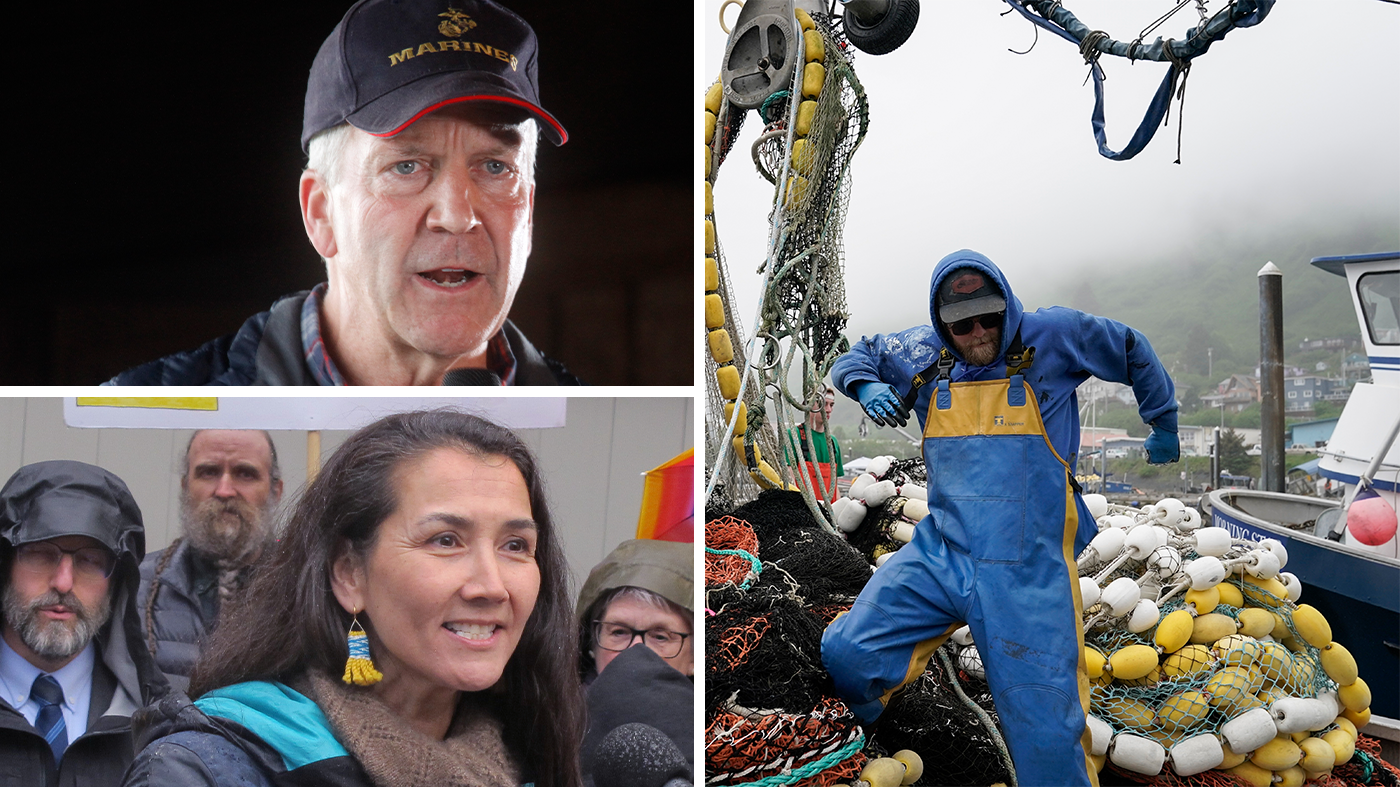
The race for Senate in Alaska, one of Democrats’ best hopes this year for retaking a seat in the upper chamber, has a lot to do with fish .
Both candidates’ records on trawling — which refers to fishing by dragging large nets through the sea — have become a central issue in the contest and a critical flash point in a state that depends largely on commercial and subsistence fishing.
As the stocks of salmon, crab and halibut run low in critical regions of the state, some Alaskans have blamed large-scale trawling, which can pick up young salmon, halibut and other fish besides their targeted species.
Former Rep. Mary Peltola (D-Alaska) has staked out a campaign platform around “fish, family and freedom” in her effort to unseat incumbent Republican Sen. Dan Sullivan. While attacking Sullivan’s fundraising ties to out-of-state trawling companies, Peltola has called for a crackdown on “factory trawlers” — ships that process and harvest fish on board.
“Some of the fisheries that have sustained generations of Alaskans are suffering at the hands of Lower 48 factory trawlers, and we need to take action,” Peltola said in a statement. “We’re in this fight together against out-of-state corporations who export our fish and our profits while leaving our fisheries worse off.”
Sullivan has also worked on legislation to help fisheries while in the Senate. He recently authored a bill to reduce bycatch in pollock trawling, specifically, including by setting new standards for monitoring and testing new technology that reduces seafloor disturbances. That bill passed out of the Senate Commerce, Science and Transportation Committee just last week.
But Peltola, a Native woman from the Yukon region who has worked on commercial fishing boats, has the upper hand in that she’s made a key platform out of opposition to large-scale trawling in four campaigns for Congress.
And some political observers view Sullivan’s push for trawling legislation as him playing catchup.
“It’s basically Sullivan conceding to fight this out on Mary Peltola’s turf,” said Aubrey Wieber, founder of the 907 Initiative, a government watchdog group based in Anchorage. His group also runs a website aimed at combating “Big Trawl.”
Sullivan spokesperson Nate Adams hit back, pointing to Peltola’s legislative record on fishing during her years in the House in contrast with Sullivan’s tenure.
“Mary Peltola made ‘fish’ part of four different campaigns in four years, but in Congress she never accomplished anything on fish other than printing it on a bumper sticker,” Adams said, noting that none of the bills the House Democrat introduced in her first two terms “had anything to do with fish.”
Adams cited several bills led by Sullivan on fishing and coastal resources that became law, including measures to clean up the marine coastline, crack down on illegal foreign fishing and study declining salmon populations in the state.
While the issue of factory trawling may seem hyperlocal, opposition to the industry in Alaska mirrors debate over data centers, for instance, in other battleground states.
Voters, concerned about the cost of living as well as environmental impacts in their backyard, are turning on big corporations and their most visible infrastructure — whether that’s a 2-acre data center going up in Ohio or an out-of-state trawler fleet in the Bering Sea.
Data for Progress, a Democratic-leaning group, found in 2025 that 74 percent of likely voters in Alaska support a ban on trawling. Among independent and third-party voters, 77 percent said they support such a ban.
Some in Alaska, however, have pushed back on the campaigns’ criticism of the industry despite its unpopularity.
Doug Vincent-Lang, commissioner of Alaska’s Department of Fish and Game, argued that fishing and trawling regulators have made significant progress on limiting bycatch and addressing declining stocks of fish.
“A picture is sometimes painted that trawling is the sole cause of stock declines, and that if we just ended it, all would be well,” he argued in an op-ed published by the Anchorage Daily News last week. “Unfortunately, the issue is more complex.”
Vincent-Lang specifically cited efforts to close off some regions from “bottom trawling” and institute caps for bycatch.
Regardless, growing backlash to the industry is buoyed by political forces.
A seafood executive who spoke to The Hill on the condition of anonymity said outside spending against trawling in the state has fired up Alaskans, boosting Peltola’s position while pressuring Sullivan to take a harder stance on the industry.
“There’s all this money to sort of build up a lot of noise around anti-trawl, but that never really split Republicans from Democrats in Alaska,” said the executive, adding that opposition to trawling served as a “ticket to entry” in the race.
The seafood executive pointed to the state’s open gubernatorial race in which four candidates were winnowed from 17 in an August primary. Most took an anti-trawling stance and pledged to appoint like-minded officials to regulate the industry, the executive said.
Another industry executive claimed campaigns’ focus on the industry has fueled public fervor over the issue. That executive mentioned the Facebook group STOP Alaskan Trawler Bycatch, which was founded by a recreational halibut charter captain in 2020 and boasts nearly 60,000 members.
“The Facebook group and now candidates are making the connection between abundance declines and trawl that is disconnected from reality,” the industry executive said.
“And when Alaskans hear both parties doing that, that’s when they just assume, ‘Oh, well if they’re telling us that trawl is causing these things then it must be causing those things,’ even though it’s not.”
But, for many in the state, trawling “is definitely the main issue” for Alaska voters after the economy and cost of living, Wieber said.
“Regardless of what issue is ultimately bringing people out to vote and influencing [how] they vote, this is the battle that the two Senate candidates have decided to fight for in this election,” Wieber added.
Topics in this story
Gathered from external sources. Rights to this text belong to whoever originally published it.