Bill that could change the nickel, how you pay with cash passes through House
It would also formally mark the death of the penny — sort of.
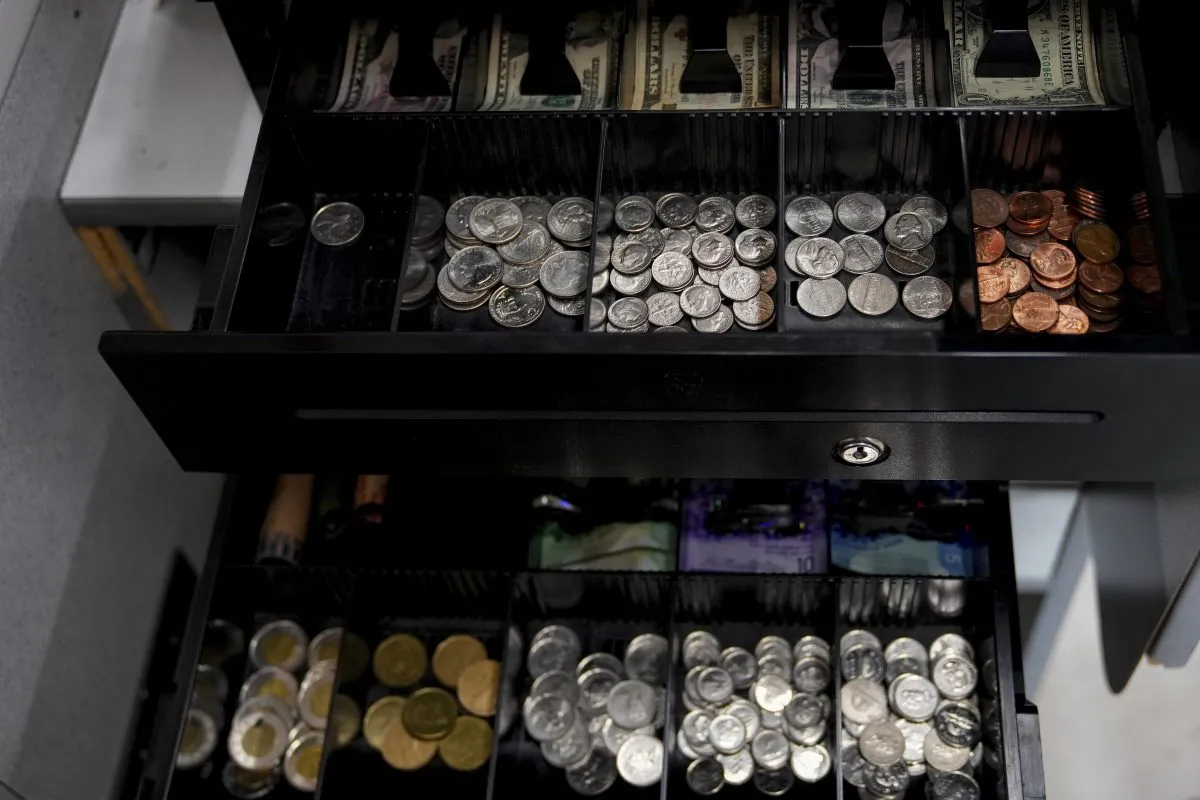
(NEXSTAR) – A new penny, bound for circulation, hasn’t been minted in nearly a year. Yet the U.S. is still working to get rid of it, once and for all.
A step in that process happened Monday in the House of Representatives, where the latest version of the Common Cents Act passed by voice vote. An identical version of the bill passed in the Senate with unanimous consent last month.
The bill passed Monday varies slightly from another version of the Common Cents Act that made its way through the House and to the Senate earlier this year. While that version instructs the Treasury to stop minting the penny, it did not explicitly outline the discontinuation of a coin.
The formal end of the penny may be the chief aspect of the bill, but the Common Cents Act could also impact how you pay with cash and potentially pave the way for the U.S. to get a new nickel . Here’s what to know.
The U.S. Mint stopped producing pennies last year , but it has released collectible pennies for America’s 250th anniversary.
The Common Cents Act, if enacted, wouldn’t change either of those practices. The penny would be formally sent to the bench, though one-cent coins “for sale as numismatic items” can still be produced.
As they do now, pennies would remain legal tender. The bill that most recently passed the House notes that “any one-cent coin that is minted and issued on any date before the date of the enactment of this subsection shall remain legal tender for all debts, public charges, taxes, and dues.”
It’s estimated that more than 300 billion pennies are out in the world — more than 800 pennies, or $8 worth, per U.S. citizen — trapped wherever a little Lincoln can hide.
If you’ve paid with cash within the last year or so, you may have found that retailers do not have any pennies to give you , despite how many are believed to be rolling around in the world.
Though the Common Cents Act would not help those pennies (perhaps lost in couches and collecting dust in piggy banks) get back into circulation, it would address some of the difficulties of paying with cash that have materialized.
Businesses would be allowed the option to round cash transactions to the nearest nickel. That would make a $1.82 purchase a $1.80, while $1.83 would become $1.85, for example. As simple as it sounds, some states and localities have laws prohibiting the practice. Advocates believe the Common Cents Act could iron out that confusion .
With the penny handled, the Common Cents Act would also focus on the nation’s second-lowest denomination: the nickel.
The five-cent coin may have some added value as of late, especially among retailers who have had to round change on cash transactions. But it still remains extremely expensive to produce . It cost 13.31 cents to produce a single nickel in fiscal year 2025 , down slightly from 13.78 cents in fiscal year 2024. Last year marked 20 consecutive years that nickel production costs remained above the coin’s face value.
One expert has even argued it would have been easier for the U.S. to ditch its nickel than the penny.
The Common Cents Act would not get rid of the nickel, but it could lead to a change in its composition. The bill allows the Treasury Secretary to test and evaluate compositions of the coin and suggest a new make-up for the nickel if it “reduces the cost” of production and “has a minimal adverse impact on machines designed to accept coins.”
That may include making the nickel out of zinc, with an outer layer of nickel. Only the penny and the $1 coin currently use zinc , which was nearly $7,000 per tonne cheaper than copper last year, the Mint reports.
Changing a coin’s composition can be difficult, though. Attempts to make the penny cheaper, for example, failed .
No changes to the nickel or how you pay with cash can take effect until the bill becomes law. And before you rush out to stock up on nickels, it’s worth noting that, according to at least one expert, that hoarding pennies may have contributed to their death . A bill that would cease the production of the nickel was referred to the House Committee on Financial Services last summer.
Topics in this story
Gathered from external sources. Rights to this text belong to whoever originally published it.