Asian shares fall after wild swings in bonds, FX before US jobs data
By Stella Qiu SYDNEY, Oct 2 (Reuters) - Asian shares fell on Friday as investors grappled with wild swings in bond and currency markets ahead of key US jobs...
SYDNEY, Oct 2 (Reuters) - Asian shares fell on Friday as investors grappled with wild swings in bond and currency markets ahead of key US jobs data, while a widening military buildup in the Gulf kept oil prices elevated.
Bond markets were again the centre of volatility overnight, with the benchmark 10-year US Treasury yields hitting the highest since 2002 at 5.34% after capping the biggest quarterly rise in 32 years. They later retreated and were steady at 5.2512% in Asia.
Fiscal worries in France pushed the spread between French and German sovereign bond yields above 140 basis points, the widest since 2012, rattling European stocks and hitting the euro hard. The single currency slid as far as $1.1215, the lowest since May 2025, and sank against the yen and the Swiss franc.
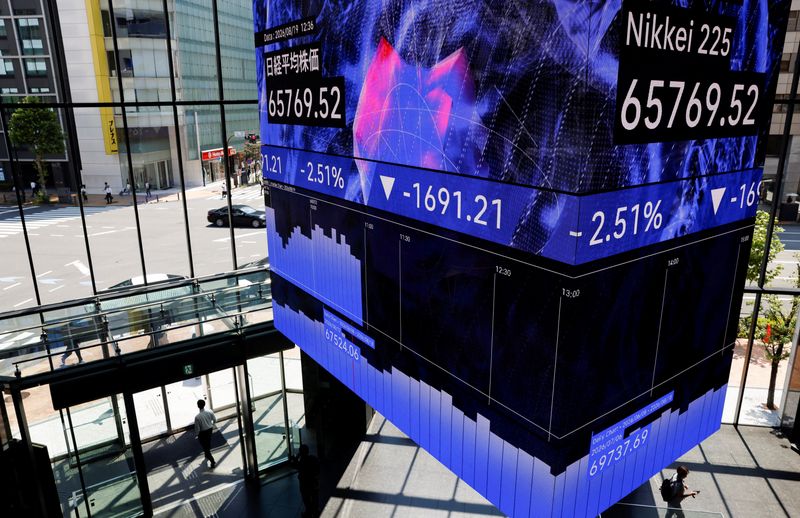
In Asia, MSCI's broadest index of Asia-Pacific shares outside Japan fell 0.5% and was on track for a weekly decline of 1.7%. Japan's Nikkei dropped 0.7% but was set for a gain of 3.1% for the week.
Mainland Chinese markets are closed for a public holiday through Wednesday of next week.
Nasdaq futures rose 0.3% and S&P 500 futures inched up 0.1% after the pullback in Treasury yields helped Wall Street stage a late rebound.
All eyes are on the US nonfarm payrolls due later in the day. Forecasts are centred on a rise of 90,000 jobs in September, while the employment rate is likely to be steady at 4.1%. Much attention will be on hourly earnings after the ISM survey showed a huge jump in prices paid, pointing to more cost pressures.
"With the Fed now myopically focused on inflation and price pressures, a hot wages print could prove particularly influential for US rates, Treasuries and the USD," said Chris Weston, head of research at Pepperstone.
"Risk assets have so far absorbed the rise in US real yields, and long-end nominal Treasury yields remarkably well. However, a sustained increase in term premium could be far more problematic."
Markets currently price in a 25% probability that the Fed will raise interest rates again in October, down sharply from 69% a week ago after two top policymakers staked out an unusually clear case for taking in more data before deciding what to do next with interest rates.
However, a hike in December is still fully priced in.
Dovish comments from Fed officials drove a big rally in 2-year Treasuries overnight, with the yield curve bull steepening as short-end yields fell. The 2-year yield was last up 1 basis point (bp) at 4.8039%, after falling 10 bps overnight.
Topics in this story
Gathered from external sources. Rights to this text belong to whoever originally published it.