France’s baguette gets a fuel shock: How the crunchy staple is draining bakers’ pockets
France’s beloved baguette is getting harder to make for bakers.
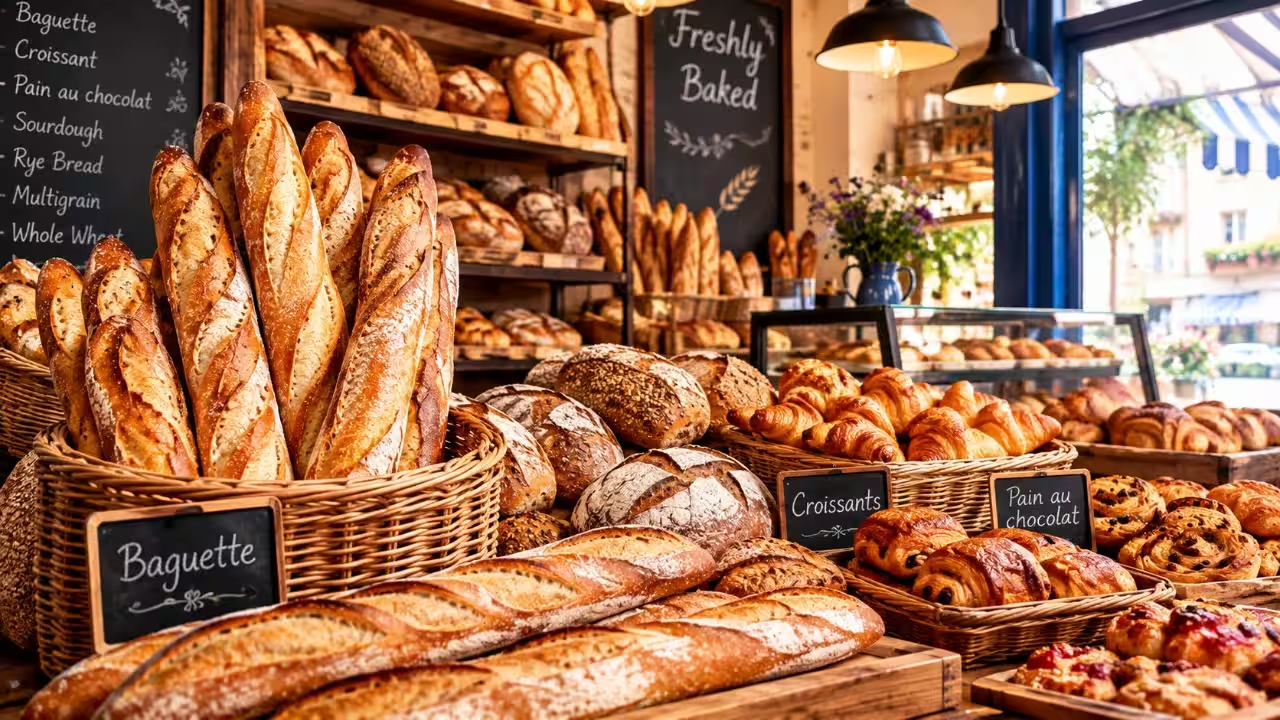
France’s beloved baguette is getting harder to make for bakers. And the problem isn’t finding the right magic to keep its signature crust intact, it starts even before the recipe does!Bakers are facing an unlikely financial and fuel squeeze, having to spend more just to keep their ovens burning and their loaves crisp.Across rural France, businesses that rely on fuel are seeing a growing share of their earnings disappear into the cost of keeping the wheels turning, or the ovens running.Fuel prices have surged since the start of the Iran war on Feb. 28, putting small businesses and households under pressure as they grapple with higher costs for transport and heating.For bakers like Kevin and Sandrine Luce, the problem starts before their first customer walks through the bakery door. Their oven needs to reach 270 degrees Celsius (518 degrees Fahrenheit) to give their baguettes a crunchy crust. The oven runs on heating oil, and that fuel is now costing the couple considerably more than it did when they first fired it up in March.“Originally, it was a good deal, because initially, a fuel-heated oven is more economical than an electric one,” Kevin Luce said. “That is until the price (of fuel) increased by 50%. So, yes, now it’s not a good deal.”Same money, less fuelBack in March, the couple paid 2,230 euros ($2,540) for 2,000 litres (528 gallons) of heating oil at their bakery in Saint-Just-en-Chaussée, a small town about 90 kilometres (55 miles) north of Paris.Last week, almost the same amount of money bought them only 1,200 litres (317 gallons).For the bakery, the extra spending does not simply mean a higher energy bill. It means less money available elsewhere in the business.As customers came in for their morning baguettes, croissants and other pastries, Luce said the additional energy expense was affecting what the business could pay and invest in.“All this superfluous expenditure on energy represents a loss of earnings. It’s salary we can’t take, it’s salary increases we can’t give to our employees. It’s investments we can’t make.”The Luces are not an isolated case. France has more than 34,000 bakers producing around 6 billion baguettes each year, according to the national federation of bakeries and patisseries. About one quarter of them use oil- or gas-fired ovens.Bills beyond the bakeryThe squeeze is also being felt by rural businesses that need fuel simply to reach their customers.Martial Realland sold his home to pursue his long-held dream of owning a food truck. He now drives from village to village in the l’Oise region of northern France, selling savoury ham and cheese pancakes, fries and other snacks.His diesel bill has climbed from 120 euros ($136) to 200 euros (around $228) for a fill-up since the Iran war began.“It really hurts,” he told the AP. “It’s catastrophic.”The higher cost is changing which work he accepts. Realland said he is already turning down jobs that require long drives because the diesel consumed by his truck would make those journeys financially unviable.And the fuel costs do not stop when his food truck does.His rented home is heated with heating oil, and he is preparing for what could be a much larger bill during the coming autumn and winter. He estimates that filling his 1,500-litre (396-gallon) tank could cost 2,500 euros ($2,847), compared with 1,600 euros last year.“I’m scared” of that bill, he said.With that in mind, he may not fill the tank at all this year.Rural France is particularly exposedThe impact of higher fuel prices is especially significant in rural France, where transport and heating can depend heavily on fuel.Around 21 million people live in the French countryside — about one-third of the population. Rural areas account for nearly 90% of France's territory, while limited public transportation means people often rely on cars to get around.Heating oil is also used by households and businesses in rural areas, including some bakeries.The latest fuel shock is also bringing back memories of the yellow vest protest movement, which took deep roots in rural towns and villages during French President Emmanuel Macron’s first term. Protesters set up camps on roundabouts, while demonstrations, some of them violent, continued for months.Fuel prices were one of the triggers of that anger. The memory remains as the government faces renewed concern over soaring costs.Government steps in as winter approachesThe French government this week announced its latest aid package, estimated at 450 million euros (around $512 million), aimed at people and industries hit by high prices at the pumps.The package includes subsidies for people who commute at least 15 kilometres (9 miles) to work. It also offers between 48 euros and 277 euros ($54 to $315) to help 5.8 million families with their winter energy bills.But concerns about heating costs remain, particularly in areas where alternatives may be difficult to afford.Christine Loir, a lawmaker from the National Rally party of far-right presidential hopeful Marine Le Pen, said more than 10% of homes in L’Eure, the Normandy region she represents in the National Assembly, use heating oil.Loir said prices for the fuel are soaring and many households cannot afford to install alternative heating systems or improve insulation. She is lobbying the government to lower taxes on heating oil, which is commonly used in rural homes and enterprises, including some bakers’ ovens.She said some constituents have told her that this winter they may have to choose between heating their homes and buying food.“People are extremely worried,” Loir told the AP. “People say that if fuel prices don’t come down, they’ll stop going to work, they can't cope.You use AI every day. Now get your AI Quotient. Take the AIQ test.
Topics in this story
Gathered from external sources. Rights to this text belong to whoever originally published it.