Bessent to G20 finance leaders: Get tougher on China
Treasury Secretary Scott Bessent said Sunday he plans on encouraging leaders from Group of 20 (G20) countries to re-examine their trading relationships with China. “The world cannot have a China with a $1.2 trillion trade surplus,” Bessent told Reuters. “In China, the economy is quite weak, and they are trying to export their way out…
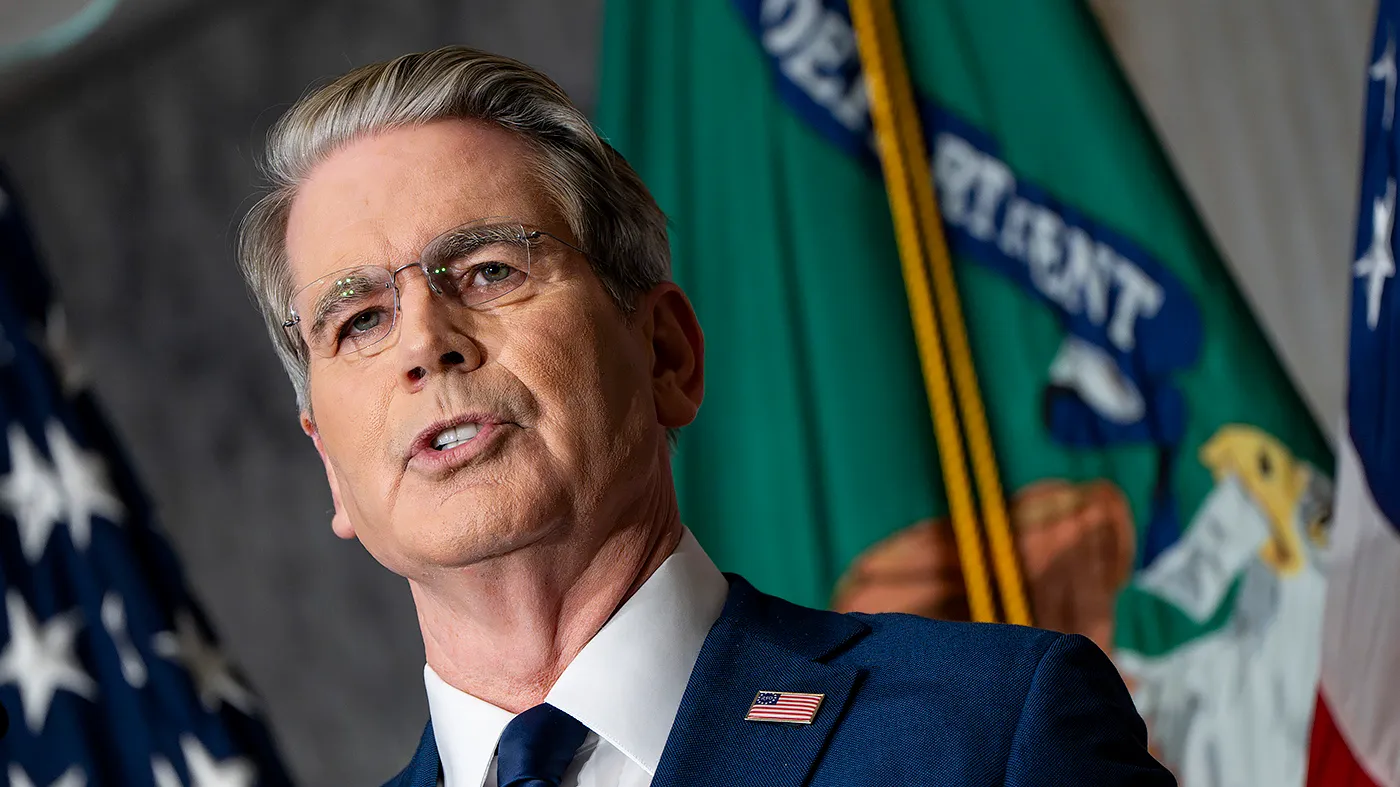
Treasury Secretary Scott Bessent said Sunday he plans on encouraging leaders from Group of 20 (G20) countries to re-examine their trading relationships with China .
“The world cannot have a China with a $1.2 trillion trade surplus,” Bessent told Reuters . “In China, the economy is quite weak, and they are trying to export their way out of it, and they need to rebalance their economy.”
The Treasury secretary added, “The rest of the world is going to have to examine their terms of trade with China.”
Bessent will host G20 finance ministers on Monday and Tuesday in Asheville, N.C. The U.S. will host the G20 leaders’ summit this December in Miami.
The Treasury Department last week ramped up its economic campaign against Iran, a move that will impact China — the Islamic Republic’s largest trading partner.
Chinese Foreign Ministry spokesperson Lin Jian said last week the sanctions “will only further intensify tensions” between the U.S. and Iran.
President Trump has also sought to rebalance the country’s trade with dozens of foreign partners, including China, through his tariffs.
Last year, the U.S. trade deficit with China dipped to its lowest point since 2005, to less than $202.7 billion, according to data from the U.S. Census Bureau.
Through June, American businesses imported roughly $129.3 billion worth of goods and exported $55.4 billion, per the Census Bureau.
After the Supreme Court in February struck down Trump’s emergency tariffs on goods from China and an array of foreign countries, the administration launched probes into unfair trading practices by foreign nations.
That included an investigation into forced labor tactics in China, undertaken pursuant to Section 301 of the Trade Act of 1974.
U.S. Trade Representative Jamieson Greer later determined that China and 53 other countries were not imposing nor effectively enforcing a ban on the importation of goods produced with forced labor. As a result, the administration finalized 12.5 percent levies on Chinese goods in July .
The president is also considering imposing a new 7.5 percent tariff on Chinese goods in retaliation for the Asian nation flooding the global market with underpriced products, The Associated Press reported last week.
Trump is scheduled to meet with Chinese President Xi Jinping at the White House late next month . Bessent said the two countries could lift tariffs on certain imported goods during the summit.
“I think that there probably are $30 billion of non-strategic, non-critical goods on each side that we could take the tariffs off,” he told Reuters.
Topics in this story
Gathered from external sources. Rights to this text belong to whoever originally published it.