AI Selloff Drags Emerging Stocks Down, Weighs on Currency Gauge
The deepening selloff in shares linked to artificial intelligence dragged emerging-market equities down for their worst day since July.
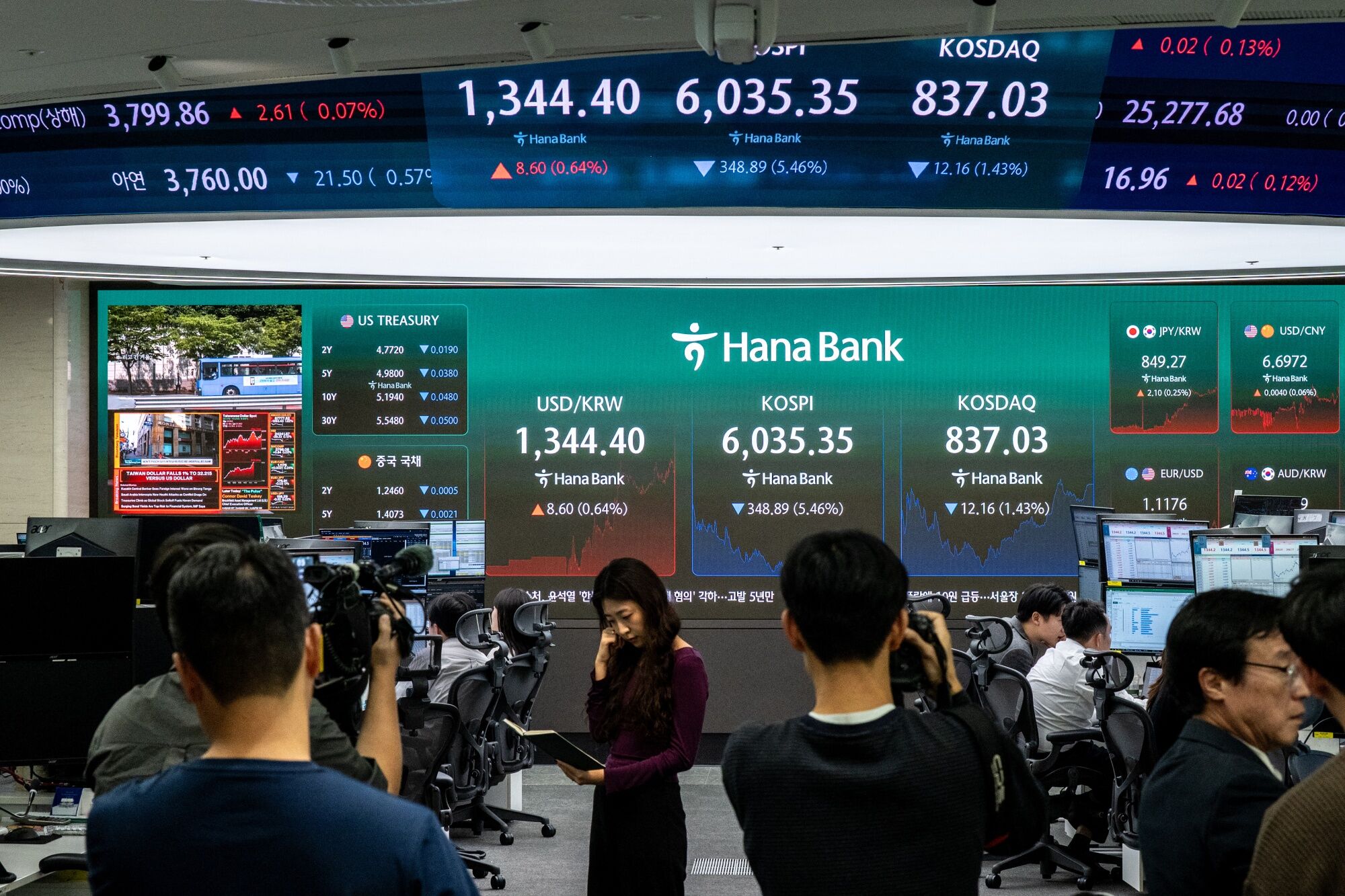
(Bloomberg) -- The deepening selloff in shares linked to artificial intelligence dragged emerging-market equities down for their worst day since July.
MSCI's benchmark for developing-nations stocks fell 2.2% on Tuesday, weighed down by Asia, which makes up the bulk of the gauge. South Korea's Kospi Index posted its longest losing streak in 21 months, with chipmaker SK Hynix Inc. leading losses. Samsung Electronics Co. also fell.
Chinese memory chipmaker CXMT said it achieved a breakthrough in chip technology that rivals like Samsung had pursued for years. A poll by Bank of America Corp. showed global investors chasing the AI-powered equity rally are the most exposed to technology shares since the rebound from the Covid pandemic six years ago.
"The debate has shifted from simply how much AI spending will grow, to who will capture the benefits and whether valuations justify expected returns," according to Felipe Barragán, senior research strategist at Pepperstone.
The rout also fueled losses in the South Korean won and the Taiwanese dollar, which pushed the index tracking emerging-market currencies down 0.3%. The gauge was little changed after Fed Bank of New York President John Williams said he still sees one more hike as appropriate this year, but currently doesn't believe it will be necessary to lift rates again in 2027.
Currencies in Latin America were also broadly lower as trading restarted in most markets in the region after Monday holidays. The Chilean peso slid about 0.5%, while the Brazilian real declined 0.8%.
Meanwhile, the Indian rupee outperformed peers and extended this week's gains to 1.5% after the central bank widened curbs on certain types of derivative transactions to support the currency.
In credit markets, Senegal's year-end target to finalize a deal with the International Monetary Fund and reach a debt-relief agreement with bondholders is already facing delays.
With assistance from Karl Lester M. Yap and Jiyeun Lee.
Topics in this story
Gathered from external sources. Rights to this text belong to whoever originally published it.