How does inflation compare to past midterm cycles?
Welcome to The Hill’s Business & Economy newsletter {beacon} Business & Economy Business & Economy The Big Story How does inflation compare to past midterm cycles? Kitchen table issues typically drive voters’ decisions at the ballot box, and this year will be no different. © Greg Nash Americans have been grappling with inflation running…
How does inflation compare to past midterm cycles?
Kitchen table issues typically drive voters’ decisions at the ballot box, and this year will be no different.
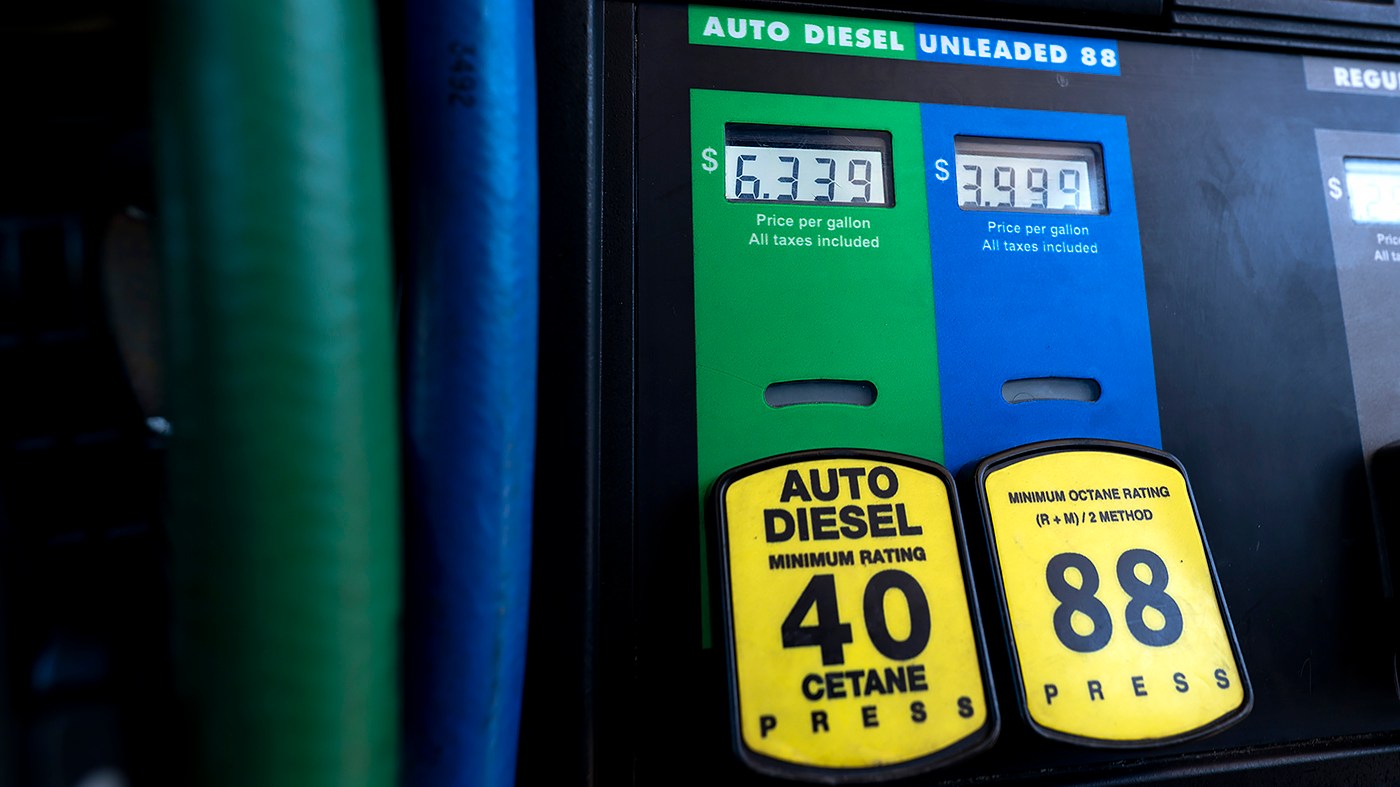
Americans have been grappling with inflation running above 2 percent for five and a half years, with prices in September up 3.7 percent annually , according to the consumer price index (CPI).
Annual inflation is up from February, when it was 2.4 percent . On the last day of that month, the U.S. and Israel launched the war with Iran — which sparked a surge in fuel prices in the U.S., impacting drivers, truckers and farmers.
Here is where inflation stood in October of the last five midterm years, based on the CPI, and what happened in those elections.
Inflation surged in 2021 and 2022 , as an explosion in COVID-19 era government spending, supply chain shortages and the Russian invasion of Ukraine sent prices soaring.
Democrats went into the 2022 midterms in control of both chambers of Congress. That November, Republicans narrowly snatched control of the House, but Democrats held on to control of the Senate.
Inflation in October 2018 was exactly where it stood in January 2017, the month of President Trump’s first inauguration . Annual inflation sunk to 1.6 percent in June 2017 but rose above 2 percent by the end of that year.
In the first midterms after Trump’s 2016 presidential victory, Democrats won a net of 41 House seats to flip control of the lower chamber. The GOP, meanwhile, expanded its majority in the Senate by two seats.
Inflation remained in the 1 percent to 2.1 percent range from May 2012 through December 2016, as the economy recovered from the aftereffects of the 2008 financial crisis.
In 2014, Republicans expanded their majority in the House by 13 seats and flipped the Senate. That gave the GOP control of Congress as former President Obama wound down his second term.
Inflation dipped below into negative territory in 2009, as the economy slowly regained its footing after the crash.
While Democrats held on to the Senate despite Republicans gaining six seats that year, the GOP rode Tea Party momentum to a whopping 63-seat gain en route to House control.
Inflation dipped from 2.1 percent in September 2006 to 1.3 percent that October.
But voters still punished Republicans and former President George W. Bush , as Democrats campaigned against the unpopular Iraq War to flip both chambers of Congress.
Welcome to The Hill’s Business & Economy newsletter , I’m Max Rego — covering the intersection of Wall Street and Pennsylvania Avenue.
Did someone forward you this newsletter? Subscribe here.
Key business and economic news with implications this week and beyond:
OpenAI’s ChatGPT gave users Election Day and voting information more than 16 million times this midterm cycle through a partnership with the nonprofit Democracy Works.
Binance said Tuesday that a $6.3 billion hack of the world’s largest cryptocurrency exchange was the result of a “multi-stage campaign,” including a malicious software download and a fake job interview.
Outgoing Florida Gov. Ron DeSantis (R) said the Iran war is a “big, big drag” on Republican candidates this midterm cycle.
Artificial intelligence firms are on high alert for Election Day, taking a page out of social media firms’ playbook to manage the flurry of information expected online in the coming days.
Upcoming news themes and events we’re watching:
Today is Election Day . Polls in all 50 states and the District of Columbia close tonight, with specific times depending on the location.
Branch out with more stories from the day:
Democrats will get new power to probe Trump’s DC projects if they win back the House
If Democrats take back one or both chambers, they’ll unlock a sweeping new set of investigative powers they could unleash on President Trump’s D.C. projects.
Business and economic news we’ve flagged from other outlets:
Anthropic was founded to answer to humanity. Soon, it will also answer to Wall Street ( CNN )
Prediction markets face US midterms test as election bets soar ( Reuters )
Corporate America prepares for post-midterm Democratic backlash ( Semafor )
North Carolina, Massachusetts, New York report technical issues at polls
Multiple states including Massachusetts, North Carolina, Pennsylvania and New York have reported technical issues at the polls on Election Day.
The House battlefield in Tuesday’s midterms comprises dozens of races in largely purple districts where majorities are won and lost. Read more
Check out The Hill’s Business page for the latest coverage.
400 N Capitol Street NW Suite 650, Washington, DC 20001
If you believe this has been sent to you in error, please safely unsubscribe .
Topics in this story
Gathered from external sources. Rights to this text belong to whoever originally published it.