A Tale of Two Dollars: Why Dollar General Outpaced Dollar Tree This Quarter
As continuous inflation squeezes household budgets, the discount retail sector should potentially benefit across the board, with middle- and lower-income con...
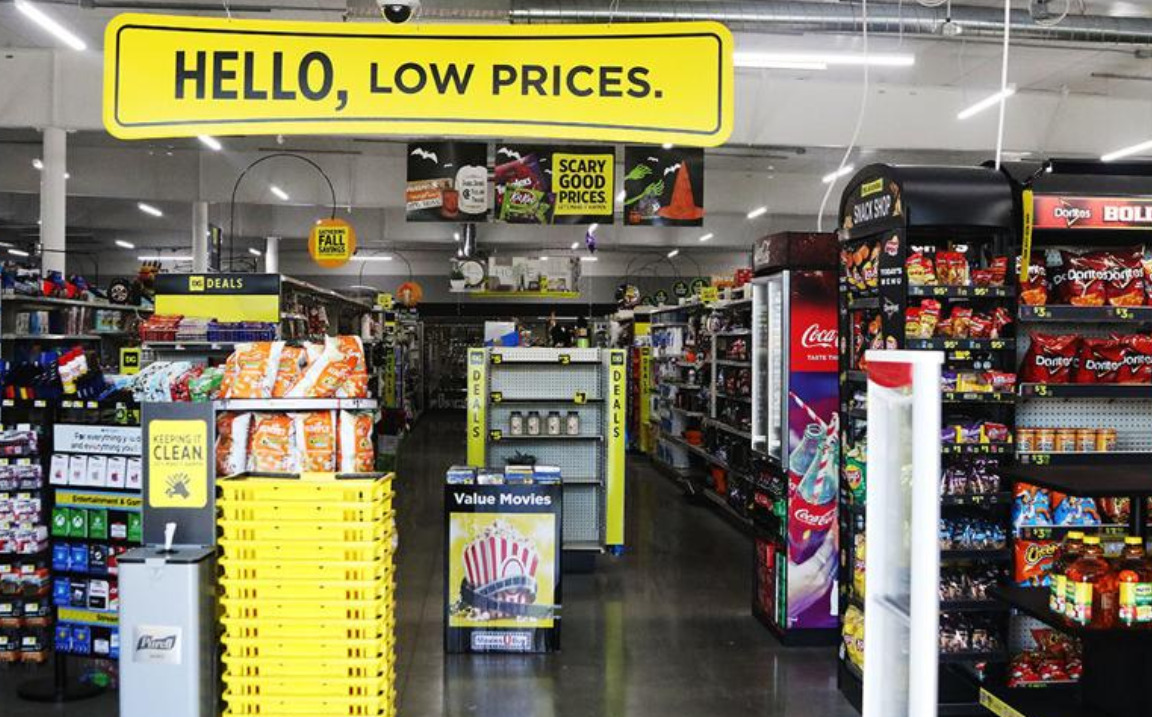
As continuous inflation squeezes household budgets, the discount retail sector should potentially benefit across the board, with middle- and lower-income consumers looking for value driving foot traffic into value chains. That's roughly what happened in the second-quarter reports from Dollar General Corporation (NYSE: DG ) and Dollar Tree, Inc. (NASDAQ: DLTR ), both of which were released in late August. Both retailers outperformed expectations, though only one company's stock was rewarded for this.
Dollar General Corporation (NYSE:DG) reported second-quarter results on August 27 that exceeded expectations, and shares rose more than 6.5% in premarket trading. Net sales increased 5.2% to $11.29 billion, surpassing the $11.2 billion market forecast, while diluted EPS came in at $2.48, up 33.3% year-over-year and well above the $2.01 analysts projected. Same-store sales increased 3.5%, driven by a 2.0% increase in customer traffic and a 1.5% increase in average transaction amount, marking the fifth consecutive quarter of traffic growth and the sixth consecutive quarter of positive comps across all four merchandise categories.
Management improved their full-year estimate across the board: same-store sales growth is now expected to be 2.5% to 2.9%, up from 2.2% to 2.7% before, while full-year EPS guidance increased to $7.80-$8.00 from $7.20-$7.45. Tariff refunds, a lower LIFO provision, and improved shrink and damages helped increase the gross margin by 127 basis points to 32.6%. CEO Todd Vasos also pointed to continued market share gains from higher-income households switching away from traditional grocers, a trend the company has cited for several quarters, with management announcing plans to resume up to $700 million in share buybacks in the latter half of the year, backed by remodels under its Project Renovate and Project Elevate initiatives.
Dollar Tree's results, released on August 27, indicate a more complicated situation. Diluted EPS came in at $2.70, including a $1.31-per-share net benefit related to tariff refunds, while revenue increased 7% year-over-year to $4.89 billion. Comparable store sales up 3.7%, driven by a 3.3% gain in average ticket and a 0.4% increase in traffic, a return to positive traffic that occurred a full quarter ahead of management's internal plan.
However, the headline figure includes an important caveat: $1.31 of the $2.70 in EPS came from the net impact of $383 million in IEEPA tariff refunds after related reinvestment spending, duties, and taxes. Strip that out, and underlying EPS was $1.39, above the $1.00-$1.15 range management had guided to in May and about 23% above the $1.13 consensus estimate.
Topics in this story
Gathered from external sources. Rights to this text belong to whoever originally published it.