US Grab of Venezuela Denies China Oil, Billions in Debt Payments
Venezuela is becoming a major testing ground for Donald Trump's hemispheric ambitions, emerging as another potential source of rivalry with China.
(Bloomberg) -- Venezuela is becoming a major testing ground for Donald Trump's hemispheric ambitions, emerging as another potential source of rivalry with China.
After announcing plans to seize control of more than 65 billion barrels of Venezuela's crude reserves, the Trump administration made clear that was only the start. Ahead is a campaign to squeeze out China and powers like Russia that the White House has called "malign foreign actors," in a push to ensure "American dominance in our hemisphere is never again questioned."
Next on Washington's agenda is an attempt to restructure Venezuela's debt, which includes billions of dollars owed to China. US Energy Secretary Chris Wright on Wednesday declared Beijing won't have any claims to revenue from Venezuela's oil production — severing Caracas' primary channel for making repayments.
The US has cast its campaign as the latest chapter of the "Donroe Doctrine," codified in the White House's National Security Strategy and which asserts a unilateral US right to deny rival powers the ability to own or control "strategically vital assets." Under that banner, taking Venezuelan oil fields from Chinese companies is a geopolitical opportunity to align them with Washington's interests.
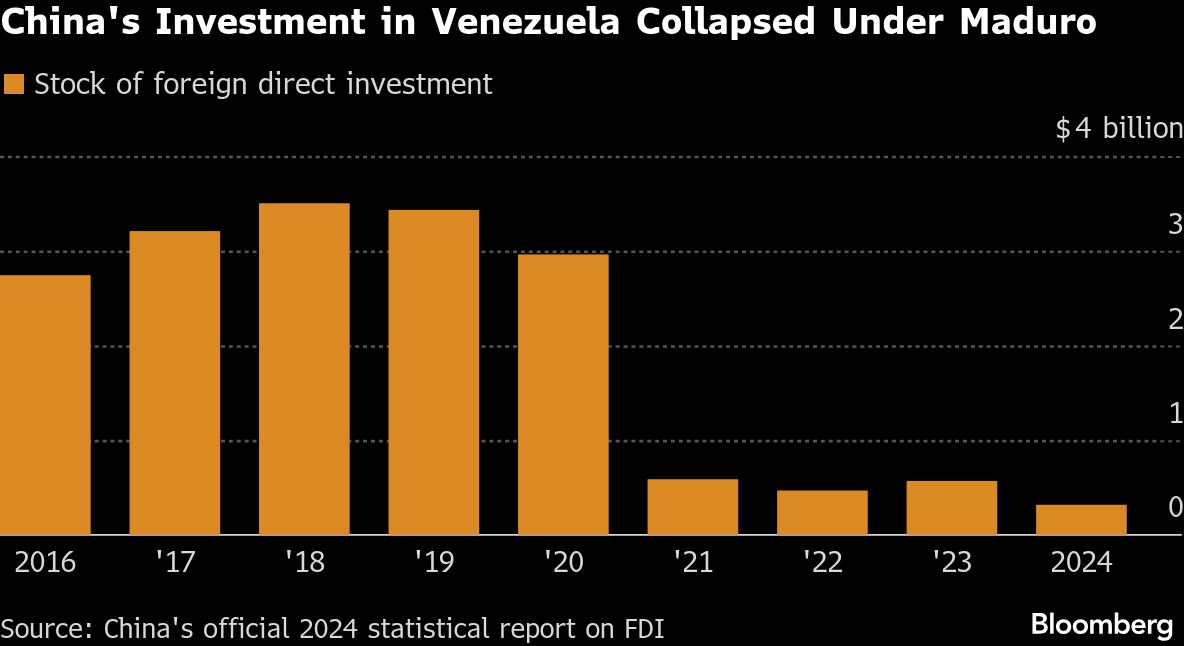
China has reduced its exposure to Venezuela in recent years and Trump would likely struggle to replicate the scale of his actions in Venezuela elsewhere, meaning for Beijing the implications are more political than economic.
A more interventionist US risks bumping up against China's broader interests in South America, said Christian Reyes, a Beijing-based political risk analyst originally from Ecuador.
"Venezuela isn't necessarily a precedent for direct expropriation, but it may be a precedent for coerced exclusion," he said. "The United States is increasingly willing to define parts of the region's economic relationship with China as a security concern and to leverage considerable influence to enforce those red lines."
China's reaction so far has been relatively muted. Foreign Ministry spokesperson Guo Jiakun said China's legitimate rights and interests in Venezuela "must be protected," at a regular briefing in Beijing on Thursday. "Cooperation between China and Venezuela is protected by international law," he added. "It doesn't concern any third party."
Topics in this story
Gathered from external sources. Rights to this text belong to whoever originally published it.