Labor Day gas has never been this expensive. Trump is scrambling for answers
Americans will likely face the highest Labor Day gas prices on record this holiday weekend. It’s another blow to a “drill, baby, drill” president who campaigned on affordable energy.
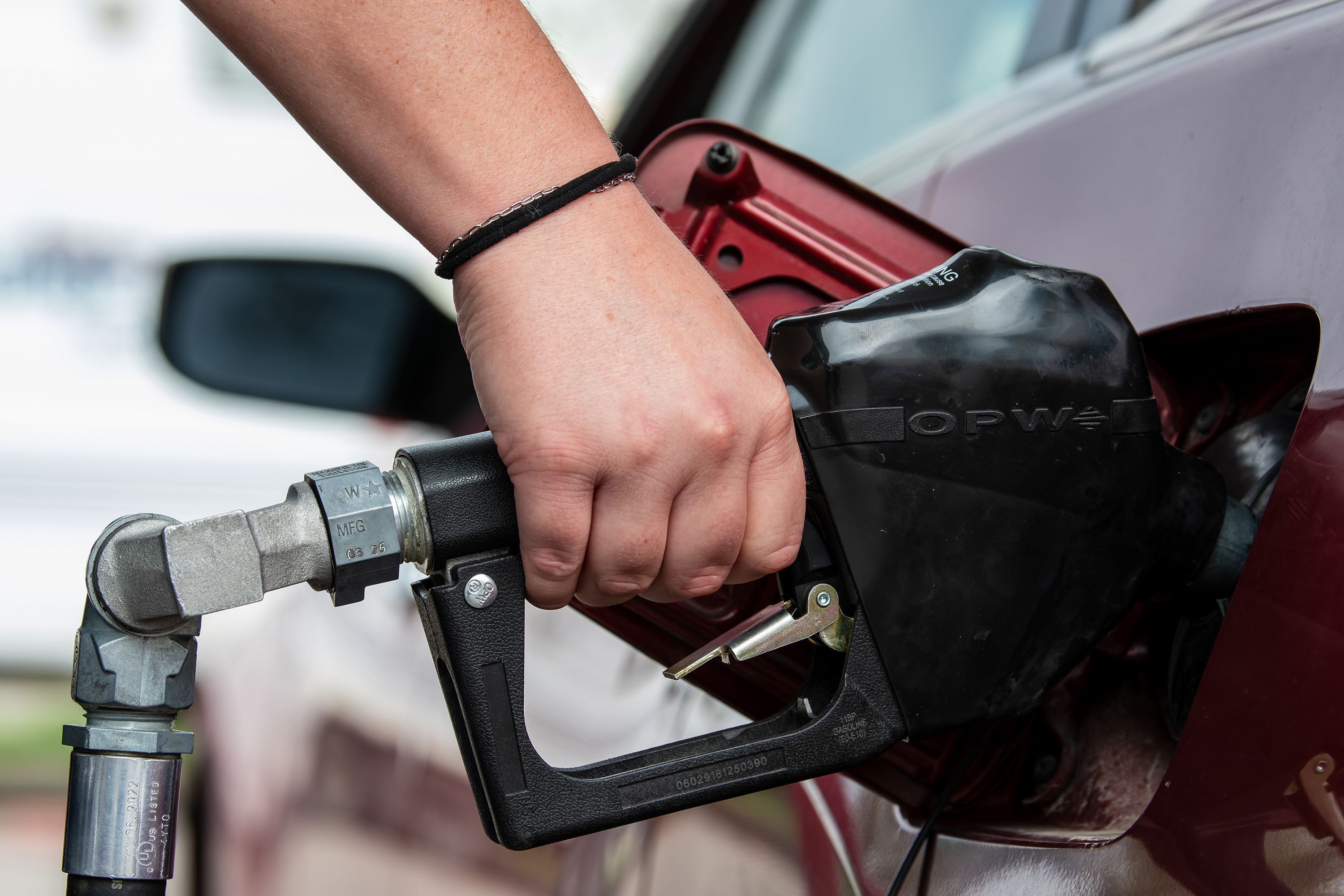
Americans will likely face the highest Labor Day gas prices on record this holiday weekend. It’s another blow to a “drill, baby, drill” president who campaigned on affordable energy. President Donald Trump’s war with Iran isn’t just driving up prices at the gas pump. Diesel, a crucial fuel at the heart of the modern economy, hit an all-time high Friday. Jet fuel costs have skyrocketed, too, leading airlines to hike airfare and baggage fees while cutting less profitable flights. The energy sticker shock has put pressure on the Trump administration to come up with answers ahead of the midterms. Trump took a flurry of actions this week: He called refining executives to the White House, unveiled a blockbuster oil deal with Venezuela and launched new air strikes in response to Iranian attacks on tankers trying to navigate the Strait of Hormuz. Before this, Trump already eased regulations to speed up deliveries of fuel and presided over a historic release of emergency oil from the Strategic Petroleum Reserve, which hasn’t been this empty since the early 1980s. But the reality is that there are no easy solutions to this problem vexing the White House. US refiners are running as hard as they can to make up for the loss of refining capacity elsewhere. Venezuela is unlikely to deliver a major increase in oil supplies for many years – perhaps not until 2035. “Realistically, the administration will have a tough time doing much about gasoline in the short term. They’ve already pulled most of the levers they can,” said Dan Pickering, founder and chief investment officer at Pickering Energy Partners. Vice President JD Vance on Thursday declined to set a timeline for when gas prices will drop back to pre-war levels. “I’m not going to make a promise about when it’s going to return to $3,” Vance said during a White House press briefing. ‘The pain is adding up’ After an early summer lull, gas prices climbed again and hit a three-month high Thursday. GasBuddy expects gas prices will be at least $4.03 a gallon on Labor Day, compared with just $3.16 last Labor Day. This would surpass the prior record of $3.83 for the holiday set in 2012. “The pain is adding up. Unlike in 2022 (when Russia invaded Ukraine), the pressure has lingered for six months,” said Patrick De Haan, GasBuddy’s head of petroleum analysis. “And there’s no schedule for when there will be relief.” Of course, gas prices don’t seem nearly as high when accounting for inflation and wage gains. When adjusted for inflation, the record high for Labor Day gas prices was in 2008 at $5.63 a gallon using 2026 dollars. On that basis, Labor Day gas prices were higher in 2005 after Hurricane Katrina and in 2022 compared to today. Still, drivers don’t adjust for inflation when filling up their tanks. The price of gas has a large psychological impact on consumers and is often viewed as a barometer for the cost of living. Americans are paying an extra $97 billion since the Iran war started due to higher gas and diesel prices, according to Brown University’s Climate Solutions Lab. That amounts to more than $740 per US household. Venezuela: A gamechanger, but when? After the Trump administration invaded Venezuela, Trump officials hailed the US-Venezuela oil deal signed this week as a gamechanger. Researchers caution, however, that it will take many years – perhaps even decades – for Venezuela to meaningfully add to the world’s oil supply. After the deal was unveiled, Rystad Energy projected Venezuela’s oil production will roughly double to 2.3 million barrels – but not until 2035. And returning Venezuela to its 1990s heyday output above 3 million barrels per day? That’s not expected until 2050. “For a long-term deal to work, the reality is that it requires stability and security, both are in short supply,” Jan Stuart, global energy economist at Piper Sandler, wrote in a note to clients this week. Even if Venezuela delivers more oil to the global market in the near term, three of the four global refining hubs are in crisis. “Just because Venezuelan oil is cheap, doesn’t mean you can just dump crude into your car, truck or plane. It’s got to be refined and that is the biggest chokehold in the economy,” GasBuddy’s De Haan said. A White House official said Trump and refining executives this week discussed a desire to ramp up US refining capacity. But that’s easier said than done. Refineries are very complex facilities that take years, and perhaps tens of billions of dollars, to build – and that’s a tough sell. “Returns are great right now for refineries. These companies are minting money,” said Pickering. “But I don’t know that anyone will trust this is the way it will be for the next five or six years.” ‘The silent workhorse’ The refining shortage helps explain why diesel, unlike crude oil, has surged to to all-time highs. The average price of diesel increased to $5.8500 Friday, surpassing the prior record of $5.816 set in June 2022 after Russia invaded Ukraine earlier that year, according to AAA. Diesel has skyrocketed more than 60% so far this year, leaving it on track for the biggest annual increase on record, according to a CNN review of AAA data that begins in 2000. Gasoline gets more of the attention because of the consumer impact, but diesel powers trucks, tractors, trains, boats and construction vehicles at the heart of the modern economy. “Gasoline is the sexy, visible fuel. Diesel is the silent workhorse. It’s the lifeblood of the economy,” said Bob McNally, founder and president of Rapidan Energy Group. Meanwhile, the war continues to drag on, like with this week’s flurry of attacks. “We don’t think Iran is out of options,” Rapidan’s McNally said. “Tehran is not ready to roll over and capitulate. This is likely to get worse before it gets better.” CNN’s Chris Isidore contributed to this report.
Topics in this story
Gathered from external sources. Rights to this text belong to whoever originally published it.