Consumers across party lines are fed up with high gas prices
High gas prices and years of persistently elevated inflation continue to drag down US consumer sentiment to historically low levels, new data showed Friday.
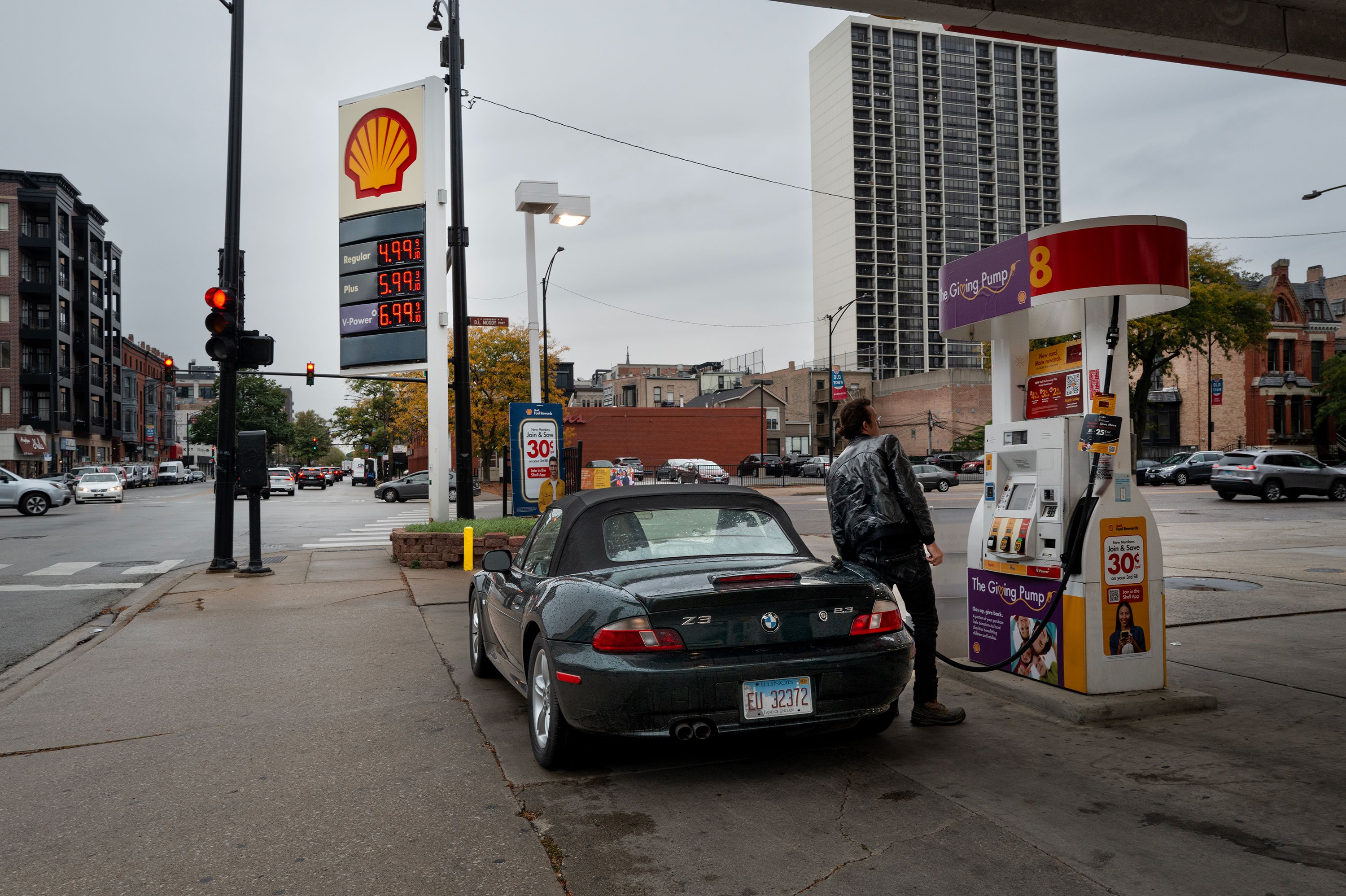
A gallon of unleaded gas costs 40% more today than it did last year. A gallon of diesel is running nearly 75% higher. As for Americans’ optimism about the economy 11 days before the midterm elections? That’s nearly running on empty. High gas prices and years of persistently elevated inflation continue to drag down US consumer sentiment to historically low levels, new data showed Friday. The University of Michigan’s October consumer sentiment index was the second lowest on records that go back to 1978. The record low of 44.8 was set in May, a month that saw the national average for a gallon of unleaded hit a four-year high of $4.56 because of oil supply shocks stemming from the war with Iran. Five months later, those weekly trips to the gas pumps aren’t feeling much better: And there’s not a lot of optimism those numbers will improve. “There is broad consensus that escalation is coming and that it could diminish flows of oil out of the Middle East,” said Gregory Brew, senior analyst at consulting firm Eurasia Group. “Right now, a lot of oil is coming out, but it’s expensive,” he added. “There is very little confidence that supply is sustainable.” Price pain across party lines Consumer sentiment is now 10% below where it was last year and 15% down from February, before the war began, according to Friday’s report. Consumers are frustrated that their purchasing power has declined while prices continue to climb higher, said Joanne Hsu, University of Michigan economist and director of the Surveys of Consumers. In October, 56% of surveyed consumers spontaneously mentioned that higher prices are negatively affecting their personal finances, Hsu said. That share has increased for four months in a row. “These increases are seen across the political spectrum, with Republicans exhibiting the largest proportional rise,” Hsu said in a statement. “Similarly, consumers with no stock holdings or very small holdings also report increased concerns over the effect of high prices on their personal finances over the course of the year.” Consumers with the largest stock holdings, however, reported little change in the burden of high prices since February, she added. And the recent hike in interest rates is starting to play a factor as well, she said, noting homebuying conditions “plummeted,” with 85% of surveyed consumers saying it’s a bad time to buy a home. The latest survey also showed that consumers expect inflation to remain high in the months and years to come. Year-ahead inflation expectations ticked up to 4.7% from 4.6% and moving even further from the 3.4% seen in February before the US-Israeli strikes on Iran. Long-run expectations moved higher to 3.5% from 3.4%. Consumers’ expectations about the pace of future price hikes are closely tracked by the Federal Reserve. If people believe that prices will only continue to rise, they might spend more now and demand higher wages, and businesses might raise prices to accommodate higher demand and wages – thus raising inflation. The Fed’s rate-setting committee meets next week, with a decision expected Wednesday at 2 p.m. ET., its last move on borrowing costs before the midterms.
Topics in this story
Gathered from external sources. Rights to this text belong to whoever originally published it.