In GTA 6 You’re Not Just Wanted, You’re Hunted
The wanted system in GTA 6 has been totally overhauled to give the police even more tools to hunt you, as well as new methods for players to evade being busted.
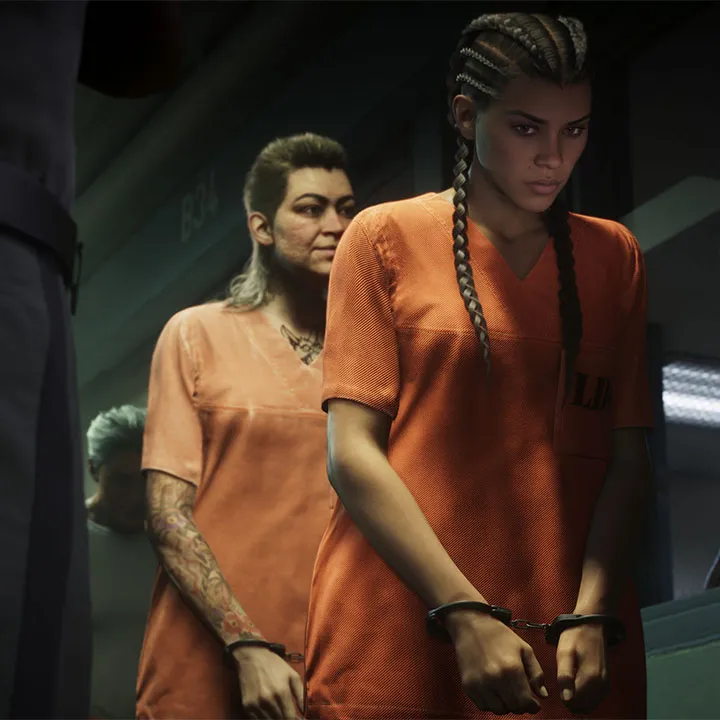
There are dozens of mechanics, ideas, and quirks that are considered core to Grand Theft Auto’s identity. The wide variety of vehicles; a cast of oddball criminals; radio stations playing hit after hit after hit; toilet humour packed into every billboard, product brand, and TV ad. But there’s one thing arguably more foundational than all those ideas, something that the entire concept of GTA was built upon: car chases. Since the very beginning, the series’ central hook has been committing crimes and getting away with it. The “getting away” part has, more often than not, been literal – tearing through the city streets as cops do everything in their power to put you behind bars.
Those chases, inspired by cinema’s best getaways, are manifested by Grand Theft Auto’s wanted system – an escalating state of emergency that sees the city’s police force deploy fiercer and fiercer measures as the severity of your crimes increases. Originally represented by four pixelated police heads, it evolved into the trademark star system – a single star causing just a couple of beat cops to investigate a pedestrian collision or break up an unarmed assault, and racking up a full six stars summoning a battalion of militarised law enforcement with the goal of putting an end to your unstoppable murder spree. The system has changed and advanced with each new game, and that evolution does not stop with GTA 6.
After Grand Theft Auto 5 dropped the number of stars by one to both streamline the system and match the five in the title, GTA 6 sees the full six stars returned to the HUD for the first time since 2009’s Chinatown Wars. While it’s still much too early to know the nuanced criteria for triggering each of those stars, during our hands-off demo at Rockstar’s Edinburgh HQ we saw that there are several new factors involved beyond the individual wanted levels themselves.
“We have this heat system,” explains Rob Nelson, co-studio head at Rockstar North. “[The police] know what I look like and what I’m wearing. [If I find] a pair of glasses – I'll put on this and this baseball hat. But they still know what I'm wearing, so I would need to go to a clothing store or call my personal vehicle, which has changes of outfits in the trunk.”
“Changing your hair will change your appearance,” he continues, “but the police will still know what you are wearing, so not great if I am standing out in the open.”
Sitting beneath the row of wanted stars on the HUD are a series of new red icons, each of which identifies the level of information the police have on you. So far, we’ve seen three:
A silhouette of a person indicates that the police have a physical description of you.
A clothes hanger denotes that the police know what clothing you are wearing.
A camera means that the police have witnessed you on CCTV security footage.
It appears the system goes even deeper than that, though. “You can see with these little icons on-screen, the police know what we're driving,” says Nelson, “so we should just jump out the vehicle. They also know we're a couple. You could split up, and that will also help lower the police’s perception of you.”
These factors add new layers to GTA’s foundational wanted system. Naturally, they influence the way the police force’s artificial intelligence is able to track you through the state of Leonida.
“The Wanted system in GTA 6 requires that someone witness the crime, or an alarm needs to be set off for it to be reported to the law,” Nelson explains. “Our dispatch is extremely specific in what it knows.”
The more information the police have, the easier it will be for them to find you. While our hands-off didn’t delve into the depths of how it all works, the possibilities are already dizzying – could Rockstar have gone as far as to create a system where cops can build a profile of you via Snapmatic and Lifeinvader photos posted by Vice City’s social media-obsessed public? GTA 5’s pedestrians were able to call 911 from their phones to report crimes that went unwitnessed by law enforcement, so it seems realistic to believe that the wider population will impact the wanted system in additional ways this time around.
Regardless of how deep the individual mechanics go, it’s clear that Rockstar intends to ratchet up the tension of each and every getaway. You’re not just wanted by the cops, but actively hunted by a force that can utilize multiple information sources and data points to narrow their search. It’s a natural evolution of Red Dead Redemption 2’s bounty system brought into the modern world — and the similarities don’t stop there. As in Red Dead, you become wanted in specific regions of the world, and returning to that area will see you face the consequences.
“I can check my map – this is a hot area,” says Nelson. “The cops are there. If I go back, they'll be hanging around for a little while. If I hover back over that area of the map, I [can see I] still have one star in that area.”
“We could wait for it to die down, change our outfits, or split Jason and Lucia up. There’s a lot of smart things we could do.”
The most fascinating aspect of this system is not the apparent enhancements to police AI routines, though, but the promise of new gameplay opportunities. GTA’s police have long been able to recognise your vehicle, and a quick stop-off at the local Pay ‘n’ Spray was a fast-pass to douse the heat. But now that applies to our human protagonists – in our demo we watched as Jason purchased a baseball cap from a convenience store, which when worn removed the “description” icon from the HUD. But it didn’t remove the “clothing” icon, which indicates the system’s depth – Jason was still wearing the same clothes and could still be identified by them, but the addition of the hat meant the cops’ physical description of him was now out of date. If only gifting Arthur Morgan mutton chops granted him the same peace of mind.
GTA 6 Reveal: 15 New Screenshots, Including 1 Exclusive on IGN
It’s exciting to consider all the possibilities we will have to bamboozle the cops: stopping by the salon after a bank robbery to turn a gorgeous hairstyle into a buzz cut. Pre-packing a complete change of clothes in your getaway vehicle. Getting a full-body tattoo after an assassination. Okay, maybe that last one is a bit much, but you get the idea. In GTA 6, reducing your wanted level is about far more than evading the cops – you can actively put them off your scent.
The other thing to think about is that these new layers mean how you commit a crime is just as important as the crime itself. If being seen, either by people or CCTV cameras, arms your hunters with information, then denying them those descriptions potentially lends you a significant advantage. This makes stealth a valuable weapon – during the demo we saw Jason crouch to keep out of a police officer’s line of sight, and so we can reasonably assume that we’ll also be able to avoid the gaze of security guards, civilians, and cameras. Tactically eliminating CCTV networks or patrolling wardens before they can call in reports feel like scenarios that GTA’s new wanted system could encourage, especially considering there’s a new type of wanted level that would fit into this scenario. A “hollow” wanted star is displayed when the police are responding to a crime but have no information who the perpetrator is. Denying the flow of incriminating data to ensure you only trigger hollow wanted stars is an idea to build an entire gameplay approach around – I’m excited to see just how deep it all goes.
For the more aggressive players out there, we’ve also seen that the mask system is back, and it’ll presumably build upon the rules established in Red Dead Redemption 2 – cover your face, protect your identity, give the cops a bad day at the office. While a quieter, more tactical approach could perhaps allow you to slip in and out without raising the alarm, this is still GTA, and so there’s going to be some mayhem. A mask – be it a securely-tied bandana or a rubbery famous face – will at least limit the details your victims can report to your hunters.
But even in moments of direct confrontation, there are ways to ensure the subsequent manhunt goes in your favour. ”There is more nuance to how you can get away with things,” says Nelson. A good example of this is the way NPCs respond to threats – in our demo we watched as Jason aimed a gun at a group of aggressors, but held short of pulling the trigger. Rather than just default to engaging in violence, the enemies thought better of it and fled the scene. While the crime was reported and the police were on their way, they weren't responding to a violent crime, and so the wanted level stayed low.
“I aimed the gun at the person, which defused the situation and they all ran,” Nelson explains. “If you commit a crime and run, get into trouble and move on before the cops get there, and you don’t start shooting people, don't start escalating, you’re generally going to be fine.”
The changes made to the wanted system tie into the larger picture of Rockstar’s intent for Grand Theft Auto 6 – this is the GTA you know and love, but each part of it has additional layers that allow you to drill deeper than you ever have before. We already know that the series’ core formula, established way back in its first 3D open world, has stood the test of time not just because it's a bulletproof idea, but because each new game has carefully reinforced it. By enhancing the wanted system, as well as interlinked mechanics like car jacking, Rockstar is making sure that in GTA 6, the things you’ve done a million times before have the potential to feel brand new.
Matt Purslow is IGN's Executive Editor of Features.
Topics in this story
Gathered from external sources. Rights to this text belong to whoever originally published it.