Whalefall Review: Austin Abrams Carries This Terrifying and Immensely Claustrophobic Movie About a Guy Trying to Escape the Belly of a Whale
Whalefall, directed by Brian Duffield based on Daniel Kraus' novel of the same name, pulls the viewer into an unthinkably frightening, incredibly gross, and panic-inducing environment that plays on primal human fears about being predator or prey. As visceral as the film is, Whalefall is ultimately a moving story about grief and the gulf that can develop between fathers and sons. An exceptional Austin Abrams anchors the whole endeavor with grueling dedication.
The new survival thriller Whalefall checked a number of my phobia boxes going into it, so my critical response to the film was always going to be measured by how much it triggered these primal fears of mine. And (I guess?) I’m happy to report the film did that too damn well at times.
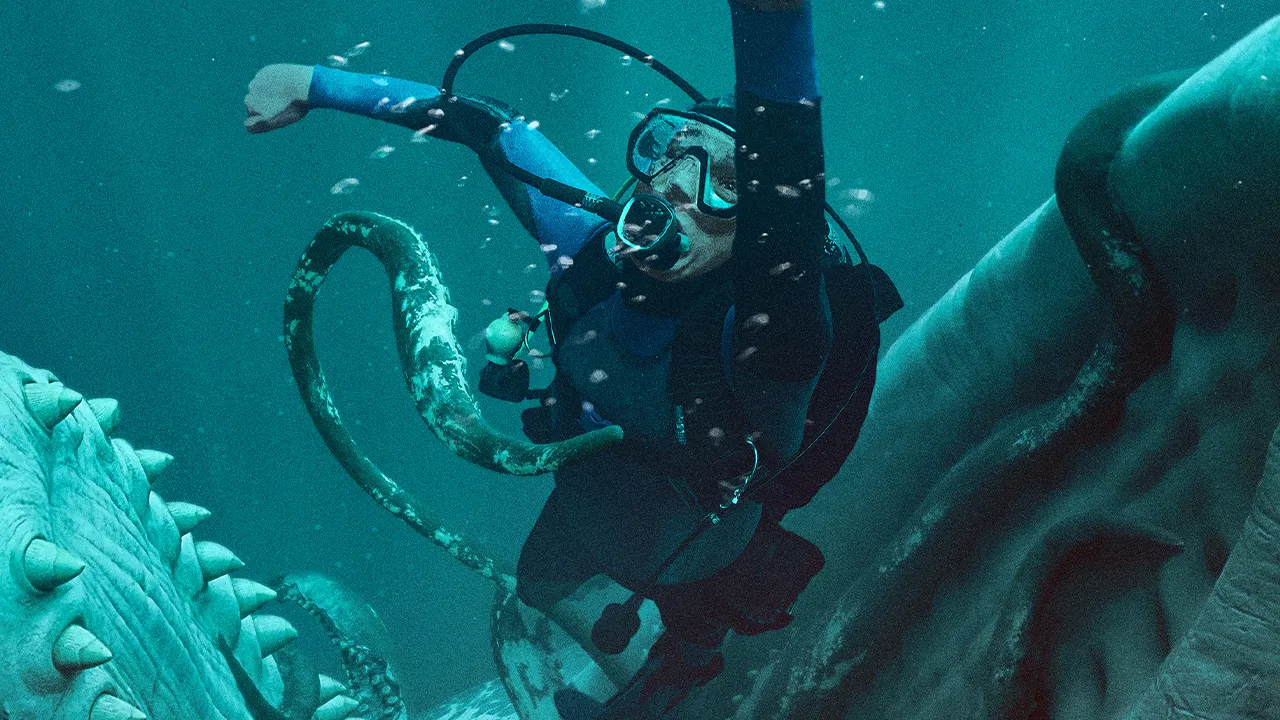
Assuredly directed by Brian Duffield and based on Daniel Kraus’ bestselling book of the same name , Whalefall has a simple yet incredibly compelling premise: Young scuba diver Jay Gardiner ( Resident Evil’s Austin Abrams ) is swallowed by a massive sperm whale and must figure out how to escape from the belly of the beast while his oxygen supply lasts. He has an hour of air left so his struggle basically plays out in real time on screen.
What happens inside the whale’s belly is brought to life with gruesome, excruciating and claustrophobic intensity by Duffield and his team of artists. (They built a whale’s belly, for Jonah’s sake!) There are so many awful ways for Jay to die in there before his oxygen runs out, whether it’s being crushed by the whale’s innards, or succumbing to all the gnarly injuries he sustains from the toxic environment or the other sea creatures the whale has swallowed that are also still alive.
Deeper emotional layers are added to the story by revealing why Jay was diving that day to begin with: He was searching for the remains of his dad, Mitt (Josh Brolin), a well-liked diver and whale-watching boat skipper in their Central California community. Suffering from mesothelioma, which robbed him of being able to dive and connect with nature, Mitt drowned himself in the opening scene rather than continue suffering.
Jay refused to see his father in his final days after a volatile falling out. Jay’s grief and guilt over his strained relationship with his gruff, tough love dad has consumed him and, as he desperately tries to find a way to escape the whale, flashbacks to the lessons Mitt drilled into him about diving and nature prove vital to his slim chances of trying to MacGyver his way out of this ordeal.
Whalefall is a visceral, grueling survival tale, but what distinguishes it in the man vs. nature/beast genre is that it’s really about a father and son who don’t know how to communicate with each other. It’s not until he’s near death himself that Jay starts to truly understand his father and find peace. This makes the third act pretty trippy as the symbolism of the whale and its role in nature is intertwined with Jay’s oxygen-deprived thoughts about Mitt. This device inches right up to the edge of absurdity but thankfully never plummets into it. It’s weird but sincere and moving enough to work.
As Mitt, Brolin is basically Robert Duvall in The Great Santini crossed with Quint from Jaws. He looks like a Hell’s Angel, talks like a New Age hippie, and is basically able to get along with everyone but his son. In the hands of a less skilled actor, the character could have been unbearable but Brolin makes him flesh and blood and, ultimately, vulnerable.
But this is Austin Abrams’ movie, full stop, and he carries it with amazing commitment.
As Jay, Abrams is put through the wringer physically, with the camera in his face the whole hour he’s trapped inside the whale, so there’s never a moment he can't deliver an authentic reaction to what’s unfolding. He conveys so much emotion with just his eyes and some grunts (he wears a scuba mouthpiece for nearly the entire time inside the whale so he can’t speak clearly). In the scenes on land, Abrams keeps the college-aged Jay from seeming like a petulant brat, his emotional avoidance more a survival mechanism than something less mature.
Topics in this story
Gathered from external sources. Rights to this text belong to whoever originally published it.