30 Open World Masterpieces You Need to Play - IGN30
From web-swinging superheroes and sword-swinging monster hunters to bank heists and shrine raids, these are the 30 open world masterpieces you need to play.
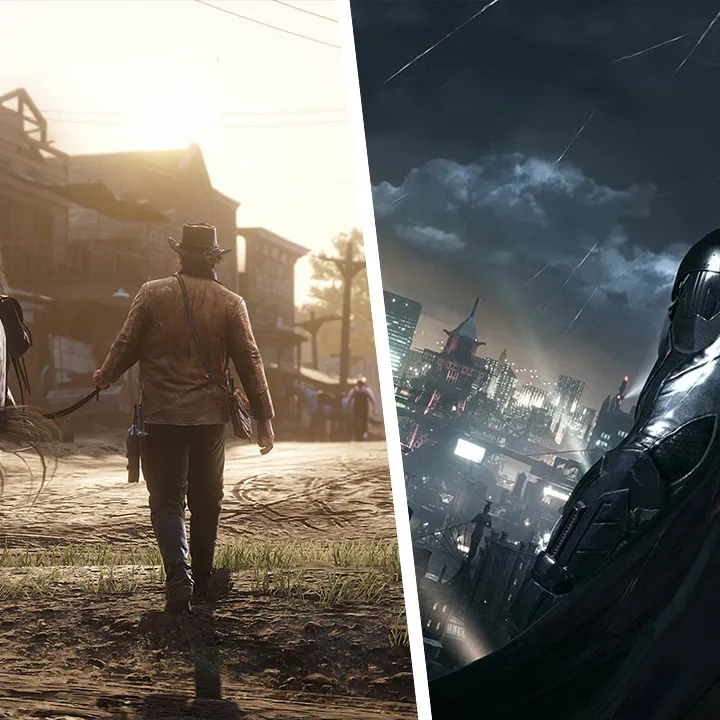
Open-world games. Arguably, no other genre has defined modern gaming more than the expansive, experimental, and exciting places this one has taken us to. Over the past 30 years, we’ve gone from grey, empty streets begging to be torn up in a blocky muscle car to glorious, colourful fantasy lands full of adventure and opportunity. But what are the games that have stood out the most, pushed the form forward, and ultimately led to GTA 6’s moment?
As part of IGN 30, I’m going to try to answer that question by walking you through five distinct flavours of open-world game before deciding on the greatest of them all. From web-swinging superheroes and sword-swinging monster hunters to bank heists and shrine raids, here are the 30 masterpieces of open-world game design.
GTA. There are really no other three letters to start with than Rockstar’s industry-changing creation, especially when it comes to city settings. What started as a top-down, level-based car-stealing simulation in 1997 was fun, but limited by the confines of the technology of the time. It would take another four years, and the creation of the PS2 and its DVD storage capabilities, for the series to truly become a phenomenon as it stepped into the 3D era with Grand Theft Auto 3.
Claude’s violent journey through the streets of Liberty City set the template for the next 10 years of copycats — a few of which we’ll look at in a short while. It took a setting first sketched out in the original GTA and combined it with the sort of cinematic storytelling emerging on PlayStation at the time to perform alchemy. The result was a first of its kind and a new gold standard for open worlds.
They may feel like monotonous, clunky missions to play through now, but there’s no denying the permanent blueprint GTA 3 created for expansive city games to come, nor the way it managed to successfully weave a story that evoked prestige television into an open world structure — casting multiple Sopranos alumni in the process. It took the pulsating urban driving experience pioneered in Driver, a 1999 open-zone car chaser, and presented it in a wholly new way. Sure, there were open-world city games before GTA 3, but not many others on this list would exist without it.
After what seems an impossibly short development timeline to comprehend these days, just one year later, those grey, rainy streets would be swapped out for the neon blues and pastel pinks of GTA: Vice City . Again, a huge step up for the series.
Tommy Vercetti’s tale offered virtual time travel back to an exaggerated 1980s that felt like a love fist to the face back in 2002. GTA 3’s city served its street-level crime story perfectly, but Vice City created a sandbox you wanted to spend time in, regardless of plot momentum. Yes, its hit-filled radio stations played a huge part in creating its vibe, but so did its numerous landmarks and distinct gang-controlled regions that made this slice of fictional Florida feel alive.
It felt more like existing in a world, and gave you the opportunity to soak in its culture in a way GTA 3 never did — managing to still provide a propulsive story, but allowing more time to breathe in between missions. In this respect, it borrowed aspects from an even earlier open-world game: Shenmue.
Yu Suzuki’s Dreamcast tale of a martial artist seeking revenge for the murder of his father in 1980s Japan immersed the player in an unparalleled level of world-building for the time — dressing its environments in impressive detail, while also encouraging you to simply exist in its world. Its influence can be seen in many an open-world game, including GTA, but perhaps most prominently in the Yakuza series, where minigames, colourful characters and eccentric slices of life can be found on every one of its Japanese and, now, Hawaiian street corners.
A day/night system and variable weather conditions went a long way to making 1986 Yokosuka feel like a lived-in city, setting a new precedent when it came to existing in a persistent world full of NPCs living their life around you. Shenmue’s raft of minigames, including throwing darts and forklift racing, undoubtedly influenced GTA, and ultimately could be considered to blame for Niko Bellic’s cousin barraging your phone with bowling invitations a decade later in an HD universe Liberty City.
But back in 2002, after Vice City, GTA would take two years to return with the just-as-brilliant San Andreas. Naturally, other studios were already trying to piggyback on its success in the meantime. Chief among those were The Getaway and Mafia. Both had their moments, but felt like first drafts for something more promising. Unfortunately, the former London-set Guy Ritchie pastiche would fail to live up to that promise when the disappointing The Getaway: Black Monday arrived in 2004. But developer 2K Czech took its time with the Mafia series, and it proved worth the wait when a sequel released in 2010 .
Undoubtedly influenced by GTA 4, which dropped two years prior and tackled the notion of the American dream through the eyes of an immigrant, this post-war tale of organised crime told its story brilliantly, even if it was lacking as a sandbox compared to Rockstar’s creations. Heavily inspired by Francis Ford Coppola’s The Godfather films, it was another step forward in open-world cities as digital tourism, recreating 1940s and 50s USA to great detail, placing the time period and societal tensions front of mind. It’s a mindset that was also taken into its sequel, Mafia 3, a flawed but fascinating examination of Vietnam War-era America, race, and political corruption.
This was a more serious era for the open-world game, with Rockstar even letting sincerity seep into GTA 4 and Red Dead Redemption. Both games were tales of one man’s tussle with a changing America and a haunted past. And though each still packed its fair share of silliness, they took swipes at capitalism through satire too. That maturity was offset by the Saints Row series, which took the bullshit by the horns and ran with it, peaking in 2011 with Saints Row: The Third .
A city where the sight of a weaponised dildo was as commonplace as a flying motorcycle, Steelport turned its gaze away from real-world issues and instead treated its world like an amusement park. An exercise in audacity, it pushed the GTA formula to comic extremes and feels more like a relic of a different era than perhaps any other open-world game on this list. In some ways, the series shared more with the superhero genre — of which we’ll delve more into very soon — than it did with Rockstar’s open worlds by the time Saints Row: The Third came about, giving players the freedom to live out their wildest power trip fantasies, no matter how puerile they may have been.
More considered contenders for the GTA-alike crown would come and go. Sleeping Dogs garnered a cult following thanks to its Hong Kong-set martial arts action. The original Watch Dogs may have failed to live up to high expectations, but its San Francisco-set sequel hit the mark thanks to its vibrant Bay Area setting and eclectic cast of hackers. But, in reality, they were just warming the seat for the king. It may come as no surprise that my pick for the best city-based open-world game is GTA 5, still unbeaten some 13 years later.
Others may look toward GTA for ideas, but Rockstar has only ever built on its own. Combining facets from each entry in the series — the cinematic foundations of GTA 3, the vibe established in Vice City, the Californian glow of San Andreas, and the cutting satire of 4 — the developer crafted the best entry in the series to date. But most importantly of all, it brought new ideas to the table that we hadn’t seen before.
The decision to expand from one to three playable protagonists opened up a new toybox for Rockstar to play with. It allowed for that switch in perspective to dynamically change how GTA could approach its mission design, with highlights being the multi-stage heists that were born out of GTA 4’s iconic Three Leaf Clover bank robbery. These expansive, blockbuster acts of criminality took advantage of every corner of GTA 5’s map, with underground infiltrations leading to street-bound car chases, before the skies were taken to in thrilling helicopter escapes. It’s the best example yet of turning an open-world city into a playground, without sacrificing cinematic aspirations.
Speaking of cinema, no genre quite dominated the box office like comic book movies did in the 2010s, so it was only natural that Marvel and DC characters would soon be getting video games of an equal standard. Attempts had previously been made in this department during the first mini-superhero movie boom of the early 2000s, which saw successful tie-ins like Treyarch’s Spider-Man 2. But that would just be a taster for what Insomniac would achieve with its own interpretation of the city swinger.
If GTA 5 opened the door to sprawling missions in an open city setting, then Marvel’s Spider-Man kicked it down. Insomniac’s 2018 original and its sequels magically managed to transfer PlayStation’s cinematic storytelling into an open-world Manhattan, chaining together sequences worthy of the best Uncharted had to offer. Take the Lizard chase in Marvel’s Spider-Man 2, for example — a 100mph pursuit that takes half of the city with it as traffic and cranes are elegantly navigated and chunks of building rain down on the streets below. It’s a level of blockbuster sheen and detail rarely seen in open-world games, but rather one that has come to represent Sony exclusives over the past decade.
Insomniac has forebears to thank for setting a template, of course. The aforementioned Spider-Man 2 on the PS2 was a nostalgia-soaked example of translating the big screen onto a smaller one, and Hulk: Ultimate Destruction showed what superpowered carnage could look like in such a large sandbox. But these Spidey games owe most to Rocksteady’s Arkham trilogy — not only in their world design, but in their pioneering combo-based melee combat. Now seems about as good a time as any to reveal that my pick for the best superhero open-world game is Batman: Arkham Knight.
Yes, not Arkham City, Arkham Origins, or Arkham Asylum (which isn’t even an open world), but Arkham Knight, the final chapter of Rocksteady’s Bruce Wayne story. The 2015 masterpiece possesses one of the most dynamic open worlds we’ve seen to this day, and no, a handful of slightly tedious tank battle sequences aren’t going to get in the way of that. The Batmobile itself acted as the key to unlocking an open-world Gotham. Although first shown off in Arkham City, the vehicle truly came to life when boosting, skidding, and ejecting in Knight. It turned the city-gone-to-hell into Batman’s domain, and made you feel like the master of it. That’s until it unexpectedly turned on you.
Arkham Knight was home to one of the most consistently surprising open worlds in a video game. Nowhere was this more apparent than in its random, and still jump-scare-inducing, Manbat appearances. We all remember the first time we grappled onto an art deco rooftop ledge and out of nowhere, BAM: a crumpled, anthropomorphised bat screamed out of the screen. It’s moments like this that made this version of Gotham come fully to life, and no matter how powerful the cowl made you feel, this reactive edge ensured you never felt fully in control of your environment. Throw in the best, most personally affecting story of the trilogy, which is replete with wide-scale Scarecrow antics that change the complexion of the city throughout, and you’ve got the best open-world superhero game of them all.
But perhaps psychological dilemmas, familial trauma, and fanged jumpscares aren’t what you’re looking for? Well, good news, because there are plenty of flavours of superhero open world out there, and none as snackable as the slapstick humour-fuelled Lego Marvel Super Heroes. Traveller’s Tales crafted an original story that brought together characters from every corner of the Marvel universe. Many of its core missions may well have been bound to linear levels, but it was in Lego Marvel Super Heroes’ open Manhattan, packed full of iconic locations, that it truly came to life. Zooming around as Iron Man or Thor felt far better than controlling any plastic-jointed minifig has the right to, especially when breaking through the clouds and landing on a SHIELD helicarrier, or zipping across the water to check on the inmates of the adjacent Ryker’s Island.
It wasn’t just a sightseeing tour for Marvel fans at a time when the MCU was approaching its peak, but a world of opportunity, too. Yes, time trial and puzzle-based challenges could be found on streets and rooftops, but Lego Marvel Super Heroes was also one of the best collectathon games ever made. The Arkham trilogy’s Riddler trophies paved the way, but no one pulled it off quite like Traveller’s Tales did here — with dozens of cheat-unlocking golden bricks, vehicles ripped out of comic book pages, and a roster of over 180 superheroes and villains to find. It’s just good, innocent fun, and to this day, it remains one of the best superhero, Lego, and open-world games available. Also, while we’re here, shout out to the criminally underrated GTA-alike Lego City Undercover — Chase McCain, you’ll always have a place in my heart.
But Marvel and DC aren’t the exclusive owners of superhero open worlds. Prior to Lego Marvel Super Heroes, Prototype and Infamous landed within weeks of each other in 2009. The former had its fans, becoming something of a cult classic over the years, thanks to its squelchy, shapeshifting-powered combat in yet another open-world Manhattan. But it would be Sucker Punch’s creation that would ultimately stand taller. Both Infamous and its sequel harnessed the superhero-or-villain fantasy, thanks to a morality meter at the centre of its systems and story. Would Cole MacGrath use his newfound electrical powers to become the saviour or destroyer of the fictional Empire City (technically not quite Manhattan, yet again) and the New Orleans-inspired New Marais? The choice was yours.
It was a series that headlined a moment in time when original superhero characters were being born in games. Before Spider-Man, Insomniac created the Xbox exclusive Sunset Overdrive, which followed along a similar path, placing open-world traversal at the core of the experience. Sunset Overdrive inarguably played a huge role in setting the stage for Spider-Man’s fluid web-swinging. This kind of non-licensed superhero game is something that has faded into the background ever since, but I hope we’re about to see it return in some form thanks to Control: Resonant, which looks to combine urban antihero aspirations with interesting RPG mechanics.
RPGs and open worlds go hand-in-hand. In a genre designed around inhabiting a character completely, what better way to do that than to wander an uncharted land and discover your place in it with every footstep, conversation, or trigger pull? And when it comes to open-world RPGs, there’s no other place to start than with Bethesda.
The Elder Scrolls 3: Morrowind and The Elder Scrolls 4: Oblivion may have been important steps, especially in transitioning a traditionally PC experience onto console, but nothing compares to the phenomenon that was Skyrim.
By removing class systems, it took away a fundamental fantasy RPG hook and replaced it with pure freedom, allowing the open world of northern Tamriel to be experienced as any combination of character traits of your choosing — even if we did all pick stealth archer. The “you can go to that mountain” cliché may be well-worn now, but without the sheer joy of discovery that Skyrim brought to the table in 2011, we likely wouldn’t have the likes of The Legend of Zelda: Breath of the Wild that would follow later that decade. It’s easy to take it for granted now, but 15 years ago, fantasy open-worlds that combined this level of scale and detail just didn’t exist, and Skyrim can largely be thanked for ushering in a whole new age.
Not happy with just pioneering in fantasy realms, Bethesda reinvigorated a dormant sci-fi series, by taking its open-world Elder Scrolls learnings and translating them within the Fallout universe. Fallout 3 was the first step on this journey, which transformed what was formerly an isometric turn-based RPG into a third-person open-world shooter. But just two years later, in 2010, Obsidian Entertainment stepped in to helm Fallout: New Vegas, delivering an intricate faction and quest system that elevated the story you chose to tell.
The post-apocalyptic Mojave Desert managed to find an excellent balance between the new Bethesda style of open-world Fallout and the more traditional Interplay RPG systems, and somehow, it all came together. Crafting an intricate power struggle between several factions where each quest, both crucial and optional, affects your standing in its world is hard enough to do in a linear level-based game. But trying to achieve that in a vast open world where you can do things in a myriad different orders, well, that’s ambitious to say the least. But, Obsidian somehow pulled it off, and with a smile, too. New Vegas’ world is packed full of memorable moments and characters that you interact with in the way you want, and whichever way you choose, you’ll have an incredible time. It’s something of a miracle that it all works, really.
But some RPG stories are told to you, not by you, and few have done it with the structural flair that Nier: Automata brought to narrative design. Yoko Taro’s masterpiece ushered you through its 120th Earth as it shifted in appearance throughout the three playthroughs recommended in order to see one of its true endings. Its open world may not have been the most cutting-edge in terms of discovery or how it was navigated — that was saved for the wonderful chip-based skills system, phenomenal score, and perspective-shifting action. But that open world did lay the foundations perfectly for its tale, which was all about Earth, what happened to it, and what it could become.
There was a charm and melancholy that permeated every corner, as pockets of civilisation were reclaimed by lost robots, and sidequests helped fill in the gaps left behind by their creators. Nier: Automata’s open world may not have been the star of the show, and was, in fact, as linear as sandboxes come, but you’ll struggle to find a story better told within one.
Stories don’t have to be the propulsive force that powers open worlds, however. Because that canvas of opportunity can produce moments like no other genre, whether part of a main quest or simply while wandering through a world. That’s a sensation the long-awaited sequel to cult action-RPG Dragon’s Dogma captured perfectly when it released in 2024. Its main plotline was arguably the weakest card in its hand, but that doesn’t take away from what made Dragon’s Dogma 2 special.
The nations of Vermund and Battahl are a haven to all sorts of mythological monsters, and when they entered your vicinity, Dragon’s Dogma 2 truly came to life. The first time a Griffon the size of a house swept down onto you was a moment you were unlikely to forget, but it was the way these creatures interacted with the world’s geography that made the game truly impressive. For example, knocking down an ogre could make it fall across a ravine before grasping onto the cliff edge on the other side with its hairy fingers, inadvertently creating a bridge for you to walk across. It’s these unexpected moments that made Dragon’s Dogma 2’s world design so special, as if it had all been designed around these beasts, with your journey through it a path you’d have to carve for yourself via any method of your choosing. It was an open world RPG that lived by its own rules, and felt alive like few others do.
Purely existing in a world and finding your place within it is a huge part of the open-world RPG, and arguably, no one has done it with as much style as CD Projekt Red did in Cyberpunk 2077. Yes, its rocky launch has been exhaustively chronicled at this point, but there’s no denying there was nothing quite like walking the streets of Night City and inserting yourself in its many intertwining stories, from seedy, neon-lit bars to the pristine sheen of its looming corporate tower blocks. The level of immersion was near-unparalleled, with its slick architecture playing host to stories that affected the world on a global and individual scale.
It’s those individuals that made Night City such an engaging whole, though, as its cast of characters were so successfully rooted in the tales it was trying to tell. Protagonist V’s partner in crime, Jackie Wells, served as the personal connection that tied you to each event from the prologue onward, as seemingly everyone you met from that point on, from shady Arasaka executives to digital projections of martyred rock stars, tried to lead you astray.
But it’s not just in the writing or the performances that these people felt so alive, but in the way the Polish studio presented them on a technical level. As you sidled up next to them, their faces and all-important body language filled the frame. The decision to lock the player into a first-person perspective was a stroke of genius, taking a leaf out of Bethesda’s playbook as pioneers in the genre, to bring Night City as close to us as possible. Through these interactions, the stories and missions of Cyberpunk 2077 came alive and made it somewhere you just couldn’t tear yourself away from, no matter how corrupting an influence it may have had. CD Projekt Red is the master of weaving engaging questlines through open worlds, as they already proved with their previous masterpiece.
It’s a near-impossible task to describe what makes The Witcher 3 so special in such a short space of time as I have here, but let’s focus on its approach to questing. Few games, if any, allow you to have such a widespread impact on their world as the Witcher series. Yes, Bethesda’s Fallout and Elder Scrolls games pride themselves on faction and choice-based mission design, with New Vegas being the shining beacon of this still. But it simply doesn’t compare to what CD Projekt Red has done in translating Andrzej Sapkowski’s novels to video games. If you played The Witcher 2, you’ll know that practically the whole second half of the game was drastically different depending on one decision you might make. But it is in its sequel, where the series truly broke through to console players, that the Polish studio stamped its mark as the master of its craft.
Whether it be the now-iconic Shakespearean tale of the Bloody Baron, or the twisting serial killer hunt in Carnal Sins, the genius of the questlines was that we all came away with our own story to tell. The breadth of them was astonishing, with each delicately written line laced with meaning, with right or wrong often obfuscated by lies and treachery. In many ways, The Witcher 3 was a fantasy detective game, where you were tasked with bringing peace to a continent that willfully resisted it. The secret was, you never could. A happy ending was a rarity in this world, and seeking one was almost foolhardy. But those moments where you thought you’d finally worked out how to achieve just one were what made The Witcher 3’s incredibly rewarding quest design so special.
In Geralt, The Witcher gave you a fairly rigid character to play as in RPG terms. The genius of it was that while he remained neutral, you could shape every character’s story that met him with the press of a button. No other open-world RPG gave you freedom to shape its story to quite the same extent, which is why it's still best-in-class. The impact of The Witcher 3 really can’t be understated, going as far as to influence one of the most successful game series of all time in its pivot from stealth-parkour playgrounds to fully-fledged, quest-based, action-RPGs.
Picking just one Assassin’s Creed game to represent a name that has become synonymous with the open-world genre over the past couple of decades is not easy. Assassin’s Creed 2 changed the trajectory of Ubisoft’s stealth series with its take on Renaissance Italy. Black Flag granted players the pirate fantasy in 2013. But the most recent entries of AC have been outright RPGs, beginning with Egyptian-set Origins, before hitting a high point with the Greece-based Odyssey.
Its vast Aegean Sea, full of islands of all sizes, represented both the best and worst of Ubisoft's open world design — the promise of endless opportunities swamped in map icons so numerous they could damage the eyes. But what made Odyssey so engaging was how Kassandra’s (or Alexio’s, but let’s face it, Kassandra’s) revenge story was presented in this huge world. While you weren’t able to affect political or societal change as in The Witcher 3, Odyssey was clearly influenced by the framework CD Projekt Red laid out, while focusing much more on a personal tale.
Its real masterstroke was the Cult of Kosmos, a secret, powerful cabal which hid across all of this fictionalised Ancient Greece. Completing quests would guide you in the right direction, inevitably leading you to them. But then there was that unique thrill of stumbling across a target in the wild that has rarely been replicated since. As rare and exciting as something like Middle-earth: Shadow of Mordor’s much-lauded Nemesis System, this freeform discovery was what set this new era of Assassin’s Creed apart, encouraging you to explore its world organically as well as walk to mission markers.
‘Ubisoft open world’ has almost become shorthand for a copy-and-paste approach to design, but the publisher was once a pioneer in the space. The daring Far Cry 2 split opinion, but remains an interesting experiment in survival and player agency in an open world. But Far Cry 3 hit on a formula that forced it into the mainstream, as its exotic map, hideout clearing, and wildlife encounters set the template for the future of the series.
The unpredictable nature of those animals, from hungry bull sharks to terrifying Komodo dragons, made the Rook Islands a genuinely dangerous place to exist in, and Ubisoft made it all the more immersive through its first-person perspective. But as much as trepidation was encouraged in Far Cry 3, experimental fun was also at its forefront, as enemy bases under the control of its magnetic villain, Vaas, served as satisfying combat playgrounds to infiltrate in your own style. The vibrant world and its ecology felt like a real step forward in 2012, with its gripping story supported by notes and collectibles found littered around that encouraged education through exploration.
Where map markers flooded Ubisoft open worlds, FromSoftware headed in the other direction with Elden Ring. An action-RPG that sent you out into its lands with little, but hid an incredible amount of depth for those that explored it thoroughly, Hidetaka Miyazaki’s evolution of the Soulslike into an open world somehow surpassed all expectations upon its release in 2022.
The Lands Between could be navigated via its golden path — literally, as gilded, glowing embers flittered towards the next main objective — but it's on the less beaten trails that Elden Ring truly came to life. Wander in one direction, and you’d be faced with a labyrinth of catacombs home to deadly traps. Ride your horse in the other direction, and you may have been ambushed by a swooping dragon that fancied a bite of you for lunch — not before barbecuing you first, of course. Or, maybe you’d just be strolling through a forest, home to oversized bears, and stumble across an ancient elevator that took you down miles beneath the surface to a once-bustling city.
And the thing was, as much as it was fun to play all of this, there was a reward waiting at the end of all of these expeditions, too. Whether it was lore that expanded upon the gods and kings that once ruled this world, or a new weapon to take them down with, it was always worth discovering. A masterpiece in every sense of the world, it may surprise you to hear that Elden Ring hasn’t taken the top spot in this category. That’s still to come.
Crimson Desert doesn’t want to hold your hand either, setting you free in a huge continent full of opportunity. In a game that has changed enormously in the few short months since its release, and if I’m honest, will likely have drastically changed again in the time between me writing this and the video being edited, one thing has remained consistent: the dynamism of its systems-led open world.
Pearl Abyss’ land of opportunity is gorgeous and bustling with life. Pywel’s towns and castles hide secrets to find, as do its vast forests, snowy peaks, and islands among the clouds, with puzzles, gear, and surprises lurking within each. The sheer vastness of it makes it a near-impossible task to discover in its entirety. Whether you’ve spent two or 200 hours flying like a crow or piloting a battle robot, it's difficult to go too long without finding something new. A red-tinged sandbox in the truest sense of the word, Crimson Desert is an open world for those who prioritise a feeling of exploring a foreign land over everything. Plus, you can now play pinball in it. I won’t even try to guess what’s next.
Similarly ambitious — to a fault at launch — was No Man’s Sky. Promised as a universe with infinite possibilities upon release in 2016, 10 years later, Hello Games’ ode to the wonder of science fiction has fulfilled that ambition, and more. The beauty of each of its 18 quintillion (yes, that’s a real number) procedurally generated planets is that whatever your flavour of fun, there’ll be something on the surface of a celestial body to satiate that hunger.
Fancy yourself a budding ecologist? Scan, name, and catalogue all of the unique flora and fauna you find. Want to be the lead in a space opera? Follow its storyline to engage in star-backdropped dogfights and unlock the mystery of some 2001: A Space Odyssey-esque monoliths. In an age of AI, the complex equations concocted by Hello Games are a triumph of human design, lending a randomness to each place you visit, but all formed from a pool of handcrafted, original permutations. It’s game development at its smartest, engaging that desire to discover and explore that sits inside all of us and projecting it onto an open-universe map that’s too large to fully comprehend.
If you’re yet to jump in, or haven’t done so since those rocky early days, then I can’t recommend it enough. There’s a whole star system of possibilities waiting for you.
Sometimes it isn’t about exploring a huge, uncharted expanse, but about mastering a contained sandbox and the toolset you’re given to play with. Ground Zeroes laid the groundwork, but The Phantom Pain is where each of Hideo Kojima’s playful stealth-action systems thrived. Ever since the original’s Shadow Moses base, Metal Gear Solid has been about commanding a space, learning each of its intricacies, and mastering the enemies that live within it. So naturally, that philosophy held true as the series evolved into its largest form yet, with the dual open worlds of Afghanistan and Angola in MGS 5.
Built with gameplay front of mind, perhaps to the detriment of its much-reported unfinished story, The Phantom Pain offered as malleable a combat system as stealth enjoyers could wish to wield. Equipment ranged from classics now nearly three decades old, such as cardboard boxes and tranquiliser guns, to altogether more outrageous items, like the now-synonymous enemy-lifting Fulton balloons and a customisable prosthetic arm that could pack a punch of your choosing. MGS 5 offered a near-unparalleled level of freedom in the way you approached your objectives, and a level of experimentation that supported replayability.
Through a refinement of the stealth camo system and numerous other trademark tools, Metal Gear Solid 5 took memorable pieces of what made its predecessors groundbreaking, and then implemented them in smart ways — creating a gameplay loop that was close to irresistible. It looked back at what always made MGS great, but never once forgot to try and push the series’ design forward, begging for its intricate systems to be explored fully and conquered completely.
But when it comes to systems-led sandboxes, it’s impossible not to mention the modern incarnations of Hyrule. For years and years, an open-world Zelda felt like a dream for fans of Link’s adventures, and it’s safe to say it was worth the wait when Breath of the Wild arrived in 2017. It’s tricky to find something that hasn’t been said about this game already, but that shouldn’t stop us from remembering just how impactful it was when it first arrived. Masterfully designed, BOTW taught you its revolutionary ropes in the confines of its Great Plateau before unleashing you onto the majesty of its open-world Hyrule.
It wasn’t just in this varied, colourful world that BOTW shined, but in the malleability of its playful systems. It took ideas from the likes of Ubisoft's Far Cry and Assassin’s Creed in its approach to unlocking towers across its vast land, but did away with map markers. Aside from those you place down manually, that is. Exploration was not only encouraged but necessary in order to defeat the looming Calamity Ganon at the map’s centre.
Nintendo took the array of possibilities found inside of The Phantom Pain’s toolkit and reinvented them for a Zelda world. Then it refused to overexplain, instead urging you to discover what weapon, power, and elemental combinations would result in its next hit of magic. And magic was exactly what it was, as it turned grounded physics systems into something altogether more exciting. It introduced new ways to traverse its world and take down its threats with a regularity only hindered by your imagination.
A rare example of true evolution inside of a genre, very few games have influenced the open world form like The Legend of Zelda: Breath of the Wild. Without it, there’d be no Elden Ring. No Crimson Desert. Surely Nintendo couldn’t improve on this. Surely not.
The Legend of Zelda: Tears of the Kingdom
Well, it did. Breath of the Wild may have set the table, but Tears of the Kingdom added new, incredible layers to an already stacked offering. Familiar, yet excitingly new, from the spine-tingling moments of its already iconic skydive opening, Link’s latest adventure somehow managed to hide its darkest secrets inside a world we felt we already knew every inch of. Lurking beneath its surface was a whole new world of horrors: the Depths, where some of the series’ biggest challenges lay waiting.
But its ingenious design soon made this land of darkness much less daunting, as each layer of Tears of the Kingdom worked in wondrous concert to support the other. To survive and combat the Gloom infestation of the Depths, you’d need to collect plenty of Sundelions from the Sky Islands that cast shadows over Hyrule. And to reach a dizzyingly high point, you’d have to engage in tasks and master the Zonai devices found littered across the main map. It all worked in beautiful harmony, intricately crafted to make you want to experience the entirety of its open world.
Experimentation was also taken to an extra level, thanks to the new powers granted as you made your way through the story. Ultrahand and Fuse, in particular, turned Link into a master builder, as you engineered all sorts of makeshift weaponry and flying machines that took the systemic playfulness of Breath of the Wild into a whole new realm. Combine all of this gameplay goodness with an actually well-told story, and you’ve got a sequel that somehow one-upped its masterpiece of a predecessor. In terms of an open world working together with gameplay and the systems that power it, rather than merely acting as a backdrop or container for activities, no game to date has done it better.
Something all open worlds grant us is the simple joy of escaping our reality and stepping into another full of opportunity. These can be locations on our planet that we haven’t managed to make our way to yet, or far-flung planets created purely for our enjoyment. Some just go that extra mile to cement you into a culture or time period, though, whether it be through painstaking attention to detail or enrolling you in a career that makes you feel like a cog in a grander machine. A prime example of this is Warhorse’s critically acclaimed medieval simulator, Kingdom Come: Deliverance 2.
Immersion is a key aspect of the open-world genre, and the more time a developer spends on making sure each and every one of our actions makes an impact on a place, the further that immersion sinks in. It’s difficult to think of many games that take this aspect of open-world design as far as Kingdom Come: Deliverance 2. The domino effect for each of your actions could be felt throughout the world, affecting the stories being told within it to a drastic degree, accidentally or deliberately.
Its systems were arguably as deep as the two modern Zeldas, but to a completely different effect, prioritising rooting you into a sim-like experience that felt grounded in its consequentiality, rather than fantastical in its inventive approach to gameplay. Dialogue choices fuelled Henry’s journey through 15th-century Eastern Europe, with a crime and punishment system affecting your standing in its society as its smart NPCs reacted to your every action. Inspired by systems-heavy RPGs such as Morrowind, it leaned even further into digital tourism than Bethesda games ever have, making it one of the most impressive open worlds to play today.
There are places on Earth we can legitimately visit but, since they’re a world away, still remain dreams to most of us. The Forza Horizon series is as good as any at sending us to these corners of the globe before we get the stamp in our passports ourselves. Having taken the festival to exotic American, European, and Australian locations, it was finally the turn of Japan in Forza Horizon 6, and it certainly lived up to the anticipation. The most recent entry on our list, this year’s open-world racing extravaganza embedded us into both Japanese car culture and the society it's housed in to stunning effect.
The detail on display when taking a Subaru for a spin around Tokyo and its surrounding rural regions was nothing short of phenomenal, but it’s in the seasonal shifts of Forza Horizon 6 that the real masterstroke could be seen. A returning feature, having been established in Forza Horizon 4’s Britain-set world, the transitions from Winter to Spring to Summer to Autumn not only delivered a refreshed presentation, as cherry blossoms bloomed and fell, but also impacted gameplay. With new paths opening up thanks to lakes freezing over and thick valley fog clouding highway corners, it was an incredibly smart way of incorporating the cultural relevance that seasonal shifts play in Japanese culture.
The opportunity to step into another person’s shoes and perform a job you’re simply not qualified for is something a lot of games aim to offer. This is something the simulation genre’s very foundations are built upon, from ice-trucking to theme park construction, but few have attempted to deliver the sort of realism that Microsoft Flight Simulator does. The most literal open world on this list, 2020’s release let you fly around the whole of our planet in a remarkable feat of recreation.
Powered by over two petabytes of data (yes, again, that’s a real amount that something can be measured in), Flight Sim utilised cloud technology to build a real-time world for you to take off into. With over 37,000 airports to do that from, and over two million cities and towns to fly over, it was the most accurate recreation of our own world ever made, and a showcase for how far technology had come in the open-world genre from those early, grey blocky days of GTA 3.
But realism isn’t always what we strive for, and sometimes those out-of-reach professions are ones that don’t even need to be at all within reach, no matter how many years of education or driving and flying lessons you take. Sea of Thieves is a perfect example of this, taking inspiration from the golden age of piracy and presenting it in an altogether sillier wrapping. Choppy seas were survived during its early days, but legendary developers Rare turned the ship around to the point where its co-op pirate fantasy has become one of the most beloved games of the past decade.
Borrowing as much from the tongue-in-cheek world of Monkey Island as it does real-world swashbucklers, Sea of Thieves' open world is one of surprise and opportunity. Whether on the high seas or on one of the many islands found scattered across it, the quest for treasure is always kept foremost in mind, no matter what ghost ship, kraken, or rival crew may try to get in the way of that. It’s a job, just not one for those looking to earn an honest living. But that’s exactly what escapism is all about, and in few places is it delivered with as many buckets of charm as here.
Fantastical occupations in a familiar world are relatively commonplace in video games. More rarely, the opportunity to perform much more mundane jobs is presented to us in otherworldly circumstances. The first post-apocalyptic mailman may well have been Kevin Costner back in 1997, but over 20 years later, Death Stranding gave us Norman Reedus’ Sam Porter Bridges. After an intriguing, if not frustrating, first draft, in 2025 we got its critically acclaimed follow-up, Death Stranding 2: On the Beach, starring a ravaged Australia as its open world. Cackling Troy Baker aside, its treacherous terrain also played the role of chief antagonist, too.
Each delivery across the country was a satisfying blend of simulation and action, with elements of creator Hideo Kojima’s previous stealth-action playgrounds incorporated into the Snowrunner-like sim that powered it. It’s a perfect example of an open-world setting being integral to the very core of a game, with a choice of route, ranging from short and dangerous to long and lonely, dictating much of the experience. Death Stranding 2’s harsh geography was as gorgeous to take in as it was difficult to navigate, with each successful delivery attempt laced with the sort of satisfaction completing a tough task can provide. It performed a miracle by transforming what could so easily have devolved into busywork into an open-world adventure where forging your own path connected you to others on our own planet — other players reaching for the same goals.
Inevitably, all roads lead back to Rockstar. There are very few, if any, other video game open worlds that are more enjoyable to simply exist in than Red Dead Redemption 2’s turn-of-the-century American West. Yes, its stories, characters, and memorable missions were all a massive factor in its success, but the towns and wilderness that made up its world were on another level. It genuinely felt alive to the point that you could believe it was all ticking over even when your console was off, with each person carrying on their lives, whether you were there to witness them or not. From chatty shopkeepers to outlandish strangers with odd jobs to complete, it was a Westworld where the immersion never broke.
I’ve spent hours strolling around Saint Denis listening to all manner of conversations, and just as many sitting around playing poker and dominoes. There are plenty of other ways I could play these games, but here is where I choose to do it. There’s something homely about being in Arthur’s shoes and unwinding in these simpler, albeit dangerous times. It’s an open world of the highest fidelity, and one handcrafted to not only be played in, but lived in. It’s the winner of this category, a reactive pinnacle of digital escapism, and the cinematic fulfilment of what Rockstar started at the beginning of the millennium in GTA 3.
And so, it all boils down to this. If I were to pick just one from these 30 masterpieces to define the last 30 years of open-world gaming — which is exactly what I’ve been tasked with — it will come as no shock to you to hear me pick Red Dead Redemption 2. Not only is Rockstar’s Western epic my favourite open world, but it’s my favourite game full stop. I’ve lost dozens and dozens of hours to its hostile wilderness and bustling towns, simply soaking in its unique charm and vibe. But it does so much more than just sing to my heart; it successfully borrows from almost everything that came before it in the genre.
It takes the city life and mature storytelling honed by Rockstar over the lifetime of the Grand Theft Auto series, and transfers it to a more rural setting that delivers its tale at its own pace. It takes the narrative spectacle of superhero games and grounds them in more analogue mission sequences, swapping out symbiote chases for train heist pursuits, while evolving Arkham Knight’s ideas when it comes to emergent events. It’s no RPG, but takes lessons from the likes of The Witcher 3 in how its overlapping questlines bring you closer to Arthur Morgan’s gang of friends, ultimately offering a choice that mirrors any of Geralt’s. And what seems like a vast swathe of grassland, snow, and swamp on the surface hides much exploration underneath it. It may never be as mechanically flexible as something like Tears of the Kingdom, but stories big and small, tragic and comedic, are waiting to be uncovered.
Other games have reached for the crown, and are all amazing in their own ways — few worlds offer the depth of discovery of Elden Ring’s Lands Between, the undeniable immersion of Cyberpunk’s Night City, Crimson Desert’s vast Pywel playground, or GTA 5’s satire-soaked streets — but for me, there is still simply nothing like Red Dead Redemption 2. Over the past 30 years, open-world games have arguably evolved more than any other genre, becoming some of the biggest success stories we’ve seen in gaming. As players continue to yearn for escapism to other worlds, this evolution shows no signs of slowing down either, and it's exciting to imagine where we’ll end up next. In a post-GTA 6 world, everything and anything may seem possible again as new frontiers are drawn. Red Dead Redemption 3, anyone?
Simon Cardy is a Senior Editor at IGN who can mainly be found skulking around open world games, indulging in Korean cinema, or despairing at the state of Tottenham Hotspur and the New York Jets. Follow him on Bluesky at @cardy.bsky.social .
Topics in this story
Gathered from external sources. Rights to this text belong to whoever originally published it.