Iran tightening control over Strait of Hormuz, spokesperson says
Iran is tightening its control over the Strait of Hormuz by increasing its surveillance over the vital waterway, Tehran’s state media reported Wednesday. Iranian army spokesperson Mohammad Akrami-Nia said the country’s military is on heightened alert and warned vessels that they must coordinate transit with Iranian forces for safe passage, according to Iran’s Tasnim News…
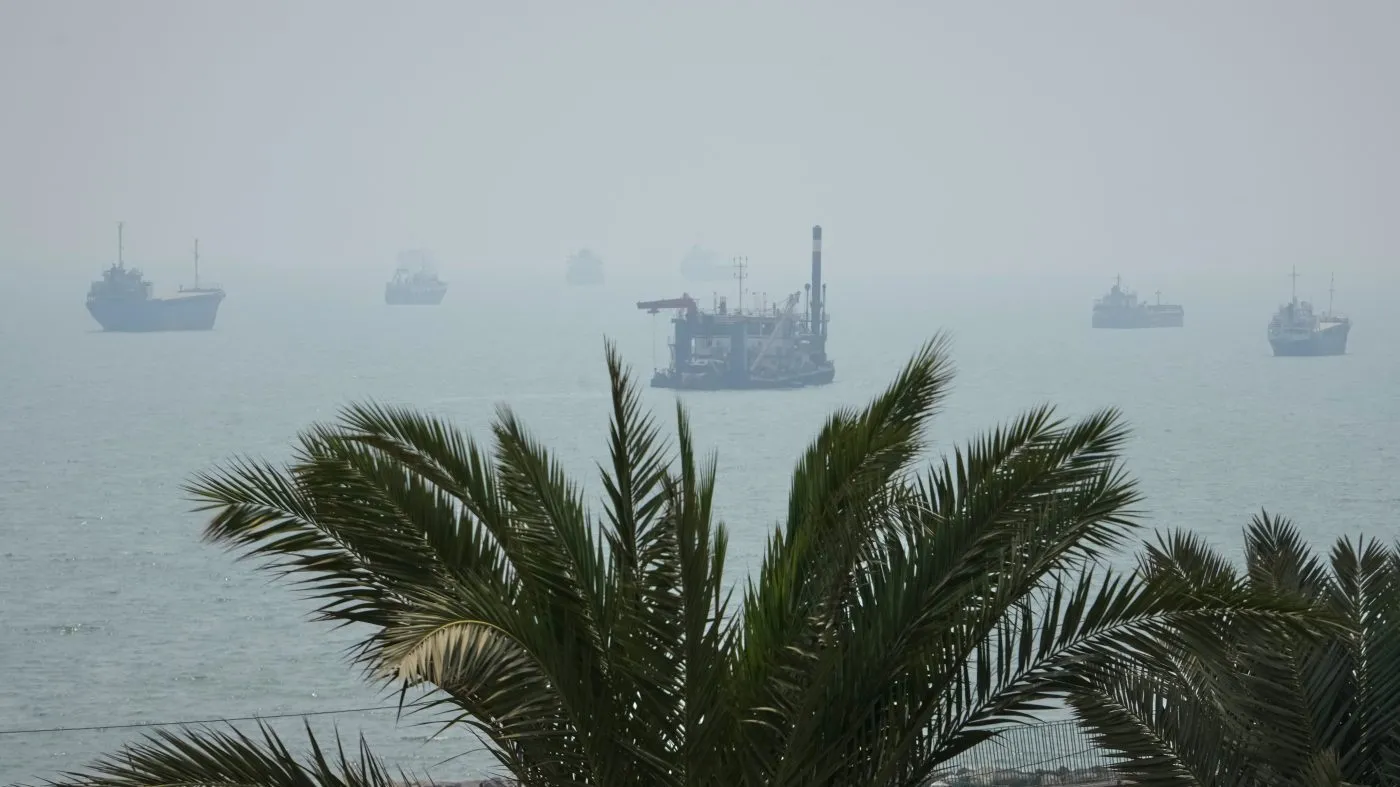
Iran is tightening its control over the Strait of Hormuz by increasing its surveillance over the vital waterway, Tehran’s state media reported Wednesday.
Iranian army spokesperson Mohammad Akrami-Nia said the country’s military is on heightened alert and warned vessels that they must coordinate transit with Iranian forces for safe passage, according to Iran’s Tasnim News Agency.
Akrami-Nia said Iran’s armed forces had improved their ability to monitor the strait with new systems and by upgrading existing ones, and he accused the U.S. and Israel of having undisclosed objectives in its war against Tehran that went beyond the shuttering the country’s nuclear program.
The warning comes after the Islamic Revolutionary Guard Corps (IRGC) said Monday three oil tankers escorted through the Strait of Hormuz were hit by underwater mines despite a U.S. military air escort.
“Any transit through unauthorized routes or disregard for communicated warnings constitutes a violation and cooperation with the aggressor forces,” the IRGC said at the time, adding that any alleged violations would be “dealt with firmly in accordance with previously announced regulations.”
And last week, Iran attacked three other tankers in or near the Strait of Hormuz, with two being hit while exiting the Persian Gulf through the strait.
The Trump administration’s war against Iran, which began nearly nine months ago, continues with no end in sight as peace talks have failed to move forward.
Since the start of November, the U.S. and Iran have been locked in tit-for-tat strikes , with Tehran targeting a U.S. air base in Kuwait and American forces most recently attacking Tehran’s Qeshm Island in the Strait of Hormuz. The activity followed an unofficial quiet period of roughly two months.
The IRGC’s commander in chief, Maj. Gen. Ahmad Vahidi, warned on Tuesday that any future fighting between Iran and the U.S. may not be confined to the Middle East and could expand to other locations, if necessary.
To bolster its stance in the region, Washington sent the USS Theodore Roosevelt aircraft carrier to the Persian Gulf , with the ship last week joining the USS George H.W. Bush and the USS George Washington aircraft carriers.
Topics in this story
Gathered from external sources. Rights to this text belong to whoever originally published it.