Hegseth’s get-out-the-vote effort draws praise and skepticism
Defense Secretary Pete Hegseth is ramping up his get-out-the-vote campaign, urging U.S. troops to register to vote in the 2026 midterm elections but not telling them which way to vote. He also issued a stand-down order, allowing service members to get one day off this month to cast a ballot. Critics view Hegseth’s increased emphasis…
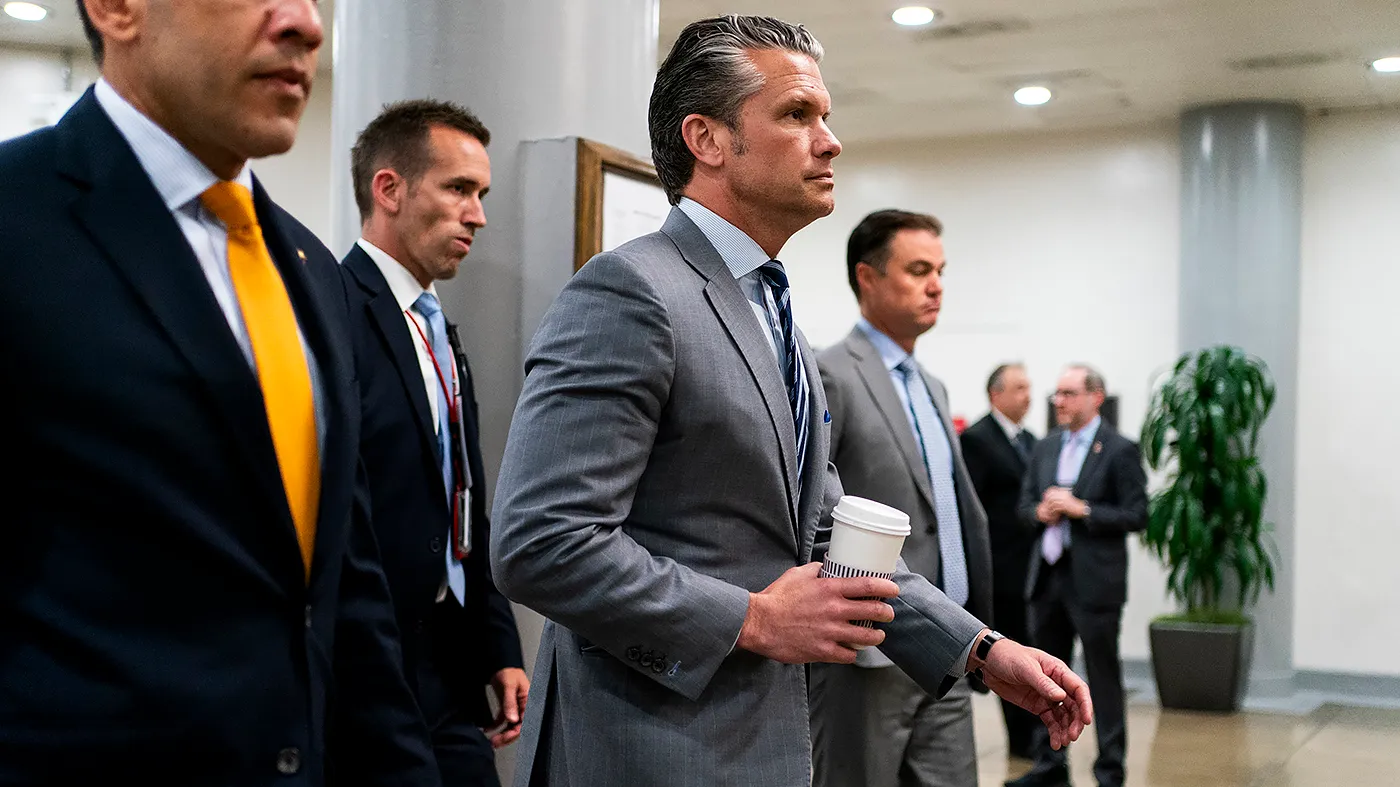
Defense Secretary Pete Hegseth is ramping up his get-out-the-vote campaign, urging U.S. troops to register to vote in the 2026 midterm elections but not telling them which way to vote.
He also issued a stand-down order , allowing service members to get one day off this month to cast a ballot.
Critics view Hegseth’s increased emphasis on having troops participate in elections as using his position to influence the forthcoming elections, pointing to the Defense secretary’s campaign appearances in Kentucky and Iowa this year.
BestReviews is reader-supported and may earn an affiliate commission.
But others argue voting is a direct way for service members to engage in a constitutional system they have pledged to protect and that the military has a responsibility to help service members register and ultimately vote.
Meaghan Mobbs, director of the Center for American Safety and Security at the Independent Women’s Forum, said Hegseth’s election-focused messaging “form is a bit unusual,” but the function is not.
“Yes, a department-wide voting stand-down personally announced by the secretary is more visible than the Pentagon’s normal election messaging,” Mobbs, a former Army paratrooper, told The Hill on Friday. “But the military has a longstanding legal responsibility to help service members register, obtain absentee ballots and vote.”
“As a former soldier, I believe the essential line is nonpartisanship,” Mobbs said. “The military should never tell troops whom to support, but it should ensure that they can participate.”
Typically, service members vote by absentee ballot because they are rarely registered to vote in the state where they are stationed. So having time to go through the candidates and drop off the ballot at the post office can be “valuable,” but it normally does not take a full day, said Carrie A. Lee, a civil-military relations expert and senior fellow at the German Marshall Fund.
“I do worry about whether this stand-down will be interpreted as an order from the secretary directing service members to vote—which would be inappropriate,” Lee told The Hill on Friday.
She noted the Trump administration rescinded executive orders last year allowing all federal workers to take administrative leave to vote and “instead implemented far more restrictive guidance” on whether federal workers could take leave to cast ballots.
“So this stand-down departs significantly from the administration’s policy across the rest of the federal workforce,” Lee said.
During both announcements, Hegseth, a former Army National Guard major, emphasized that Pentagon leadership should not tell service members for whom they should vote but encouraged service members to exercise their right, pointing out that about 300,000 troops did not register to vote two years ago.
The Defense secretary also said the stand-down order will be executed by Oct. 15 and will continue in even-numbered election years.
“Every warrior deserves an opportunity to cast his or her ballot and be confident that it will be counted. Keep our nation the land of the free and the home of the brave,” the Pentagon chief said Friday in a video. “Get registered and vote.”
About 67 percent of active-duty military members were registered to vote in the 2024 election, a 3-point decrease when compared to the 2020 election, according to Federal Voting Assistance Program (FVAP) data.
Around 71 percent of the 1.3 million active-duty military members are eligible to cast an absentee ballot with special protections because they are stationed away from their voting residence, according to the FVAP.
But involvement has gone down in recent elections. The FVAP estimated the participation rate of active-duty military personnel in 2024 was 42 percent, down from 47 percent in 2020.
Mobbs, a combat veteran of Afghanistan, said Hegseth’s stand-down order is “extremely valuable” because military underparticipation is a “measurable problem.”
“From a national-security perspective, civic participation matters. Our adversaries constantly work to convince Americans that our institutions are corrupt, illegitimate or not worth participating in,” she said. “A military whose members are informed, engaged and invested in our constitutional system is a stronger military.”
In May, Hegseth went to Kentucky to help unseat Rep. Thomas Massie (R-Ky.), who ran in the GOP primary against former Navy SEAL Ed Gallrein, in an unusual move for any Defense secretary.
Pentagon officials said Hegseth was already in Kentucky as part of official duties and attended the event “in his personal capacity .” Some critics pointed to a potential violation of the Hatch Act, which limits the political activities of some federal officials.
Massie ultimately lost the primary. Last month, Massie, a prominent Iran war critic, introduced eight articles of impeachment against Hegseth.
In August, Hegseth campaigned for Rep. Zach Nunn (R-Iowa), who is running for reelection. The Pentagon again explained it was in “a personal capacity.”
Lee, of the German Marshall Fund, said there is “significant precedent” for commanders in chief and administrations to support get-out-the-vote efforts for U.S. service members, though the “biggest” efforts come during wartime when it can be difficult to get absentee ballots to deployed troops.
“For example, during World War II the Roosevelt administration led a big GOTV [get-out-the-vote] effort in 1944 to ensure all deployed GIs were able to vote,” she said. “So it’s unusual that there is such a big emphasis during a midterm election when it’s peacetime, but there is precedent for supporting GOTV during elections.”
Hegseth’s stand-down order will ensure time for service member training, processing and submission of Federal Post Card Applications (FPCA) if they choose to vote by absentee ballot. Commanders have to allow time for troops to coordinate with their Unit Voting Assistance Officers, review state voting requirements and submit the FPCA to ensure “timely receipt of their ballots,” the Defense secretary said in a one-page memo .
Former Trump administration chief strategist Steve Bannon, who has not always backed Hegseth’s Pentagon, praised Hegseth’s stand-down order, saying the Defense secretary “threw down and threw down hard today.”
“I told you it’s Washington, Lincoln and Trump,” Bannon said Friday on his “War Room” show.
Mobbs said time will tell if the order will boost the number of service members who cast votes in the November elections, but Lee argued that anytime access to voting is made “easier,” it will increase turnout.
“I would love to see the administration apply this same philosophy across the entire federal government to ensure everyone has the opportunity to cast their ballot,” she said.
Topics in this story
Gathered from external sources. Rights to this text belong to whoever originally published it.