4 takeaways from the MAHA Summit
Trump administration officials mingled with insurers, corporate executives and wellness influencers at the second Make America Healthy Again (MAHA) summit. They discussed issues ranging from affordability, the U.S. food supply and the food pyramid, as well as the use of artificial intelligence in healthcare. Along with many other mainstream outlets, The Hill was not granted…
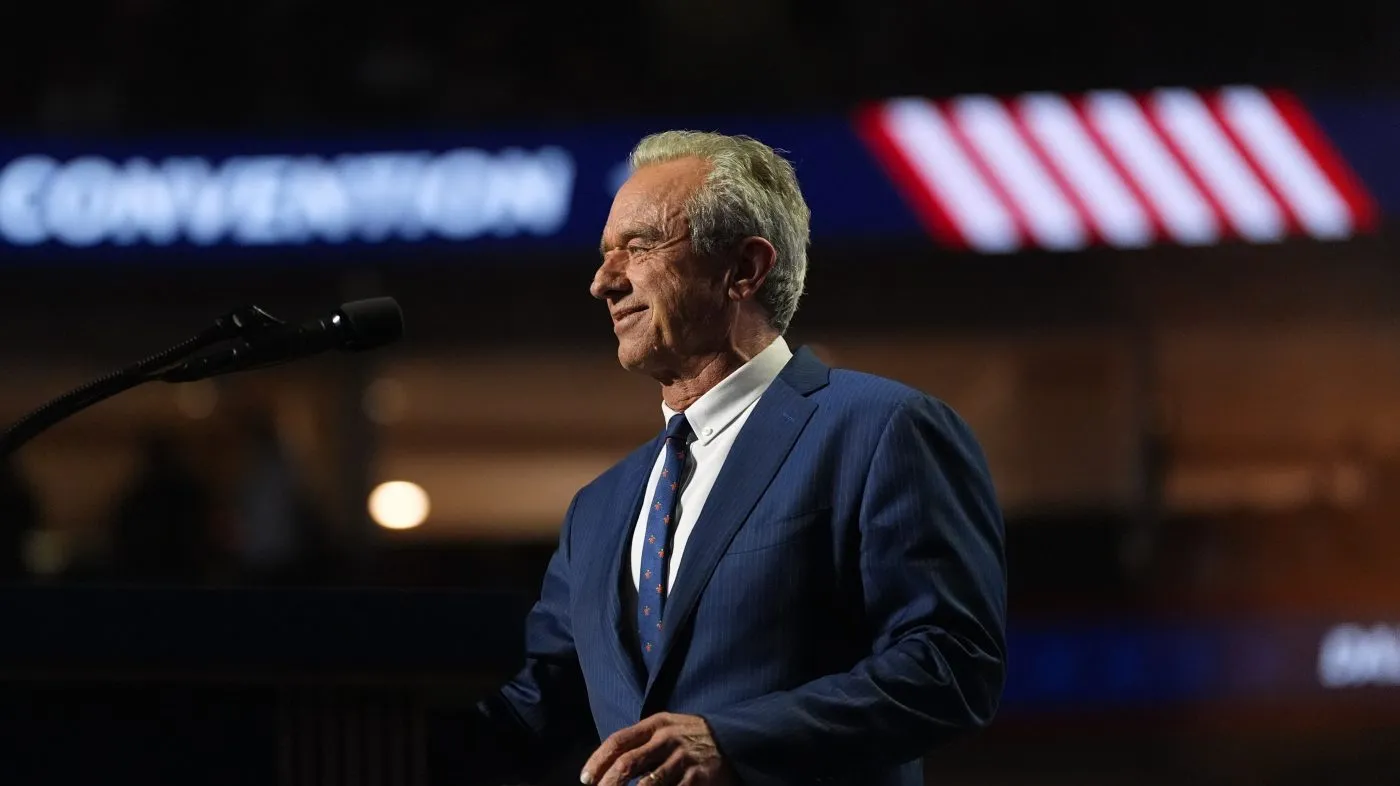
Trump administration officials mingled with insurers, corporate executives and wellness influencers at the second Make America Healthy Again (MAHA) summit. They discussed issues ranging from affordability, the U.S. food supply and the food pyramid, as well as the use of artificial intelligence in healthcare.
Along with many other mainstream outlets, The Hill was not granted press credentials to attend but watched a free livestream. Here are takeaways from the event.
The event featured nine publicly traded companies including insurance industry giants, artificial intelligence firms, Walmart and pharmaceutical companies.
As Bloomberg reported, some companies were offered access to officials for a fee. One of the main sponsors of the event was Grail, a company awaiting approval from the Food and Drug Administration (FDA) for a cancer blood test.
Scott Morris, Walmart’s senior vice president, spoke about “real food” on a panel that included Michael Boes, chief MAHA officer at fast-food company Steak ’n Shake; and Jonathan Neman, CEO of the salad-focused restaurant chain Sweetgreen.
Members of the grassroots MAHA base feel the movement is selling out.
“Nothing screams medical freedom like UnitedHealth, Elevance Health, Walmart, GRAIL, ResMed, Compass Pathways, Definium Therapeutics, Hims & Hers, Noom, Advocate Health, Sutter Health, Anthropic and OpenAI,” Robert Malone, a MAHA activist and former member of the Centers for Disease Control and Prevention’s vaccine advisory panel, wrote on social media.
In a subsequent Substack post, Malone noted that MAHA “was supposed to expose the revolving door between money, industry and government, not build its own.”
The MAHA movement could be at a crossroads ahead of key midterm elections. MAHA helped give President Trump an important ally in Health and Human Services (HHS) Secretary Robert F. Kennedy Jr., a longtime Democrat before he endorsed Trump and joined his administration. And Kennedy gave Trump and Republicans access to a new group of voters.
But the base is increasingly at odds about the administration’s relationship to their core policy goals — like eliminating pesticides and chemicals in the food supply, encouraging healthy eating by reducing reliance on ultra-processed foods, and changing the nation’s vaccination policies.
Numerous speakers throughout the summit extolled the integration of AI into healthcare, especially MAHA leader Kennedy.
In a fireside chat with Vice President Vance, Kennedy declared, “We’re making it easy for every American to use AI,” sharing his hope that patients can use it in the future to push back against advice given to them by medical experts.
“If somebody tells you, ‘Masks work, trust the experts,’ AI may tell you otherwise. If somebody tells you, ‘Social distancing works, trust the experts,’ AI may correct that. And if somebody tells you that a vaccine will prevent transmission and infection — ‘Oh, you need to take it to protect your grandmother’ — AI may say it actually doesn’t do that,” said Kennedy. “So, it really has the capacity to dominate us to free us from medical tyranny.”
Kennedy shared an anecdote in which OpenAI co-founder and CEO Sam Altman apparently told the secretary, “Two years ago, I wouldn’t have advised anybody to take medical advice alone from AI,” before adding, “But today it would be malpractice for a doctor to make a diagnosis or to make a prescription without at least checking AI.”
Kennedy went as far as to claim that AI has surpassed what physicians can do, saying, “It can give you a second opinion that is much better informed than any doctor in the country.”
Mehmet Oz, the administrator of the Centers for Medicare and Medicaid, argued the healthcare system was “hurting people” by not utilizing AI more thoroughly, though he added, “Yes, I know it can destroy humanity.”
Dan Brillman, director of Medicaid and Children’s Health Insurance Program (CHIP), acknowledged that public distrust and dislike of related issues like data centers remains high among the population.
“We need more people using AI to better their health whether it’s diagnosis and daily routine. A lot of people on Medicaid are starting to use it,” said Brillman. “So, building public trust, education in healthcare are the best, perfect examples where you can … use case and stories around AI.”
The first panel of the summit dealt with psychedelic medicine, a topic the FDA has recently begun gathering insight into.
Matthew Zorn, HHS deputy general counsel, was joined by the CEOs of three separate companies developing psychedelics for use in mental health care, including those who are looking into the potential uses of psilocybin.
None of the companies represented during the discussion currently have any FDA-approved products.
Kabir Nath, CEO of Compass Pathways, said investigating psilocybin could be the future of addressing treatment-resistant depression.
“You have 4 million people in the U.S. who have what’s characterized as ‘treatment-resistant depression,’” said Nath. “There is a huge shortfall between what we are able to offer people today and what we want to be able to do in the future and, as we’ll talk about, we all believe that psychedelics have the potential to offer hope for those patients.”
Kennedy has long been a critic of commonly used antidepressants, particularly SSRIs — arguing they are overprescribed in the U.S. and previously claiming they could be linked to violence and mass shootings.
Earlier in September, the FDA held a hearing to gather public comments on therapeutic uses of psychedelic drugs.
One of the more incongruous moderators of the day was comedian Russell Brand, who led a panel comprised of Oz and Brillman.
At the start of their panel, Oz quipped, “Russell Brand was backstage hugging the secretary of Agriculture, but here he is.”
Brand responded, “She initiated that contact, I shall make clear, doctor,” drawing a laugh from Oz.
Brand’s appearance on Tuesday precedes his upcoming trial in London next month over multiple charges of rape and sexual assault. He has pleaded not guilty to three counts of rape, three charges of sexual assault and one allegation of indecent assault — all in connection to allegations made by six women regarding incidents that took place between 1999 and 2009, The Hollywood Reporter wrote in March.
In an April interview with Megyn Kelly, he acknowledged engaging in what he called “exploitative” consensual sex with a 16-year-old girl when he was 30 years old.
The British comedian has become enmeshed in the MAHA movement through regular appearances at events and briefings hosted by the nonprofit group MAHA Action, which supports Kennedy’s agenda.
In a discussion hosted by MAHA Action earlier this month, Brand said, “I’m very proud of my affiliation with MAHA and strongly believe it will become increasingly important as the divisiveness that’s defined American culture and perhaps culture more broadly … it’s just getting worse, isn’t it?”
Topics in this story
Gathered from external sources. Rights to this text belong to whoever originally published it.