HiddenLayer nabs $100M as enterprises rush to secure their AI deployments | TechCrunch
Security companies are scrambling to build products that can monitor not just agents but also the tools and add-ons they use.
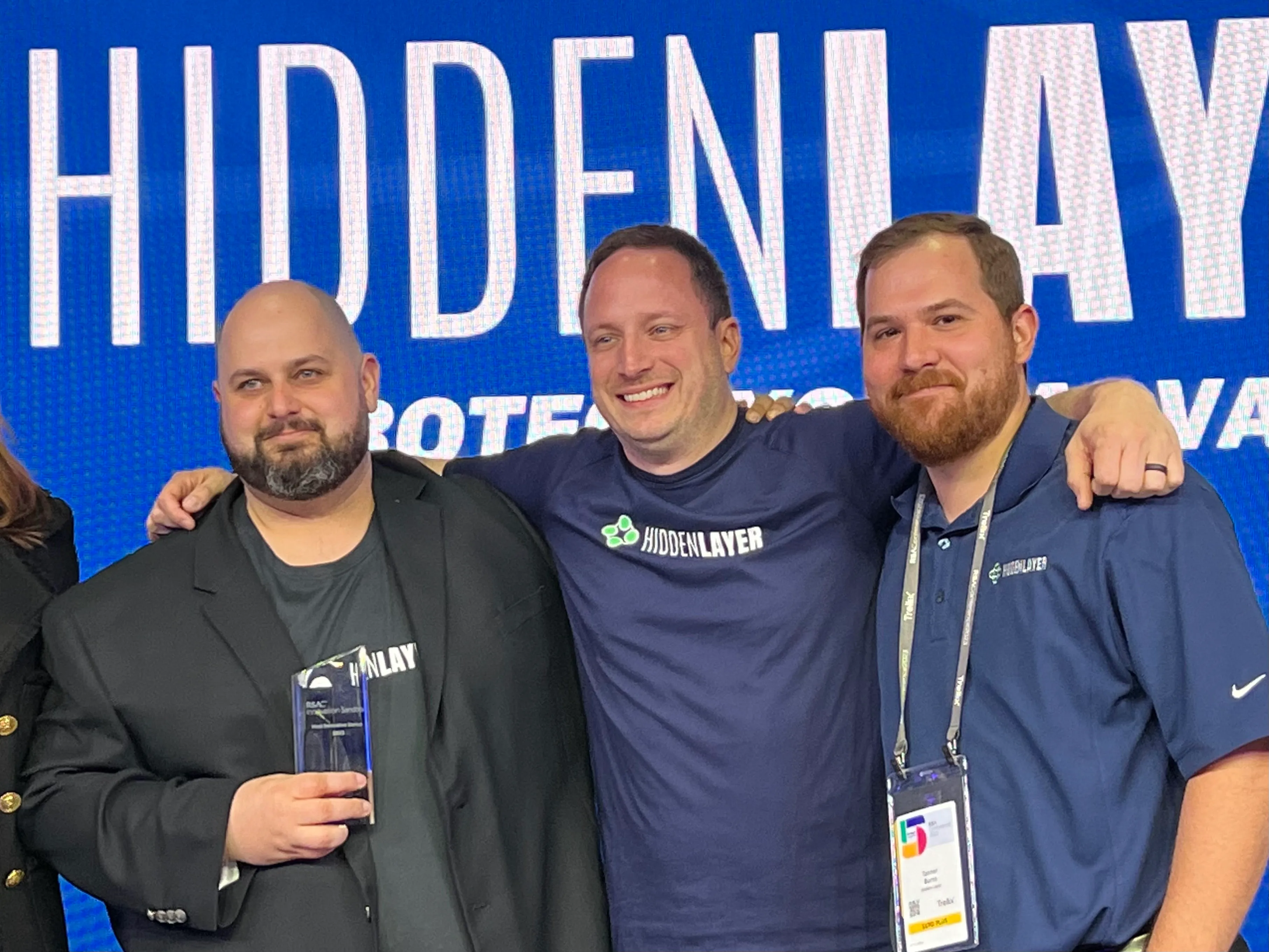
When AI security startup HiddenLayer raised its $50 million Series A three years ago, one of the big questions in the space was whether the AI threats the startup was protecting against would manifest in enough quantity to make for a real market. As my former colleague Kyle Wiggers noted at the time, it was difficult to pin down real examples of attacks against AI at scale.
How quickly things have changed. Security companies are now scrambling to build products that can monitor not just agents but also the tools and add-ons they use . While there still aren’t many headlines about agents being exploited, the risk of agents going haywire during production is nevertheless real . And so the market for tools to prevent that from happening has exploded: Gartner estimates companies will spend $2.83 billion this year on products meant to secure AI tools, 83% more than 2025, and expects spending to reach nearly $4.78 billion next year.
HiddenLayer, which makes tools to protect AI models, agents, and workflows from adversarial attacks, vulnerabilities, and malicious code injections, has been able to take good advantage of that shift. Its co-founder and CEO, Chris Sestito, tells TechCrunch that the startup’s annual recurring revenue grew more than 10x over the past year. He declined to give an exact number but said ARR is now in the “tens of millions” of dollars, and over 90% of that growth was driven by new customers signing in the past year.
Financial services and large tech companies building AI products are currently the company’s largest verticals, and it also has contracts with the Department of Defense and intelligence community. One of its customers is apparently a “leading frontier model provider” with “more than 700 million weekly users,” which sounds like OpenAI or Anthropic to me.
To make the most of that momentum, the startup has now raised $100 million in a Series B funding round that was led by Delta-v Capital, with participation from Ten Eleven Ventures, Morgan Stanley, Microsoft’s M12, Booz Allen Hamilton, and others.
The Austin-based startup broadly still sells what it used to in 2023, but Sestito told TechCrunch that the biggest change it’s had to make was to extend its existing products — discovery, runtime protection, attack simulation, and supply chain security — to address prompt injection, agent manipulation, and malicious tool use.
“Inference is still inference. So whether it’s on a traditional machine learning model, whether it’s GenAI, whether it’s an agentic work stream, a lot of our technology still applied. So really, we haven’t had to pivot, but we’ve had to grow our scope … from traditional modeling to GenAI to agentic,” he said.
Sestito stressed that runtime security has especially become a priority as AI deployments grow common across businesses and likened it to traditional endpoint detection and response (EDR) solutions, but specifically for AI.
The company’s new products reflect that shift, and Sestito highlighted a new opportunity for attackers in exploiting open source models. “We parse and scan about 50 different AI file frameworks to make sure that, especially in the case of open source, open-weight models, that the tool you’re working with is the one you believe it to be, and it’s the one it’s purporting to be. We’re looking at things like models purporting to be one thing, but they’re another — hidden models inside of models,” he said.
The startup says the new $100 million is going to help it build in that direction, though with more of a focus on sales and distribution, while continuing to expand its engineering and research. It also plans to expand into Europe and EMEA.
HiddenLayer may find itself tapping that war chest for more, though. Large cybersecurity companies, like Cisco , Palo Alto Networks , and Check Point often prefer to buy rather than build this sort of tech, while startups like Noma and Zenity have raised over $100 million each to take on adjacent or overlapping areas of this space.
Sestito acknowledged that some parts of the AI security products his company offers could eventually be bundled into the platforms built by companies such as Microsoft, OpenAI, and AWS. However, he expects AI infrastructure will grow toward governance features such as discovery, identity, and policy controls, rather than the kind of tools that his company builds.
For now, he says HiddenLayer’s job is to “scale vertically alongside artificial intelligence,” and eventually expand horizontally into parts of cybersecurity that increasingly depend on AI. That’s an ambitious goal, but the startup first has to prove it can turn its head start into an enduring business before the rest of the industry catches up.
Topics in this story
Gathered from external sources. Rights to this text belong to whoever originally published it.