Trump, AI industry go on offensive to counter data center backlash
President Trump and the AI industry are going on the offensive, attempting to bolster support for data centers as they contend with a groundswell of public opposition that has swept across party lines. Trump has not shied away from embracing the controversial server warehouses behind the AI boom, but he appeared to take a no-holds-barred approach Monday as he called for the U.S. to “let Data Reign” and accused the opposition of wanting…
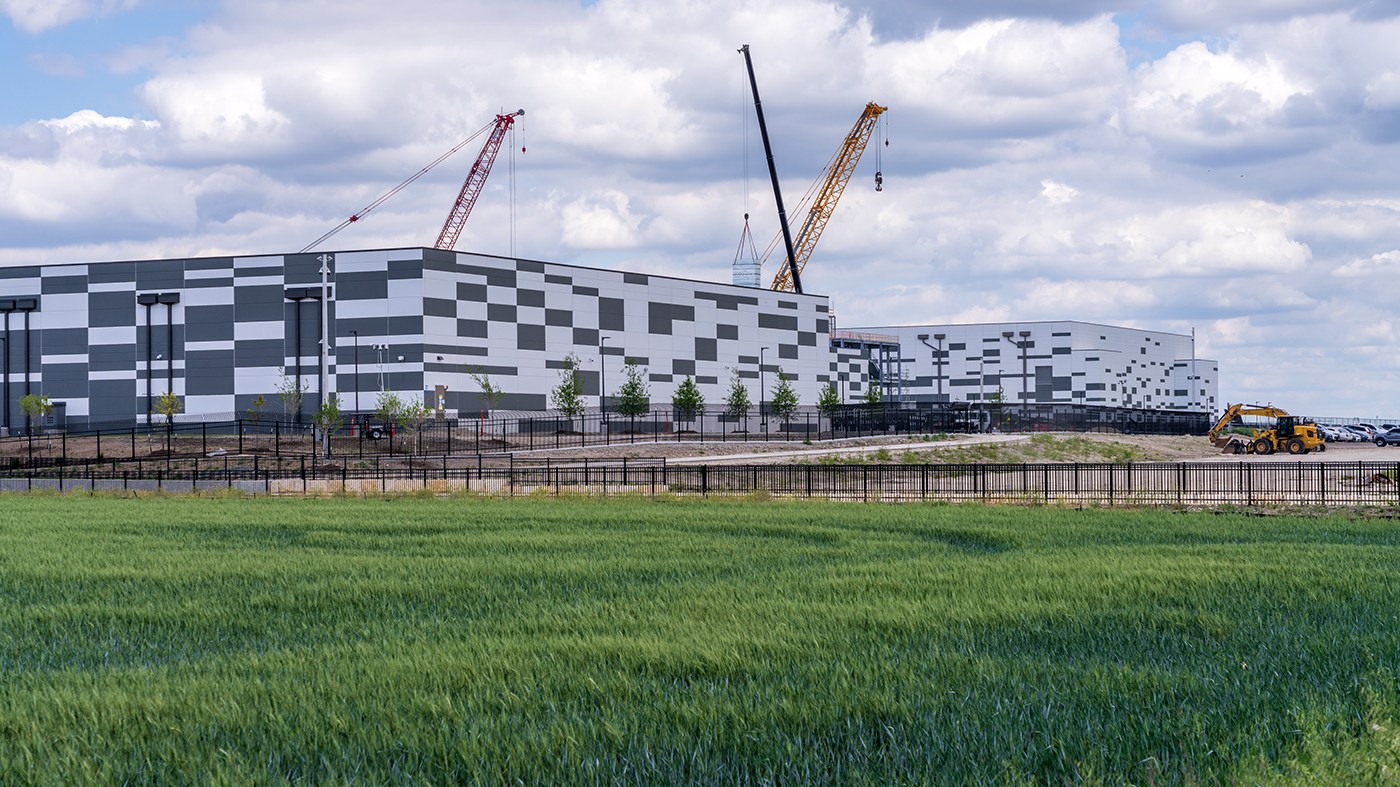
President Trump and the AI industry are going on the offensive, attempting to bolster support for data centers as they contend with a groundswell of public opposition that has swept across party lines.
Trump has not shied away from embracing the controversial server warehouses behind the AI boom, but he appeared to take a no-holds-barred approach Monday as he called for the U.S. to “let Data Reign” and accused the opposition of wanting to be “ backwards and poor .”
The AI advocacy group Build American AI also launched a multimillion-dollar campaign Monday aimed at building support for “commonsense” data center policies, while a group of data center developers unveiled their own nonprofit Wednesday seeking to highlight benefits from the AI infrastructure.
The latest push comes as the data center buildout has increasingly become politically “toxic,” said Brendan Steinhauser, a GOP strategist and head of the advocacy group Alliance for Secure AI.
“The AI industry is losing and has been [losing] on this issue pretty much all year,” he told The Hill, adding, “The American people are skeptical of AI, skeptical of Big Tech, and the companies are trying to reverse that trend and it’s going to be very difficult.”
Nearly two-thirds of Americans — 63 percent — say they would oppose a new data center being built in their community, according to an Economist/YouGov poll released Tuesday. Another 51 percent say data centers are bad for the country.
This includes a sizeable share of Republicans, with 52 percent in the poll opposing nearby data center construction and 39 percent deeming the infrastructure bad for the U.S.
Trump finds himself “caught between this massive movement by his base that is skeptical of data centers and AI and the moneyed interests in Big Tech that are funding a lot of candidates and funding the party and even White House projects,” Steinhauser said.
The president has long embraced the AI buildout, keeping up the drumbeat for data centers even as public opinion soured and other GOP politicians tried to distance themselves from such projects.
When Texas Gov. Greg Abbott (R) announced a temporary data center moratorium last month, Trump called it a “mistake.” But he left room for Republicans to maneuver ahead of the midterms , where the AI infrastructure has increasingly become a central issue.
In key swing state races from Michigan to Pennsylvania to Wisconsin, GOP candidates have called to halt construction or accused their Democratic opponents of being overly cozy with AI companies.
“If Republicans are against a data center, that’s OK with me,” Trump said last month. “I’m only saying that if I ran a community … if I was a mayor or if I was a governor in the state, I would want to have the data centers because they bring tremendous income.”
However, the president took a different tack Monday, offering a sharp rebuke of data center opponents.
“The only reason that communities throughout the U.S.A. should not want Data Centers is if they want to end up being backwards and poor,” he wrote on Truth Social. “If they want to be successful and rich, with far lower taxes and jobs all over the place, let Data Reign.”
His comments faced pushback from a handful of lawmakers in his own party. Rep. Tim Burchett (R-Tenn.) responded by saying, “I guess I’m backwards and poor,” while Rep. Thomas Massie (R-Ky.) — a frequent Trump critic — said he doesn’t think “you should let data reign without any kind of regulation at the local level.”
Cooper Teboe, a Democratic strategist based in Silicon Valley, suggested Trump is “out of touch” and “genuinely seems to not understand why these things are such an issue with voters.”
“If you want to go all in on a 90-10 issue, 60 days before the midterms, I wish you luck and Godspeed,” he told The Hill, referring to an issue that has 90 percent opposition.
White House spokesperson Davis Ingle argued in a statement Wednesday that Trump’s “bold leadership is turning data centers into engines of growth and opportunity for communities across the country that want them.”
“By requiring data centers to pay for their own power, water, and utilities, the President has ensured the American people never foot the bill for private companies’ profits,” he added. “President Trump will continue leveraging the data center boom to deliver real benefits for working families and small businesses.”
The AI industry is simultaneously ramping up a charm offensive on data centers.
Build American AI said Monday that its new campaign, which will initially focus on Kansas, Ohio and Wisconsin, seeks to build support for responsible data center policies and highlight economic opportunities tied to such projects.
The group didn’t specify how much it plans to spend on the campaign but noted it currently has about $50 million in cash on hand.
“The stakes are too high to allow the loudest and most extreme voices to dictate America’s future,” it said in a statement. “Driving responsible investment away will cost Americans good-paying jobs, weaken communities and undermine America’s ability to lead.”
Rob Flaherty, a Democratic strategist and 2024 campaign official for former Vice President Kamala Harris, suggested Build American AI was responding to a recent memo from the National Republican Senatorial Committee (NRSC) warning about data centers’ impact on the Ohio Senate race.
The GOP’s Senate campaign arm called data centers “the anchor hanging around [Sen. Jon] Husted’s neck” and urged AI companies to help fix public perception.
“Sounds like @BuildAmericanAI heeded the call,” Flaherty wrote in a post on X. “NRSC calling in reinforcements.”
Four data center developers separately joined forces Wednesday to launch their own nonprofit, called Infrastructure for America. They aim to focus on “the people who build, power, support, and benefit from data centers.”
The group argued that public discussions about data centers have not reflected “perspectives of the workers who build and operate them, the residents who live in surrounding communities, or the local leaders responsible for making decisions about development and investment.”
However, even as the AI industry puts its messaging efforts in high gear, strategists are skeptical about its immediate impact. Teboe suggested the push was “two years too late.”
“It’s really tough,” Steinhauser added. “It’s tough when public opinion has formed on something to change it, especially something visceral like this … I think it can shift over time, but I don’t see it happening before the election.”
Topics in this story
Gathered from external sources. Rights to this text belong to whoever originally published it.