Senate further advances bipartisan permitting reform bill
The Senate took a series of key votes on Wednesday to advance a permitting reform bill that seeks to speed up the nation’s ability to build infrastructure and energy. The upper chamber advanced the Bipartisan American Affordability and Jobs Act (BAAJA) 65-31 in a procedural vote known as a cloture vote, helping it move toward…
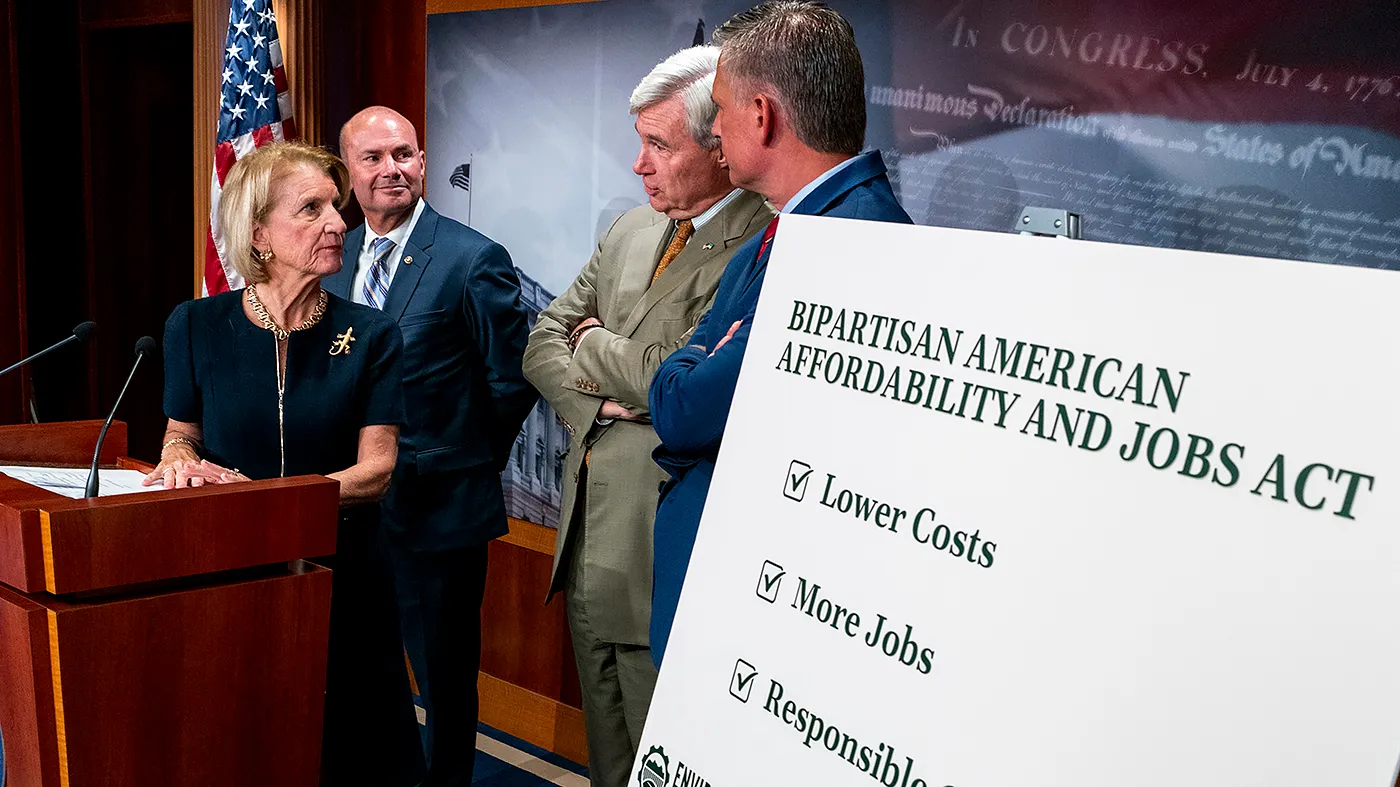
The Senate took a series of key votes on Wednesday to advance a permitting reform bill that seeks to speed up the nation’s ability to build infrastructure and energy.
The upper chamber advanced the Bipartisan American Affordability and Jobs Act (BAAJA) 65-31 in a procedural vote known as a cloture vote, helping it move toward final passage and overcoming the Senate’s 60-vote threshold.
This is not a surprise, as the legislation has also advanced in other recent votes, though it represents the formal clearance of a key hurdle to the bill becoming law.
While there were enough votes to pass, it appears some support has been dropping off. A vote early last week, for example, passed 73-25 .
Sens. Josh Hawley (Mo.) and Mike Rounds (S.D.) were the only Republicans to vote against the legislation Wednesday. Rounds had previously voted against the bill, citing disagreement with some of the bill’s provisions on power lines . Hawley previously voted to advance debate on the bill, but he opposed the bill in a procedural vote earlier this week.
The Democrats and their caucusers who voted against the legislation were Sens. Angela Alsobrooks (Md.), Tammy Baldwin (Wis.), Michael Bennet (Colo.), Richard Blumenthal (Conn.), Lisa Blunt-Rochester (Del.), Cory Booker (N.J.), Maria Cantwell (Wash.), Catherine Cortez Masto (Nev.), Tammy Duckworth (Ill.), Dick Durbin (Ill.), Maggie Hassan (N.H.), Mazie Hirono (Hawaii), Tim Kaine (Va.), Mark Kelly (Ariz.), Andy Kim (N.J.), Ben Ray Luján (N.M.), Ed Markey (Mass.), Jeff Merkley (Ore.), Patty Murray (Wash.), Jon Ossoff (Ga.), Alex Padilla (Calif.), Gary Peters (Mich.), Bernie Sanders (I-Vt.), Jeanne Shaheen (N.H.), Tina Smith (Minn.), Chris Van Hollen (Md.), Elizabeth Warren (Mass.), Peter Welch (Vt.) and Ron Wyden (Ore.)
The measure is still expected to go through an amendment process as some lawmakers have insisted on tweaks, including addressing concerns from tribes that its changes to historic preservation law don’t give them adequate input into projects that may impact them. It’s not clear whether these or any other amendments will make it into the bill’s final text.
The legislation seeks to address long-standing gripes from developers that the U.S.’s environmental review and other processes pose significant hurdles to the nation’s buildout.
Its supporters say the bill will help the American economy and bring down its planet-warming emissions at the same time through significant benefits for renewable energy.
Opponents warn, however, the BAAJA could be bad for the environment as it bolsters fossil fuels and mining, loosens environmental laws and limits the ability of a project’s opponents to challenge it in court.
Among those opponents are several environmental groups and tribes. The bill is supported by a wide array of industries, including those representing renewable power, fossil fuels, manufacturing and chemicals. It’s also supported by major labor unions.
While the bill appears highly likely to pass the Senate, its path in the House is a bit less certain. It has bipartisan House support, but it faces some opposition from progressive Democrats. Meanwhile, House Energy and Commerce Chair Brett Guthrie (R-Ky.) has raised pieces of the bill he’d like to change .
It is competing with a crowded lame-duck agenda that includes a lapse in federal funding in December if Congress does not act. But the bill has support from the White House, which could help push it through.
The legislation seeks to boost the nation’s ability to build power lines, which is particularly key to helping renewable energy projects get onto the grid, including by allowing federal regulators to approve the lines if states don’t act on them.
It also contains provisions that seek to prevent presidents from yanking existing permits from energy of all types — combating President Trump’s ability to block already-approved wind projects and moves made by Democratic presidents, such as revoking approval from the Keystone XL pipeline.
The bill also allows project developers to sue the government if they can demonstrate a pattern of disparate treatment of certain energy sources.
The BAAJA also exempts certain activities, including expansions to natural gas pipelines, from environmental reviews and limits those reviews to only alternatives that meet the goal of a project’s sponsor company.
It restricts lawsuits against projects by mandating that they be filed within 150 days of a project’s approval and only allows people who weighed in during a formal public comment period to sue.
The bill also seeks to rein in increased electricity costs from large data centers, forcing them to pay for any costs stemming from their high electricity demand. However, these facilities may also benefit from the general provisions that seek to help industry build.
Topics in this story
Gathered from external sources. Rights to this text belong to whoever originally published it.