Collins, Murray speak out against reported Trump push to ‘politicize grantmaking’
Sens. Susan Collins (R-Maine) and Patty Murray (D-Wash.), leaders of the Senate Appropriations Committee, spoke out Monday against the White House’s reported plans to give political appointees more control over the National Institutes of Health’s (NIH) grantmaking process. Multiple outlets reported over the weekend that the White House is planning to impose more political oversight…
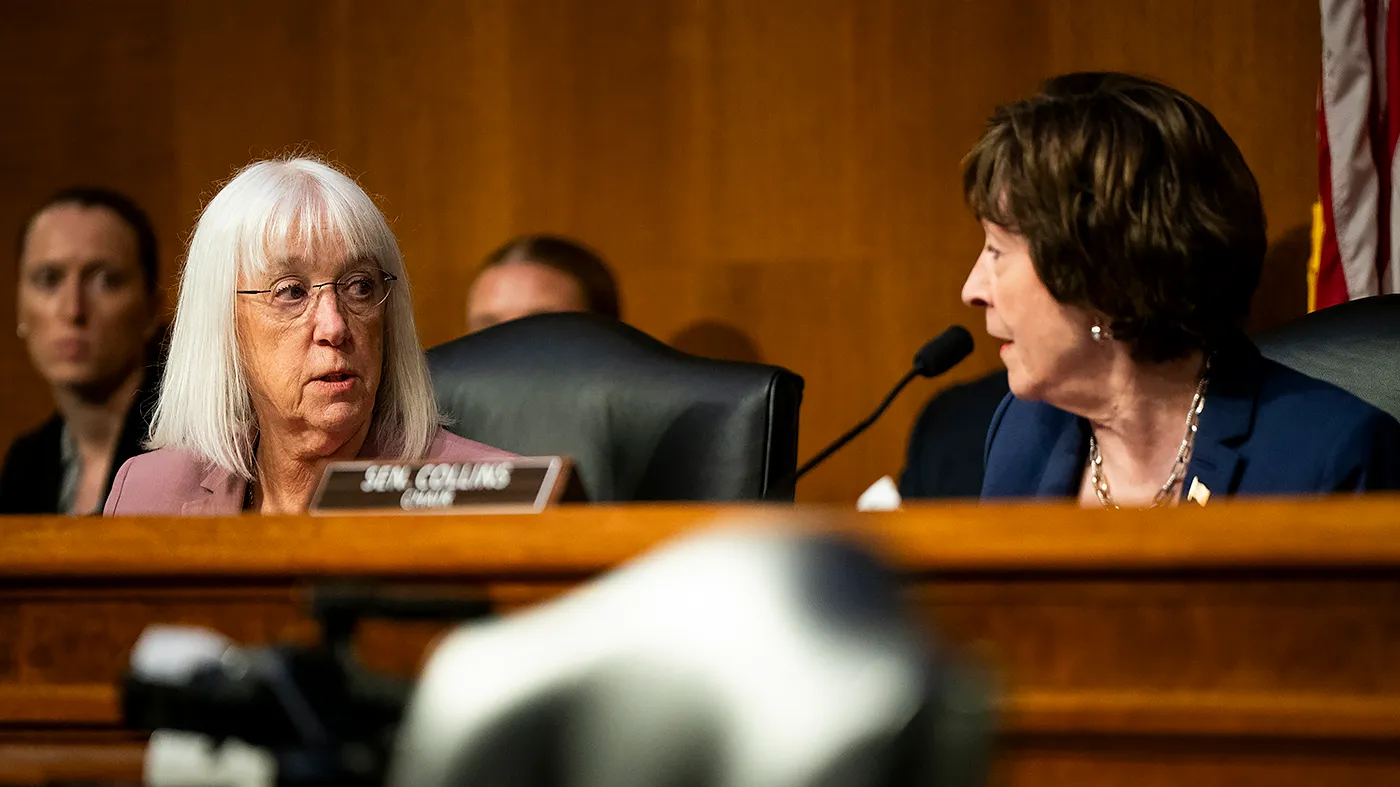
Sens. Susan Collins (R-Maine) and Patty Murray (D-Wash.), leaders of the Senate Appropriations Committee, spoke out Monday against the White House’s reported plans to give political appointees more control over the National Institutes of Health’s (NIH) grantmaking process.
Multiple outlets reported over the weekend that the White House is planning to impose more political oversight over NIH grantmaking due to the administration’s belief that the agency is rewarding research that goes against President Trump’s agenda.
White House Office of Management and Budget (OMB) Director Russell Vought has reportedly accused the NIH of funding “woke” initiatives, though NIH Director Jay Bhattacharya is said to have defended his agency’s grantmaking process.
Collins, chair of the Senate Appropriations panel, denounced the OMB’s potential involvement in how NIH grants are awarded.
“The Office of Management and Budget (OMB) should not be involved in agency decisions on the awards of grants. As I stated in my July 6 letter, a proposed OMB rule would politicize grantmaking. The Continuing Resolution — which passed the Senate, House, and was signed into law on September 2 — blocks OMB’s proposed rule or any substantially similar one,” Collins said in a statement.
“Any attempt to politicize grantmaking at the National Institutes of Health (NIH), or any other agency, by another means—whether an Executive Order or guidance—is contrary to congressional intent,” added Collins. “Imposing a political review on awards that have already been selected through a rigorous scientific and merit-based process undermines the long-standing principle that the government funds awards based on scientific need and merit, rather than political ideology.”
The White House did not immediately respond to The Hill’s request for comment.
Murray, ranking member of the Appropriations Committee, said NIH grants should not be decided by a “panel of lackeys chosen by Donald Trump and Russ Vought.”
“Only one question should decide which research gets funded: is this good science that could save lives? Trump wants to answer a different question: does this help me settle a score? NIH funding doesn’t belong to Donald Trump — it belongs to the patients and families waiting on the next medical breakthrough,” she said in a statement.
“President Trump will stop at nothing to defund medical research that fundamentally changes the lives of patients and families across the country, and Republicans need to join us to put a stop to any effort by this administration to politicize what groundbreaking new treatments and cures we decide as a country to invest in — whether that’s an OMB rule or a new executive order,” Murray added.
The White House has yet to publicly confirm the reported plans, and an executive order like the one reported by The New York Times that would give an external committee authority to veto grants has not yet been issued as of Monday afternoon.
Topics in this story
Gathered from external sources. Rights to this text belong to whoever originally published it.