What to know about 7-OH, MGPI, the synthetic kratom extracts known as ‘gas station opioid’
Federal authorities and lawmakers are cracking down on synthetic concentrates of kratom, an herbal product sold legally over the counter in most states, as concerns rise over their risk to public health. The Drug Enforcement Administration (DEA) signaled heightened concerns about kratom-derived extracts earlier this year when it announced plans to temporarily ban products containing concentrations…
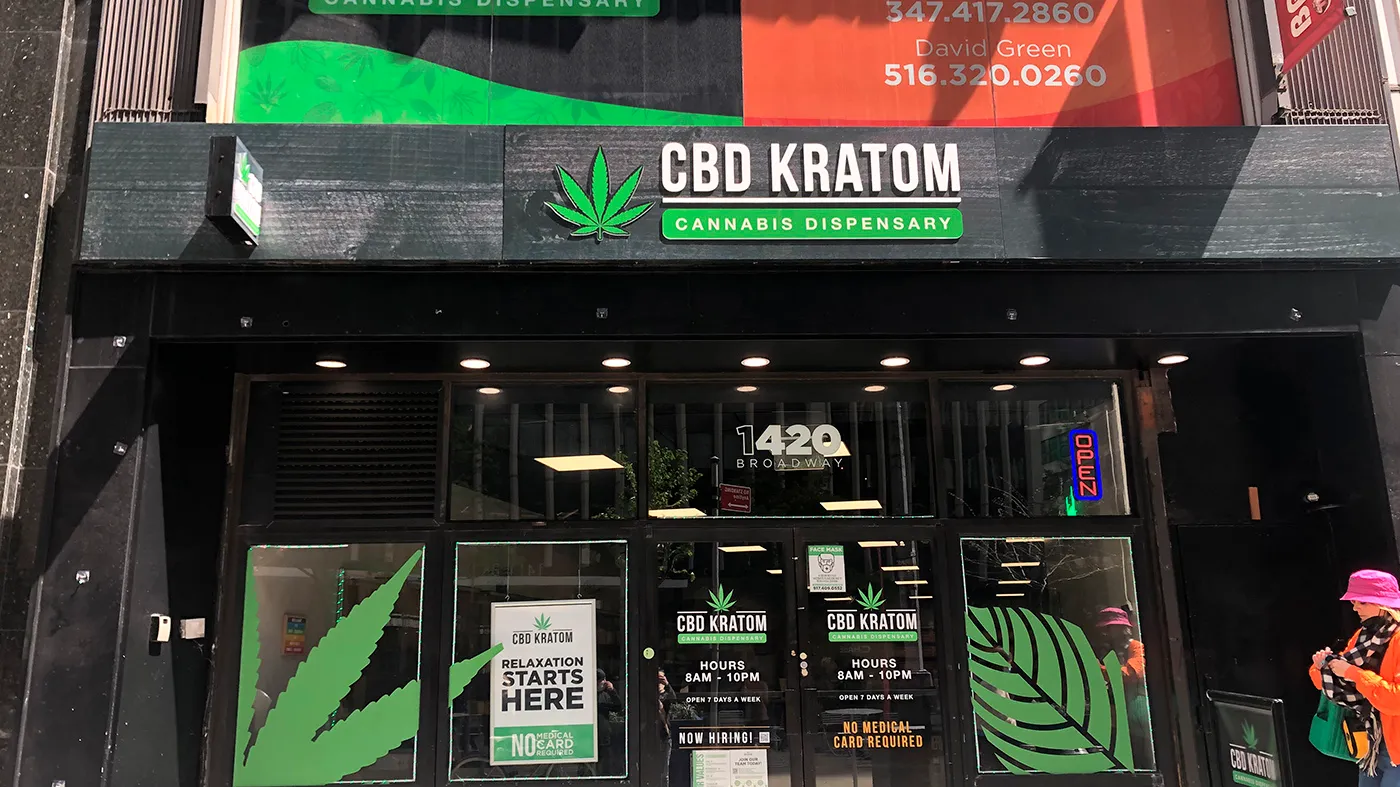
Federal authorities and lawmakers are cracking down on synthetic concentrates of kratom, an herbal product sold legally over the counter in most states, as concerns rise over their risk to public health.
The Drug Enforcement Administration (DEA) signaled heightened concerns about kratom-derived extracts earlier this year when it announced plans to temporarily ban products containing concentrations of 7-hydroxymitragynine (7-OH), mitragynine pseudoindoxyl (MGPI), MGM-15 and MGM-16.
The agency is aiming to temporarily classify these substances as Schedule I under the Controlled Substances Act. This action would not affect the natural herbal form of kratom also sold over the counter.
These compounds are naturally present in the southeast Asian herb kratom, but in small trace amounts — miniscule in comparison to the primary psychoactive compound mitragynine, which is much milder in effect.
Since around 2010, however, products containing synthetically concentrated extracts like 7-OH and other related compounds have become readily available over the counter at gas stations and tobacco shops. Due to the opioid-like effect these substances have — binding to the same receptors in the body — they’ve become colloquially known as “gas station opioid.”
The Department of Health and Human Services (HHS) put its support behind the DEA’s push to schedule these substances, issuing its own recommendations on how to determine which concentrations should be placed in Schedule I.
Concerns spiked after products containing a blend of the synthetically concentrated compounds were discovered near the bodies of two deceased University of Mississippi students , though a cause of death has not determined in either case.
Oliver Grundmann, clinical professor in the Department of Medicinal Chemistry at the University of Florida, told The Hill that scheduling these highly concentrated products is warranted given that Schedule I classification indicates a drug has no accepted medical use.
Determining a medical use would require going through the Food and Drug Administration’s (FDA) approval process.
“That is clearly not what any of these manufacturers that sell [7-OH] products want to do, and therefore it is adequate at the moment, given what we know about [7-OH], to place it into controlled substances schedule,” Grundmann said.
While he questioned whether Schedule I was too severe, since this categorization could limit potential future studies, Grundmann agreed that products containing higher concentrations of 7-OH or MGPI should not be available over the counter.
Those in the kratom business have been quick to note that federal authorities are not targeting natural, herbal kratom, which has been sold commercially in the U.S. for decades.
At lower doses, kratom can act as a stimulant, becoming depressant-like at higher doses. Kratom is traditionally used as a self-treatment for pain management, and some people recovering from opioid use disorder use it to help with withdrawal for the similar effects it can have.
Grundmann noted that herbal kratom, along with being far less potent than its synthetically concentrated derivatives, is also self-limiting in its use, as it has an unpleasant taste and can cause gastrointestinal issues in high doses.
Data on its toxicity is limited, but Grundmann said there is some evidence that the rise in 7-OH sales has contributed to an increase in kratom-related calls to poison control centers.
Kratom’s legal status varies from state to state. Nine states have fully banned the herb while more than 30 states regulate the sale of it on some level with have caps on 7-OH concentrations. In more than a dozen other states, kratom exists in a legal gray area, neither banned nor strictly regulated.
This ambiguous status extends into who’s manufacturing synthetic, concentrated kratom derivatives.
“It probably is in many cases illicit lab setups, or certainly gray area lab setups, that are… concentrating the psychoactive components of kratom,” Ty Schepis, professor in the Department of Psychology at Texas State University, told The Hill.
“This is definitely not done in any kind of pharmaceutical company, very carefully done lab setup,” Schepis continued. “These folks may be knowledgeable and professional in their own way, but it is either going to be illicit or certainly kind of gray area setups.”
Earlier this year, Schepis co-authored a study examining how common kratom use has become in the U.S. and what demographics are using it the most. The study found that more than 5 million people in the U.S. have used kratom in their lifetime — the highest usage being among people between the ages of 21 and 34 — and a strong association between individuals who use cannabis.
Schepis emphasized that kratom would not be considered a commonly used drug in the U.S., especially when compared to substances like nicotine, alcohol or even cannabis.
While not discounting the potential therapeutic effect herbal kratom could have, particularly for people with opioid use disorder, Schepis noted there is no strong existing evidence supporting kratom’s use as a medical treatment. According to the researcher, kratom is analogous to cannabis in terms of knowledge on its potential therapeutic use.
“I hope we will learn a little bit from our experience as a nation with cannabis, where there is some sometimes contradictory evidence that cannabis might help certain conditions,” Schepis said. “But because of how cannabis was regulated and how cannabis was scheduled under Controlled Substances Act, it was somewhere between extraordinarily difficult and impossible to study as a potential medicine.”
Experts who spoke with The Hill said the herbal leaf form is generally safe, but oftentimes consumers aren’t certain if they’re buying the herb or a synthetic, single chemical derivative that’s significantly more potent.
“I think that even the leaf is not something I would recommend people try, even if the harms are probably generally minor and relatively low frequency,” Schepis continued.
Topics in this story
Gathered from external sources. Rights to this text belong to whoever originally published it.