Japan’s Wages Grow Most Since 1997, Keeping BOJ on Rate Hike Path
Japanese workers’ nominal wages rose at the fastest pace in nearly three decades on the back of strong corporate earnings and a tight labor market, in data l...
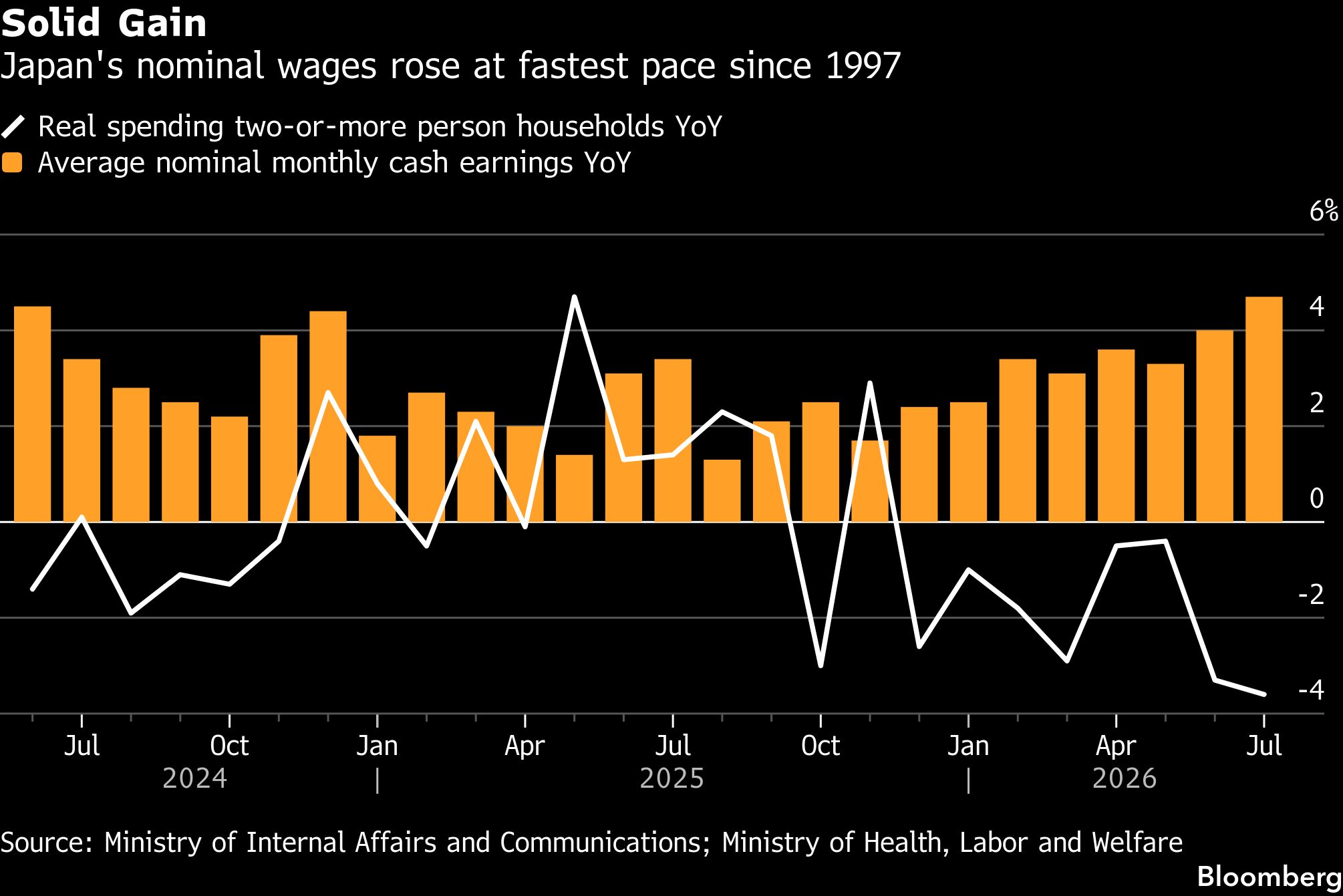
(Bloomberg) -- Japanese workers' nominal wages rose at the fastest pace in nearly three decades on the back of strong corporate earnings and a tight labor market, in data likely to keep the Bank of Japan on course for further monetary tightening.
Nominal pay climbed 4.7% in July from a year earlier, following a revised 4% increase in June, the labor ministry reported Tuesday. The gain, the biggest since 1997, far exceeded economists' forecast of 3.8% and marked a sixth straight month in which the advance exceeded 3%, the longest such streak in 34 years.
Real wages — adjusted for inflation excluding rents — gained 2.4%, marking the largest gain in about five years. Base pay also advanced 4.1%, while a more stable measure — which strips out bonuses and overtime and sampling distortions — rose 2.7% for full-time workers.
The stronger-than-expected figures bolster the case for the BOJ to proceed with a widely expected rate hike this month. Markets have largely priced in a move when the board meets next week, with some investors expecting further tightening after a relatively short interval.
The BOJ's ability to sustain that tightening path will depend in part on whether rising incomes translate into stronger domestic demand. For now, there is reason for doubt. Data last week showed that household spending fell for an eighth consecutive month in July, as shoppers cut back on discretionary outlays. That was after gross domestic product data for the second quarter showed that private consumption flatlined in the period.
The wage gains are partly the result of another strong round of annual wage negotiations, through which workers at companies under the Rengo union umbrella secured pay gains of more than 5% for a third year. Separately, the national minimum wage for the current fiscal year climbed to an average of ¥1,177 ($7.55) per hour in what was the second-largest increase on record, suggesting that momentum is spreading across a broader range of workers and industries.
Healthy corporate profits have helped companies shoulder higher labor costs. Current profits rose for a seventh consecutive quarter in the three months through June, led by manufacturers amid booming demand related to artificial intelligence and data centers.
Topics in this story
Gathered from external sources. Rights to this text belong to whoever originally published it.