As Trump and Xi meet, TD Cowen says the auto stock sell-off on Chinese car fears is 'overdone'
Wall Street thinks the odds of Chinese automakers breaking into the US market is low, but the US auto industry is taking no chances.
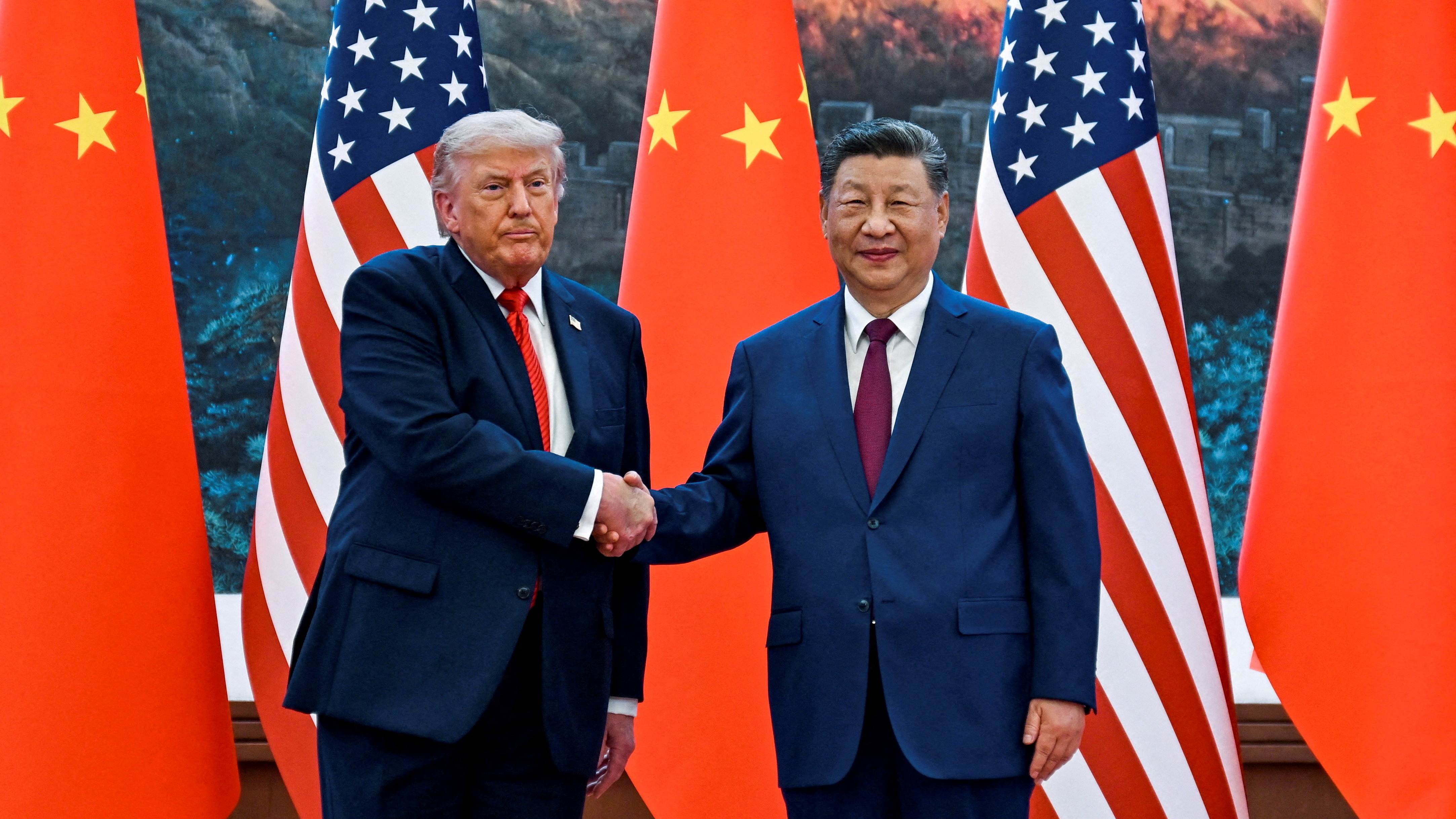
Wall Street thinks the odds of Chinese automakers breaking into the US market are low, but the US auto industry is taking no chances.
Chinese President Xi Jinping arrives in Washington on Wednesday for three days of talks, yet analysts expect small steps on trade and AI rather than breakthroughs . A bilateral trade truce expires in November, and the likeliest outcomes include possible tariff relief on a small set of less sensitive goods.
Cars are unlikely to be the main event. TD Cowen advised clients on Tuesday that a shift in US import policy at the summit is "very unlikely," even as it urged investors to prepare for the eventuality anyway.
"Most industry contacts have expressed similar views," senior analyst Itay Michaeli wrote, "w/ the typical caveat that regardless, we need to get prepared."
And the industry is gearing up for a fight. In a letter to Trump, a coalition led by the Alliance for Automotive Innovation, joined by the American Automotive Policy Council, dealer group NADA, and supplier association MEMA, urged the administration to "keep the door firmly shut to Chinese automakers seeking to sell, import, or manufacture vehicles inside the US.'
They credited Trump's 100% tariffs on Chinese vehicles and a Commerce Department rule barring Chinese connected-car software with keeping the US, unlike Europe, Australia, Southeast Asia, Mexico, and South America, from "grappling with a massive surge in cut-rate Chinese vehicles."
The fear is what happened north of the border in China, where Canadian Prime Minister Mark Carney allowed a limited number of Chinese-made EVs into the country as part of a larger trade deal.
Given this backdrop, Michaeli and the TD Cowen team are gaming out scenarios.
The big question starts with how China's entry would be structured. The firm laid out the likely guardrails, such as Chinese automakers being forced in through minority-owned joint ventures (JVs) with domestic players and probably barred from building full-size trucks, products that generate the vast majority of the Big Three's North American profits.
Counterintuitively, the JVs could help the Detroit Three, per Michaeli. Such structures "might even prove EPS accretive given sizable D3 EV losses," Michaeli argued, "w/ Stellantis arguably having the most to gain given its lower NA [North America] EBIT starting point."
But the catch is that Big Three stock multiples could still suffer on the long-term risk that any initial restrictions eventually get lifted.
There are some beneficiaries in TD Cowen's view, such as EV suppliers and charging networks like ChargePoint ( CHPT ) and EVgo ( EVGO ), which would ride any acceleration in US EV adoption. Parts makers with existing ties to Chinese OEMs, including BorgWarner ( BWA ) and Aptiv ( APTV ), would be "better positioned" than most.
Topics in this story
Gathered from external sources. Rights to this text belong to whoever originally published it.