Iowa’s cancer crisis could reshape the state’s biggest midterm races
Rising cancer rates and their potential link to farm pollution are causing a crisis in Iowa, throwing uncertainty into the midterm elections in a state that has shifted ruby-red in recent years. Iowa suffers from the second-highest rate of new cancer cases in the U.S., and it’s one of the few states where the number…
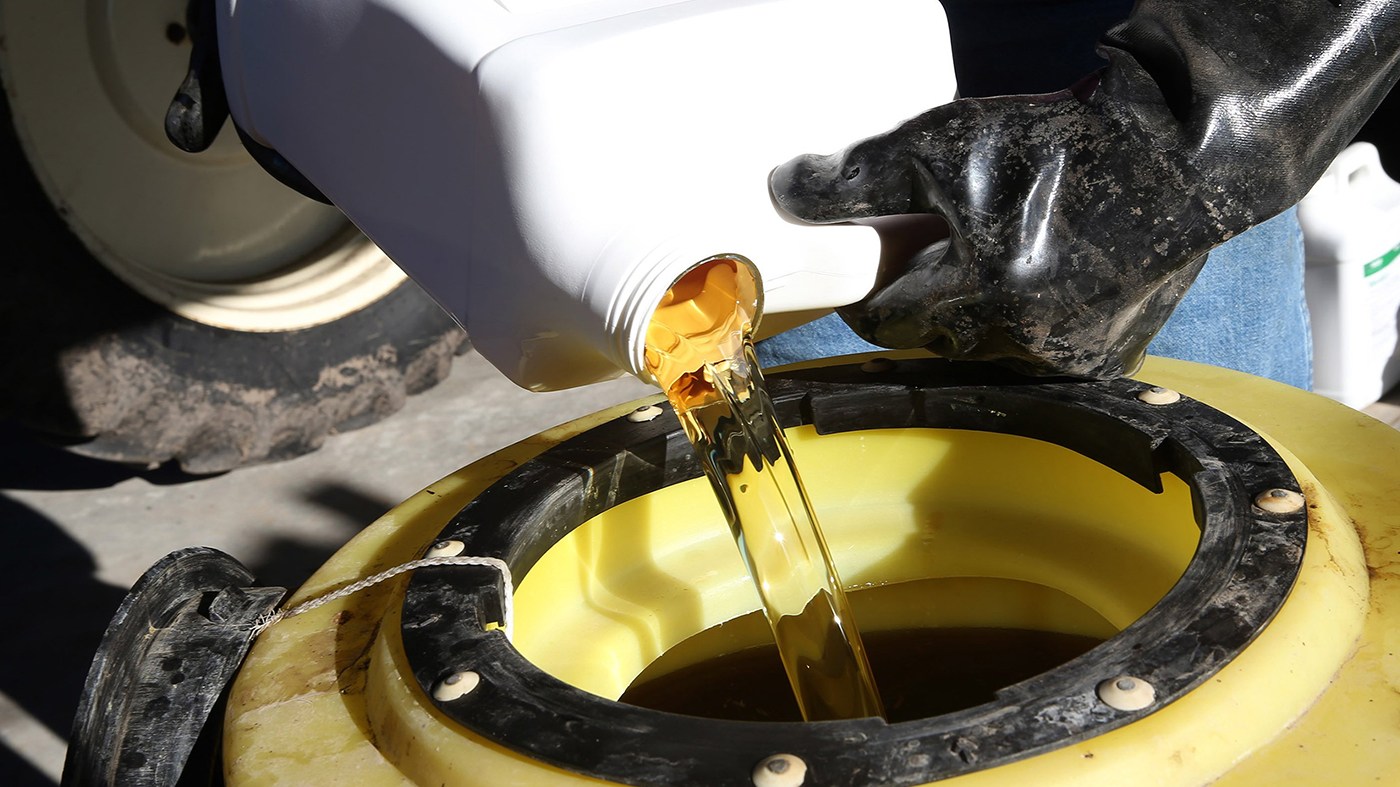
Rising cancer rates and their potential link to farm pollution are causing a crisis in Iowa, throwing uncertainty into the midterm elections in a state that has shifted ruby-red in recent years.
Iowa suffers from the second-highest rate of new cancer cases in the U.S., and it’s one of the few states where the number of cancer cases is rising. Across the state, the cancer crisis has become a major campaign topic.
Candidates from both parties have made tackling the environmental causes of cancer — and blaming “Big Ag” — a key part of their platforms. It’s an attack that previously would have been unheard of from Republicans in the Corn Belt hub.
The state has a series of blockbuster races this year, including the governor’s contest between Zach Lahn (R) and Rob Sand (D), the Senate race between Rep. Ashley Hinson (R) and state Rep. Josh Turek (D) and several competitive House races.
Lahn, in an unusual move for a Republican, is not only leaning into the cancer issue but also vowing to clean Iowa’s water and regulate chemicals if he’s elected.
“We have the fastest rate of new cancer anywhere in the country, number one. If you move out of the state of Iowa, to, say, a state like Nevada, your chance of getting cancer any given year goes down by 40 percent,” Lahn said during a “Face the Nation” interview earlier this month .
The focus on cancer and the role of Big Agriculture shows the influence the Make America Healthy Again (MAHA) movement has had in the state.
MAHA principles, especially those that push for clean water and food at the expense of pesticides and farm profits, are often at odds with the Republican Party’s historically probusiness agenda , especially in agriculture-heavy Iowa.
Karen Kedrowski, a professor of political science at Iowa State University, said Lahn discussing cancer is significant because it is such a departure from traditional Republican views. But it speaks to the massive scale of the issue for voters.
“When you start talking about cancer, everybody knows somebody, or a friend of a friend, or someone who has had cancer,” Kedrowski said. “The cancer piece really becomes salient because it’s so common and kind of top of mind.”
In a year where Iowa Democrats feel they have their best shot in more than two decades at winning the governorship, healthcare and the environment are in the spotlight.
Republicans are hoping Health and Human Services Secretary Robert F. Kennedy Jr. and his MAHA agenda can bring voters to the polls.
Timothy Hagle, a political science professor at the University of Iowa, said voters who support the agriculture industry, a frequent MAHA target, may not be likely to “all of a sudden flip and support the Democrats in whatever race we’re talking about.”
But, he said, Kennedy may be persuasive for voters without strong partisan ties.
“The idea may be that RFK Jr. …. can maybe appeal to more of those no-party voters,” Hagle told The Hill.
MAHA threw its support behind Lahn early, helping him defeat Rep. Randy Feenstra, an established politician who was endorsed by Trump.
Lahn was the first candidate endorsed by MAHA Action, the Kennedy-aligned advocacy group run by Tony Lyons, Kennedy’s book publisher and a key ally.
Kennedy has made repeated visits to Iowa to boost GOP candidates, most recently headlining a MAHA rally featuring Lahn and Joe Mitchell, a candidate for the House seat being vacated by Hinson as she runs for Senate.
“I love Zach, because we need to figure out a way to feed ourselves in this country, make this country the breadbasket of the world without degrading our soils and without poisoning our children,” Kennedy said during the rally.
Aside from cancer and chemicals, Lahn has also adopted other MAHA principles: He’s promised to end vaccine mandates in schools and ban the COVID-19 vaccine.
However, in Iowa, environmental issues do not fall neatly along party lines. For example, Chris Jones, a Democratic candidate for Iowa agriculture secretary, is also running on a platform of clean water.
“This cancer issue is resonating with people, and almost everyone has a story here of a family member or someone else that has met an early demise,” Jones told The Hill earlier this year.
And while he certainly has differences with Lahn, Jones said that having a Republican also speaking out about water quality “makes me look less like a renegade.”
Jones has been endorsed by democratic socialist Sen. Bernie Sanders (I-Vt.), but he also has a MAHA tie in his finance director, Dave Murphy, who also worked on Kennedy’s presidential campaign.
And Jones’s opponent, incumbent Mike Naig (R), used to work for Monsanto, whose Roundup weedkiller has become a prime target of the MAHA movement.
Murphy told The Hill that even with MAHA candidates in the race, “Democrats have won” on issues of water quality. However, he thinks that Lahn may “keep some of the votes that would run from Feenstra … to Rob Sand.”
The MAHA movement is not a singular bloc, and there are different factions with priorities that don’t necessarily translate neatly into partisan camps. Some members prioritize changes to the food supply, others want tighter chemical and pesticide regulation, and some want to eliminate vaccine mandates.
The newfound focus on the issue could create an opening for Democrats and MAHA-aligned Republicans alike — and it could give the Trump administration extra incentive to have Kennedy make its case.
“The Republican Party has taken the rural vote for granted,” said Jeff Hutt, who worked on Kennedy’s presidential campaign. “Now that Republican policies, through support of Big Ag, through use of pesticides, [are] starting to affect these rural communities negatively, I think you’re going to see a shift in the Republican Party about how they treat these issues.”
Meanwhile, Democrat-aligned groups hope that voters will tip in their favor in part because of issues such as clean water and healthcare.
“Republicans have had a chance to show up and deliver on promises from everything from lowering cost to the things that they said they would do around MAHA voters’ concerns, and I think that they’ve failed miserably,” said Sara Schreiber, senior vice president of campaigns at the League of Conservation Voters Victory Fund.
“We have powerful testimonials as part of our communications to voters, and these are Iowans who are really concerned about their water quality and the efforts to chip away at it while they’re taking corporate contributions from these companies,” Schreiber said.
As one example, the group is running an ad targeting Rep. Mariannette Miller-Meeks (R) on votes she has taken on water pollution, healthcare cuts and cuts to cancer research.
Tuesday’s midterms also come amid a backdrop of other political debates, including broad issues of affordability and agriculture-specific matters related to high diesel prices, which raise costs for farmers. That, too, could drive voters toward Democrats as the Trump administration’s war in Iran and foreign tariffs have exacerbated the problem.
Still, Hutt said he views the governor’s race itself as a victory for the MAHA movement.
“The fact that you have two candidates running for the governor of Iowa who have embraced MAHA principles almost exactly, with the exception of vaccines, I think that is more a statement about the success of the movement than whichever candidate wins the election,” he said.
“In my mind, MAHA has already won this election. It doesn’t matter who comes out with the most votes at the end.”
Topics in this story
Gathered from external sources. Rights to this text belong to whoever originally published it.