Divide over yields: Fed officials see a stronger economy, Wall Street frets over oil prices and deficits.
As long-term bond yields climb to new heights, a divide over what is driving the historic run-up has opened between Federal Reserve policymakers and Wall Str...
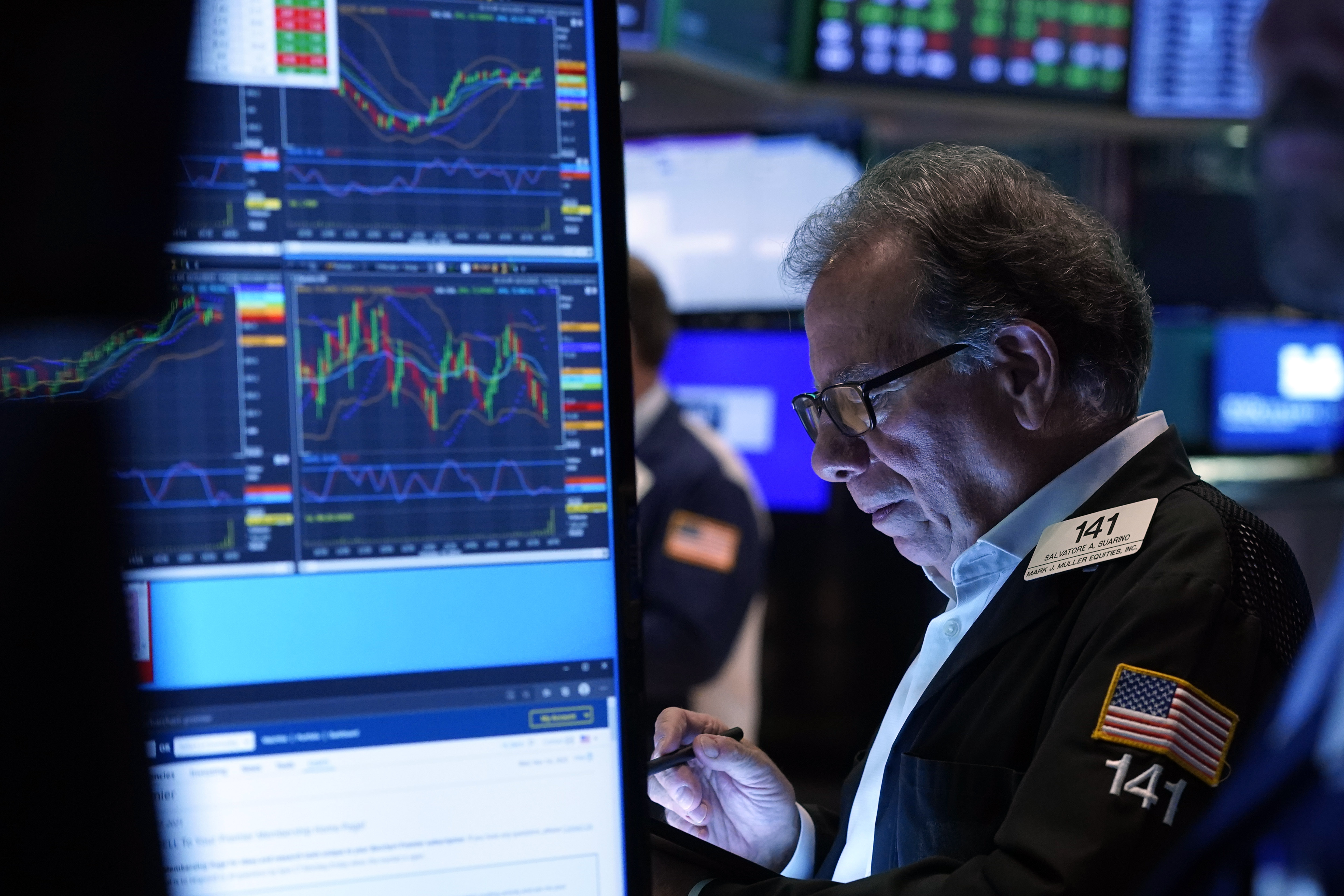
As long-term bond yields climb to new heights, a divide over what is driving the historic run-up has opened between Federal Reserve policymakers and Wall Street.
While Fed officials point to a remarkably resilient economy and robust growth as proof that higher rates are justified, traders are painting a more anxious picture, blaming a volatile cocktail of stubborn inflation, surging energy prices, and bloated government debt for forcing yields upward.
The yield on the 10-year Treasury ( ^TNX ) this week hit 4.814%, its highest level since November 2023, before easing. Meanwhile, the 30-year Treasury yield ( ^TYX ) was at 5.12%, also down from earlier this week. Oil prices ( CL=F , BZ=F ), meanwhile, jumped above $95 a barrel on renewed military strikes in the Middle East.
New York Fed president John Williams, who is also chair of the Federal Open Market Committee, said this week that he thinks a strong US economy and a positive economic outlook, fueled by big investments in AI, data centers, and technology in general, are driving yields higher.
"I see this as more of a reflection of the strength of the economy. We're not seeing it in terms of inflation compensation," he said in an interview with CNBC on Wednesday. "With a strong economy, you expect the cost of funding this investment tends to go up, and so I see that mostly through that light."
"It's not really about financial conditions affecting the economy, it's more about the economy affecting financial conditions," he said.
Williams acknowledged that between higher oil prices and the conflict in the Middle East, investors are demanding extra compensation, or term premium, for holding longer-term debt.
Fed Chairman Kevin Warsh has also argued that long-term bond yields have risen because of a strong economy. He painted a robust picture of the economy in a speech in Jackson Hole, Wyo., last Friday, citing capital business investment growing 9% over the past four quarters and resilient consumer spending coupled with strong profits.
Also in Jackson Hole, Ken Rogoff, former chief economist of the International Monetary Fund, made a case that long-term bond yields have merely reset to normal levels. The current growth follows a period when economists predicted growth would stagnate for an extended period, a so-called secular stagnation.
Warsh on Monday declared that secular stagnation, which he described as the once-prevailing academic consensus that "all the good stuff had already been invented," was past and that the economy is in a new period of secular growth dominated by a global investment surge.
Topics in this story
Gathered from external sources. Rights to this text belong to whoever originally published it.