President Donald Trump Just Proclaimed, "Tariffs Don't Cause Inflation, They Cause Wealth," but Data From Federal Reserve Economists Show Otherwise
Statistically speaking, tariffs have been bad news for Wall Street and consumers.
From a purely statistical standpoint, Wall Street has enjoyed having President Donald Trump in the White House. Even accounting for a few periods of historic volatility (e.g., the COVID-19 crash in February-March 2020 and the tariff tantrum of April 2025), the average annual return of the Dow Jones Industrial Average (DJINDICES:^DJI), S&P 500 (SNPINDEX:^GSPC), and Nasdaq Composite (NASDAQINDEX:^IXIC) has been higher under Trump than under most presidents since the late 1890s.
However, this doesn't mean that all of the president's policies are necessarily well-received on Wall Street. For example, Trumpflation (inflation specifically driven by Donald Trump's policies) is a genuine threat to the artificial intelligence (AI)-driven bull market.
Missed AI's "Act 1"? Act 2 Could Be 14x Bigger. Most investors think they missed the AI boat because they didn't buy Nvidia in 2005. But according to our analysts, we're only at the end of "Act 1"—the R&D phase. "Act 2" is the global rollout. Continue »
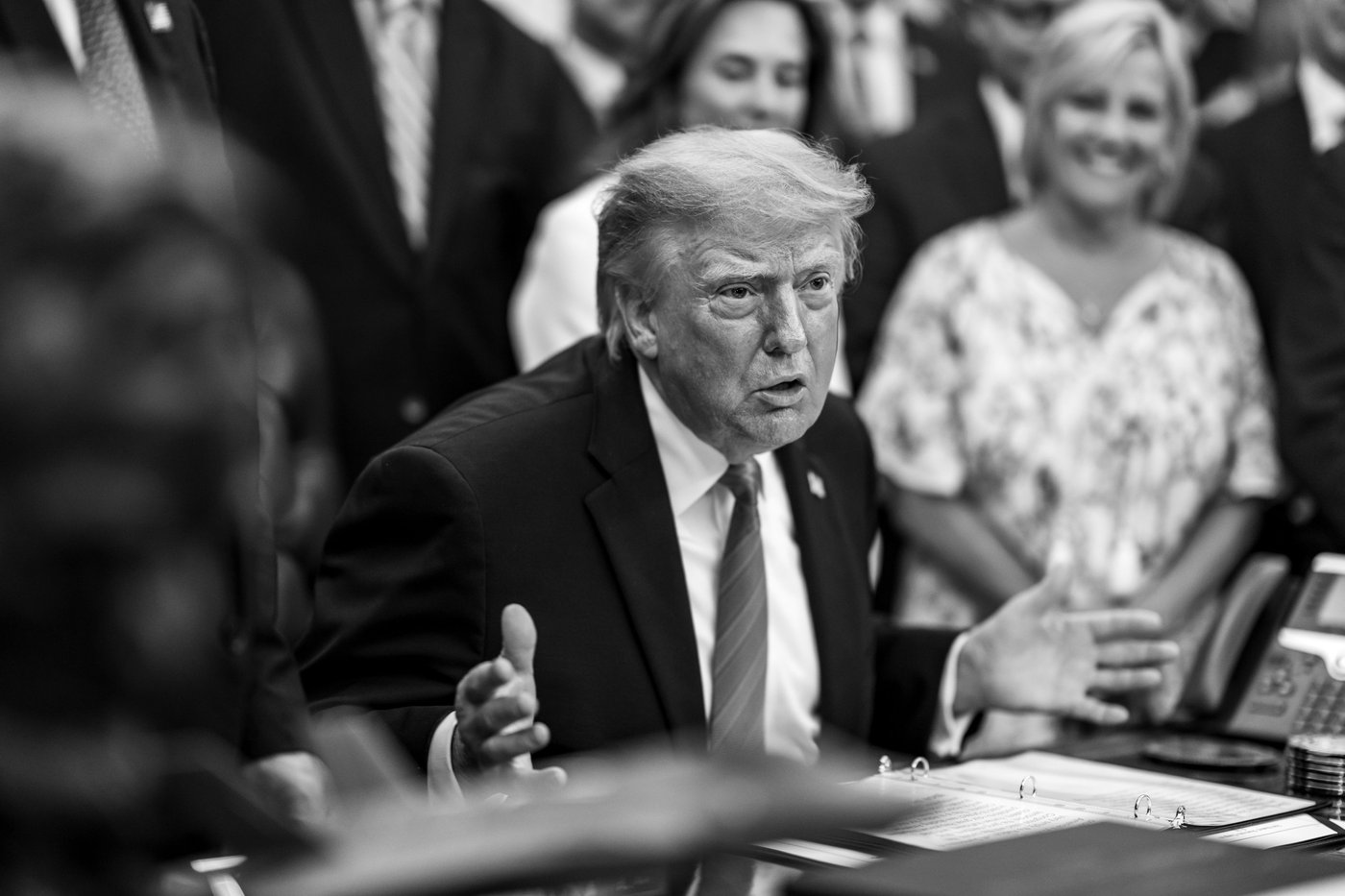
President Trump's tariffs are doing more harm than good. Image source: Official White House Photo by Daniel Torok.
President Trump sees things differently. While speaking to an audience at a campaign rally in Montana ahead of the Nov. 3 midterm elections, Trump touched on inflation and the role his tariff and trade policy may have played in it. Said the president:
We don't have inflation, and tariffs don't cause inflation. You know what they cause? Wealth.
Although Trump insists that tariffs aren't contributing to persistently elevated inflation and are beneficial to the U.S. economy, reports from New York Federal Reserve economists show otherwise .
Tariffs have been foundational to Donald Trump's presidency
While tariffs have been a hot-button topic since Trump's second non-consecutive term began in January 2025, they've been a theme throughout both of his terms. In 2018, the Trump administration kicked off a trade war with China, imposing tariffs on washing machines, solar panels, steel, aluminum, and various tech goods.
President Trump's tariffs had three purposes:
To encourage overseas companies to manufacture their U.S.-bound products in America
To make U.S. products more price-competitive with those being imported
Shortly after the start of his second term, he introduced a new round of tariffs. Trump's April 2025 "Liberation Day" tariffs imposed a sweeping global duty and higher reciprocal tariffs on dozens of countries deemed to have adverse trade imbalances with America. A majority of these tariffs, imposed under the International Emergency Economic Powers Act, were invalidated by the U.S. Supreme Court in February 2026.
Topics in this story
Gathered from external sources. Rights to this text belong to whoever originally published it.