'Generational theft': Harsh pushback follows a plan to fund Social Security with more government borrowing
A plan to pay Social Security benefits with even more government borrowing has drawn harsh pushback from budget experts.
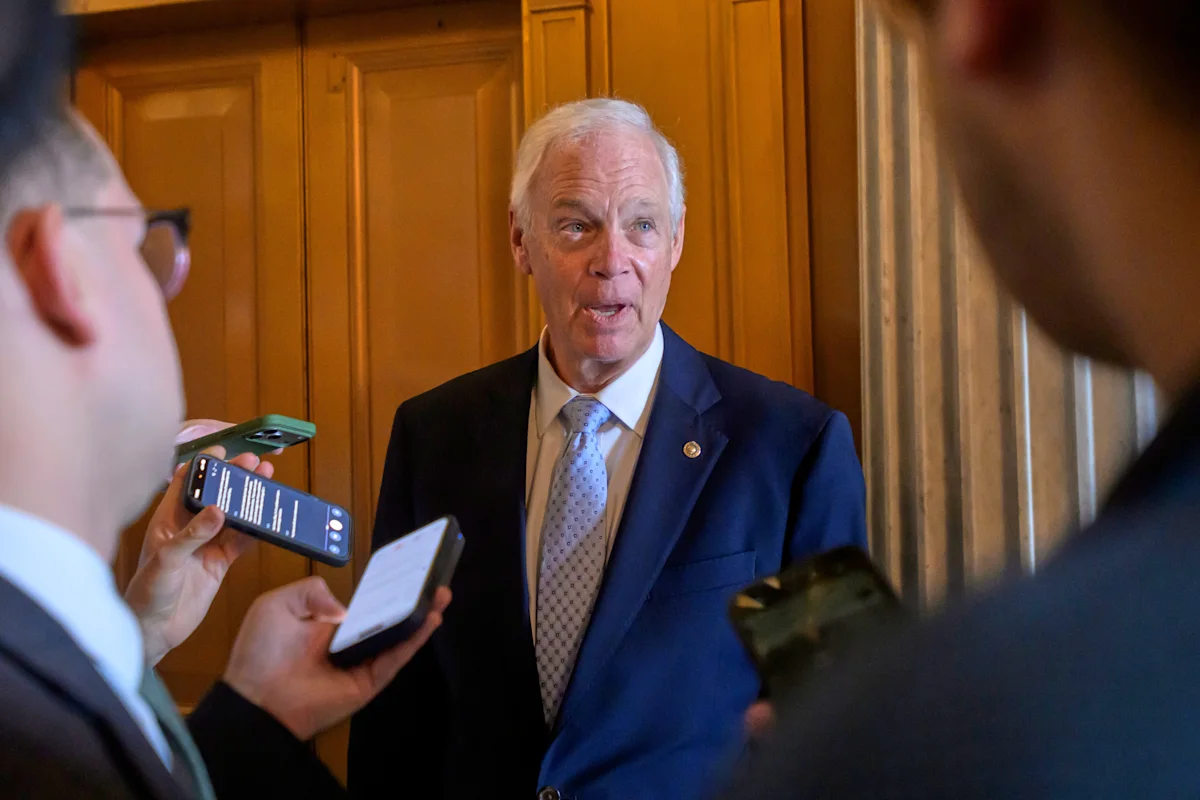
A new plan to pay Social Security benefits with even more government borrowing has drawn harsh pushback from budget experts, who note it would make America's debt exponentially worse and fail to fix the underlying problem.
Republican Sen. Ron Johnson introduced a bill this week that would forestall any cuts in benefits by authorizing transfers from the US Treasury in the event of a shortfall in Social Security's main Old-Age, Survivors, and Disability Insurance (OADSI) Trust Fund.
The bill has little chance of passage, but this week's contretemps illustrates Washington's current lack of readiness to confront the Social Security shortfall that is projected to be felt during the next presidential term.
An array of budget experts dismissed Johnson's plan as unserious. They say solutions are urgently needed before the program is depleted in about six years — but that this isn't it.
"Let's be clear: Senator Johnson's proposal would add $45 trillion (!) to the national debt through three decades," wrote Jessica Riedl, a budget and tax fellow at the Brookings Institution, calling it "generational theft."
"This isn't Social Security reform. It isn't even a nothingburger. It is actually anti-reform," said Douglas Holtz-Eakin, a former director of the Congressional Budget Office, calling it "a terrible step in the wrong direction."
Johnson, for his part, was unapologetic, writing on X , "My Stop Scaring Seniors Act simply prevents Social Security benefits from being reduced when the trust fund is depleted."
But with the US already more than $40 trillion in debt , Johnson's bill would need to be funded by more government borrowing which — the bill specifies — would not count toward US debt ceiling calculations.
"Not only does the legislation automate congressional malfeasance, it evades any congressionally set limits on that malfeasance," Holtz-Eakin added.
The Social Security program's trustees currently estimate that the program will face a shortfall by 2032, which, under current law, would force benefits to be cut by roughly 22% .
Experts for years have urged lawmakers to avert this shortfall through some combination of increasing revenue and the hot-button topic of reducing benefits.
Social Security is funded through payroll taxes. One fix often pushed by Democrats is to raise the taxable income cap, which rises to $192,300 in 2027 . Earnings above that amount are not subject to the tax, a break for wealthier Americans.
Topics in this story
Gathered from external sources. Rights to this text belong to whoever originally published it.