Army set to detonate lead munitions in Iowa: What to know
The Army is poised to detonate lead-containing weapons in Iowa on Wednesday, sending a burst of lead dust into the air. The controlled destruction of the munitions has been highly controversial, both over potential health risks and how the issue advanced to this situation in the first place. Here’s what the public needs to know:…
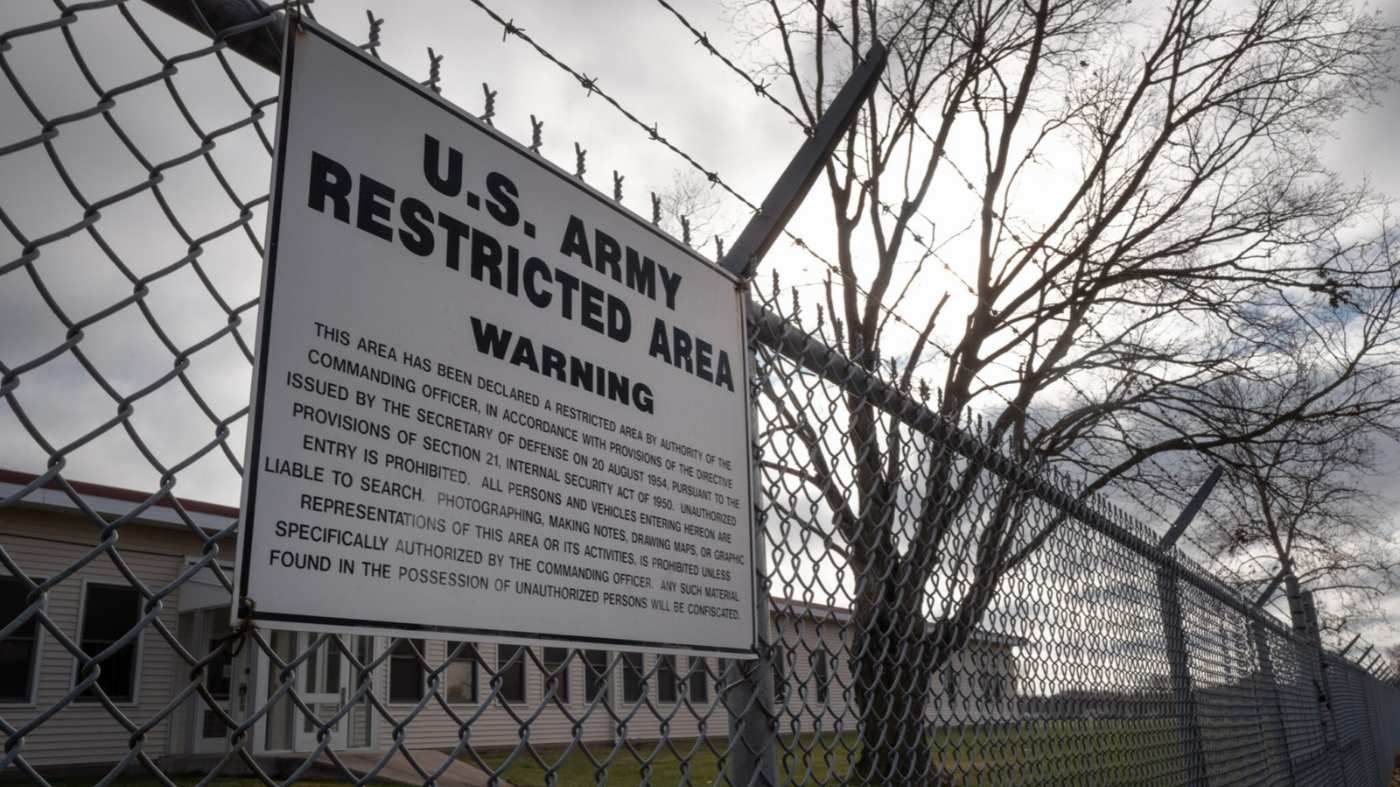
The Army is poised to detonate lead-containing weapons in Iowa on Wednesday, sending a burst of lead dust into the air.
The controlled destruction of the munitions has been highly controversial, both over potential health risks and how the issue advanced to this situation in the first place.
At around 9 a.m. local time on Wednesday, the Army is expected to explode lead azide munitions at the Iowa Army Ammunition Plant in Middletown. This is expected to send up a plume of lead-containing particles.
BestReviews is reader-supported and may earn an affiliate commission.
The latest map from the Army indicates that the plume could travel in a southwest direction.
Officials say they will take measures aimed at mitigating the impacts of the explosion, including using a water wall to absorb the blast impact and associated pollution.
Lead azide munitions appear to have been at the site for a long time. A 2014 press release references a research project happening in response to “concerns over a 40-year-old stockpile of lead azide deteriorating at the Iowa Army Ammunition Plant in Middletown, Iowa.”
The Army has said, meanwhile, that it “uncovered” the degrading lead azide in March. It said that “it was determined that a controlled detonation was the option that posed the lowest risk to the public in the immediate and surrounding area.”
Officials say that they need to dispose of the lead azide, an explosive used in detonators that’s currently being stored in 68 plastic drums, in a controlled way in order to prevent an accidental explosion that could have greater consequences.
Army Col. Aaron Teller said in a court filing that in April, the Army inspected the drums and found crystallization in 58 of them. He said the lids of the barrels where they are kept are “no longer safe to remove because of unknown crystal growth” meaning they cannot be refilled with a water and ethanol mixture that was being used to keep the lead azide stable.
Without that mixture, he said in court, the munitions are “more susceptible to freezing which can increase sensitivity of the crystals and cause an uncontrolled detonation.”
Teller warned against allowing the munitions to explode accidentally because “an uncontrolled detonation can result in an incomplete destruction of the lead azide during the explosion, causing both the potential for secondary explosive events and an extremely unsafe condition for personnel conducting post-blast cleanup activities. Incomplete destruction of the lead azide during an uncontrolled explosion may also cause unpredictable dispersal of the explosive material, leading to an ongoing explosives safety issue in the impacted area.”
While the government says the controlled detonation is the best way to go at this point, critics say the issue is a mess of the Army’s own making.
Rachel Rintelmann, managing attorney at Earthjustice, said that the key question is: “Why are we in this situation in the first place?”
“This may be an emergency now, but it is an emergency of the Army’s creation,” Rintelmann said. “It is their mismanagement of this hazardous waste and their allowing it to deteriorate to this point that has put us in this crisis now.”
What are the health impacts of lead exposure?
Lead is a neurotoxin and is particularly harmful to babies and children.
Exposure to lead in children can cause brain damage, nervous system damage, learning problems, behavioral issues and a lower IQ. In rare cases, it can also cause seizures, coma and death, according to the Environmental Protection Agency .
In adults, lead exposure can cause decreased kidney function, heart-related issues and fertility issues.
Lead exposure can also harm a developing fetus. In pregnant women, exposure can cause early birth or low birth weight, harm fetal development, and increase the risk of a miscarriage or stillbirth.
“Lead doesn’t break down into something else; it just is lead. And so, if that dust gets transported through the air, wherever it lands … it will be there for some time, so … that means it’s going to be a longer-term exposure,” Peter DeCarlo, a professor who studies air pollution at Johns Hopkins University recently told The Hill .
“One of the things we worry about sometimes is if this dust can get into a home and it’s no longer airborne, but it’s on the ground … then it’s particularly potentially problematic for little kids who play on the floor and who are more prone to putting their hands in their mouth,” DeCarlo said.
The latest Army advisory recommends relocation of “all residents of Middletown, Iowa, and immediate surrounding impacted areas” which includes a 5-mile cone extending southwest.
In a press briefing Wednesday, a key Department of Health and Human Services official particularly emphasized that children, pregnant women and chronically ill people should leave the area.
The Army said that residents outside the evacuation zone should shelter in place.
“Best practices include closing all windows and doors, setting heating to recirculate … turning off fans that pull in outside air … keeping small children and pets inside, and covering feed and water for livestock and crops,” the advisory states.
Illinois state officials have said that potentially impacted residents should stay inside by keeping doors and windows closed for 24 to 48 hours.
But the detonation is occurring the day before Thanksgiving, a holiday in which people frequently travel to each other’s homes.
President Trump this week backed the detonation but also sought to leave it in the hands of Iowa Gov.-elect Rob Sand (D).
In a Monday post on Truth Social, Trump wrote, “I feel the proper course is to get rid of this longterm problem but, at the same time, have ordered the Military not to do so until such time as the Eighth Circuit agrees that we can go forward, and am further making this decision fully subject to the incoming Governor Elect, Rob Sand, agreeing to the operation.”
“If he or the Courts do not agree, we will have no choice but to not proceed with the controlled removal of these hazardous materials, and be forced to hold the incoming Governor responsible for any and all death or destruction caused by this very unfortunate, and longterm, situation,” the president added.
In response, Sand passed the issue back to the Trump administration.
“The Administration should make this decision based on the information they have from the people they brought in to do the job months ago and have been on the ground in Middletown for weeks,” he wrote on social media Monday.
Sand also called for the federal government to share more information with the public.
Current Iowa Gov. Kim Reynolds (R) wrote Tuesday on social platform X, “I take the Army’s warning seriously that the choice is between a planned detonation and an uncontrolled explosion.”
“I believe, based on the information I’ve been given, that the danger is immediate, and I trust the Army will do everything in its power to protect the people who could be affected,” she added.
Iowa Sen. Chuck Grassley (R) has said in a statement that “a controlled, safe removal of the lead azide far outweighs a spontaneous catastrophe.”
Fellow Iowa Sen. Joni Ernst (R) said, “I understand the real risks of further delaying this controlled detonation. I support every effort to reduce the risk of lead exposure to the public.”
Topics in this story
Gathered from external sources. Rights to this text belong to whoever originally published it.