Bank of England must raise interest rates, says chief economist
The Bank of England must raise interest rates or risk losing market confidence, the central bank’s chief economist has said.
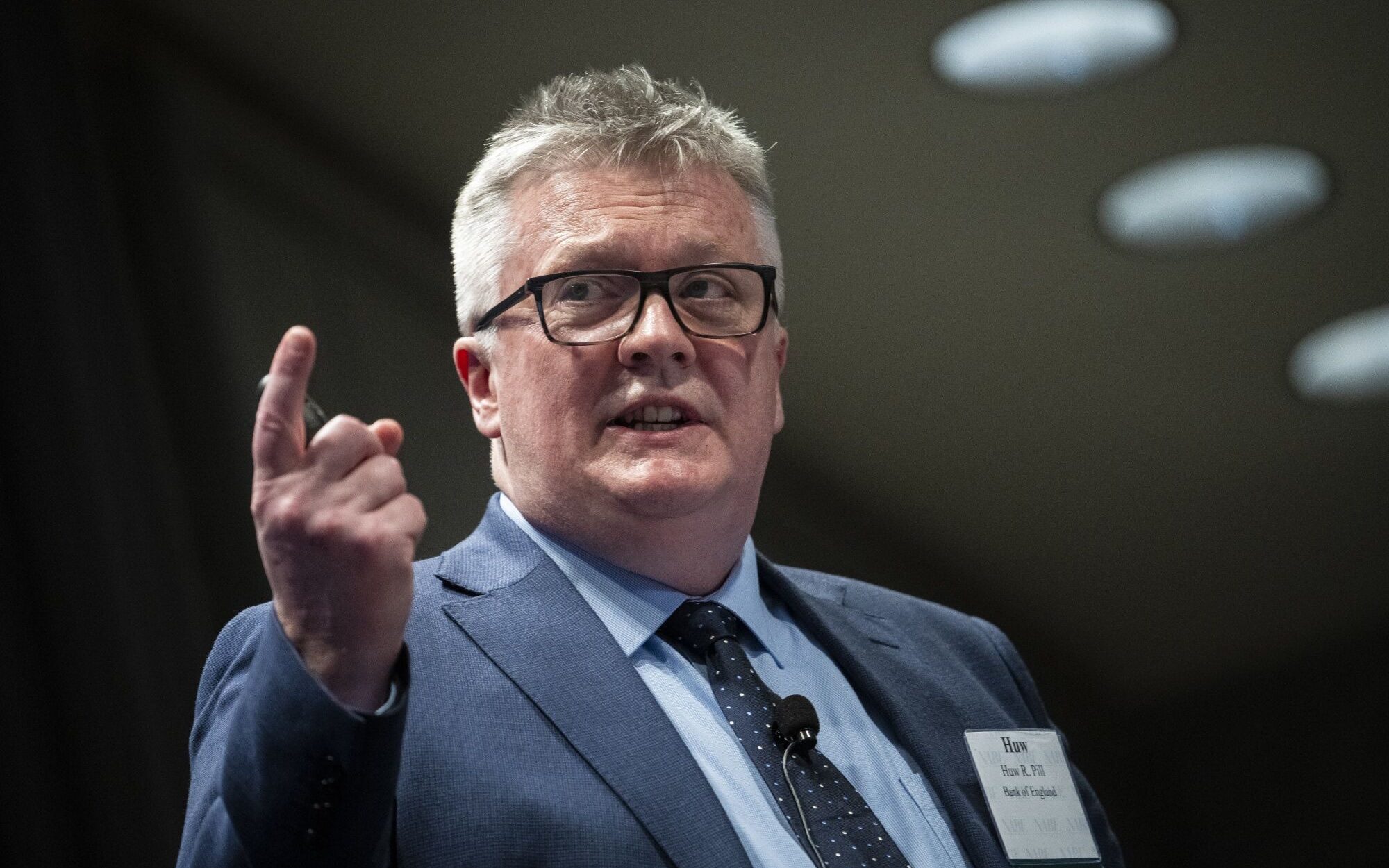
The Bank of England must raise interest rates or risk losing market confidence, the central bank's chief economist has said.
In a speech in Edinburgh, Huw Pill said he was "uncomfortable" with holding interest rates steady to assess the impact of the Iran War. He warned that investors could lose faith in the Bank's ability to tackle inflation.
He said: "The danger exists that the market may lose confidence that expected Bank Rate increases will be implemented just at the time as it starts to entertain doubts that the MPC [Monetary Policy Committe] [sic] ability or willingness to bring inflation down to target."
The warning from Mr Pill comes after the Bank of England's Monetary Policy Committee (MPC) voted 6-3 to hold interest rates at 3.75pc in July. It was held despite inflation standing at 2.9pc, above the Bank's 2pc target.
Unlike the majority of his colleagues, Mr Pill voted to increase the bank rate to 4pc
In his speech he warned that the "wait and see" approach currently taken by the Bank of England could result in rising inflation.
Mr Pill said: "We cannot wait for uncertainties to resolve themselves before acting. It is now six months since the onset of conflict in the Middle East.
"How or when the conflict will be resolved – and, more importantly, the magnitude of its implications for UK inflation – remain unclear: essentially as unclear as they were six months ago."
He added that policymakers should act "clearly, promptly and decisively" to raise rates to show they are prepared to tackle inflation while uncertainty continues.
The intervention comes as government borrowing costs rise rapidly in financial markets, partly due to inflation concerns.
Markets are currently pricing in just a 13pc chance that the Bank of England will vote to raise interest rates to 4pc at the next MPC meeting on September 17.
Thank you for following along with our coverage of the bond markets.
This week, borrowing costs in the UK have surged to multi-decade highs. A global sell-off in the bond market is partly to blame, though investors are also concerned about the UK's heavy borrowing ahead of Mr Burnham's first budget next month.
It comes as the Bank of England's chief economist has warned that the central bank must raise interest rates or risk losing market confidence.
Yields on 10-year UK government bonds have dropped by 0.1 percentage points, though are still up considerably from the start of the week. The 30-year yield has also eased by about 0.08 percentage points but also remains elevated.
Topics in this story
Gathered from external sources. Rights to this text belong to whoever originally published it.