Across the country, Kennedy touts MAHA, but not vaccines
Health and Human Services Secretary Robert F. Kennedy Jr. stood in the Oval Office last week as President Trump proudly signed an executive order to reduce childhood vaccines, heavily implying a link between vaccines and autism. But when Kennedy made appearances in California and then hit the campaign trail for Republicans in Iowa over the…
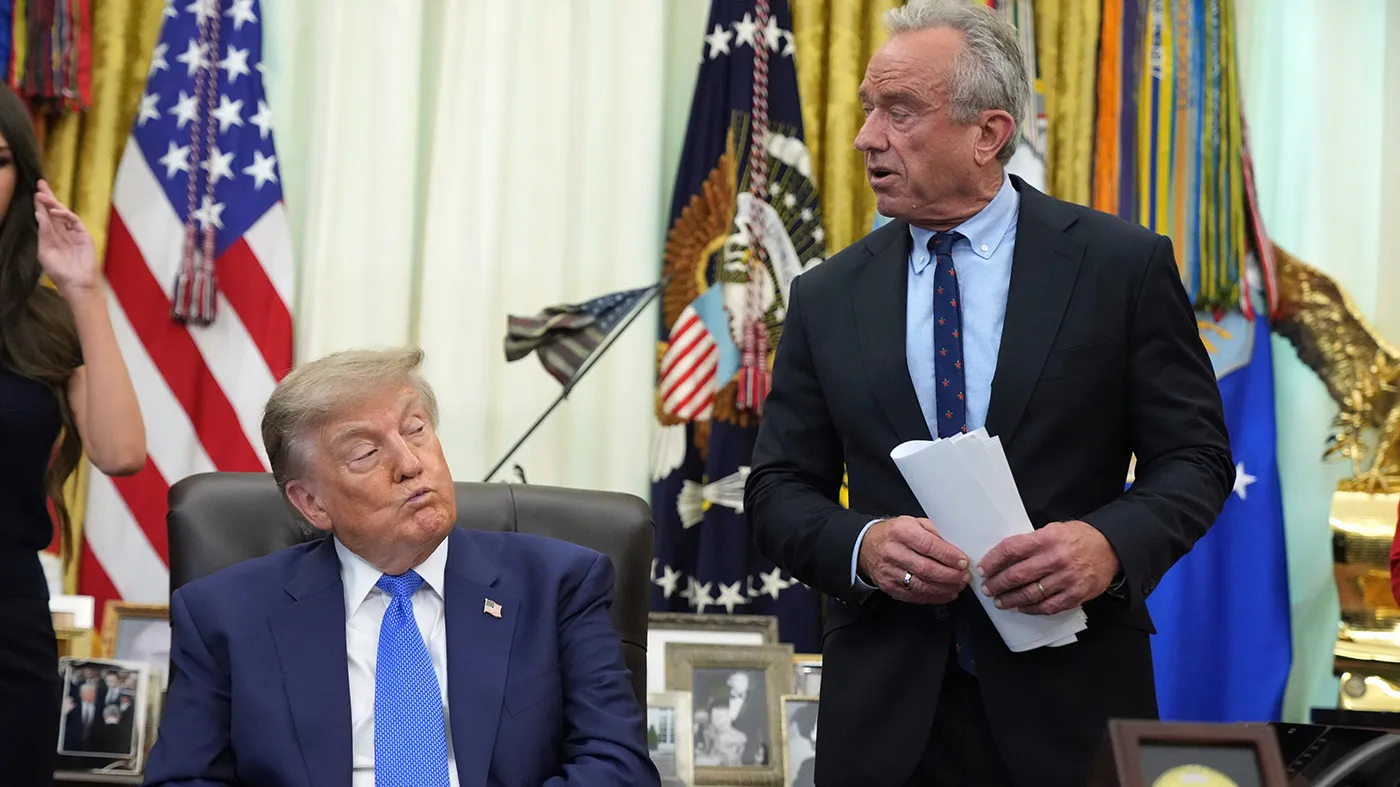
Health and Human Services Secretary Robert F. Kennedy Jr. stood in the Oval Office last week as President Trump proudly signed an executive order to reduce childhood vaccines, heavily implying a link between vaccines and autism.
But when Kennedy made appearances in California and then hit the campaign trail for Republicans in Iowa over the past week, vaccines weren’t on the agenda at all.
In Iowa, he spoke on the importance of nutrition, youth fitness and the revived presidential fitness test with Rep. Mariannette Miller-Meeks (R-Iowa) at a YMCA.
“We think the sedentary condition of many of our children is contributing to this malaise, to the mental health crisis, to the physical fitness crisis, to the chronic disease crisis in our country,” Kennedy said.
Alongside Republican Iowa Gov. Kim Reynolds, Kennedy announced a new statewide addiction treatment and prevention program. He visited a community health center to participate in a roundtable discussion focused on expanding access to primary and preventive care.
Kennedy even went fishing with Republican gubernatorial candidate Zach Lahn, who has been endorsed by Kennedy’s Make America Healthy Again PAC.
Through all his events over the past week, Kennedy has addressed vaccination — and by extension the country’s measles epidemic — only when asked a direct question.
“We’re doing everything that we can,” Kennedy told reporters in Dubuque, Iowa, about measles, saying the U.S. is in much better shape than other countries.
He blamed the COVID-19 pandemic for a loss of faith in the public health system and declining vaccinations worldwide, without mentioning the new executive order.
“During COVID, people lost faith in the public health system. … My job is to make the public health establishment trustworthy,” Kennedy said.
He is in the middle of a 10-day swing across Iowa, Minnesota and Florida, the White House said , part of his sweeping Make America Healthy Again Tour aimed at keeping MAHA supporters engaged ahead of the midterm elections.
It’s a sign the administration views Kennedy as an important asset in trying to help Republicans keep control of government.
“No administration has done more to address America’s chronic disease epidemic than the Trump administration, from overhauling the Dietary Guidelines for Americans to removing artificial ingredients from our food supply,” White House spokesperson Kush Desai said in a statement to The Hill.
“Secretary Kennedy and the entire HHS [Health and Human Services] team have been instrumental in these successes, and he will continue touting these historic wins for the American people.”
But Kennedy’s localized messaging highlights the conundrum facing the administration on vaccination and the varied interests of MAHA voters who are not necessarily strong Republican primary midterm voters and don’t necessarily support Trump at all costs.
The MAHA movement, which came about from the political alliance between Kennedy and Trump, is broadly focused on issues like chronic disease and childhood illness. It has elevated issues such as vaccine safety but also corporate interests in federal agencies and the presence of chemical additives and pesticides in the food supply.
“I think that the MAHA agenda has been one of the highest priorities of this administration, and it hasn’t been isolated to one or two issues. It’s really been a pretty big breadth of policy issues that they’ve taken on and had success with,” said David Mansdoerfer, who served in the HHS during the first Trump administration.
Mansdoerfer said he doesn’t think Kennedy is “shying away” from talking about vaccines so much as trying to sell what the administration says are MAHA wins.
“’Whether you agree or disagree with us, we are delivering on the agenda that we promised.’ So, to me, [Kennedy’s appearances are] an opportunity to translate the policy efforts done in D.C. to the local level,” Mansdoerfer said.
The White House and Kennedy had stepped back in recent months from aggressive actions to remake vaccine policy ahead of the midterms, until Trump brought it roaring back to the fore with his executive order aimed at reducing the number of recommended vaccines for the youngest children.
During the Oval Office event, both Kennedy and Trump multiple times hinted at the debunked idea that rising rates of childhood shots have led to an increase in autism diagnoses.
“Genes don’t cause epidemics. You need an environmental toxin,” Kennedy said, while thanking Trump for allowing him to reexamine the childhood immunization schedules.
“Decades ago, children received only a small fraction of the vaccines required today. In those times, people were much healthier, and of course, the high rates of autism now observed did not exist,” Trump said. “So there’s a reason for such epidemic rates of autism, and we’re going to bring it back to where it was.”
But 24 hours later, Kennedy arrived in California, where he spent the next three days talking up substance abuse treatment and the administration’s faith-based solutions to addiction and homelessness.
Kennedy also spoke about combatting health fraud — a key priority for the Trump administration.
During a visit to a community health center in the Central Valley, Kennedy was asked about how the vaccine order would impact California.
“The president’s executive order should not change the way that children are vaccinated. In California, the state decides what the vaccination schedule is,” Kennedy said, as first reported by Politico.
Topics in this story
Gathered from external sources. Rights to this text belong to whoever originally published it.