What to know about Trump’s MAHA-backed push for psychedelic research
The Trump administration, under the influence of the Make America Healthy Again (MAHA) movement, is exploring the potential use of psychedelic substances in medicine — once a fringe topic that is now being heavily researched and invested in. The Food and Drug Administration (FDA) held a public hearing in September in which over 200 people requested…
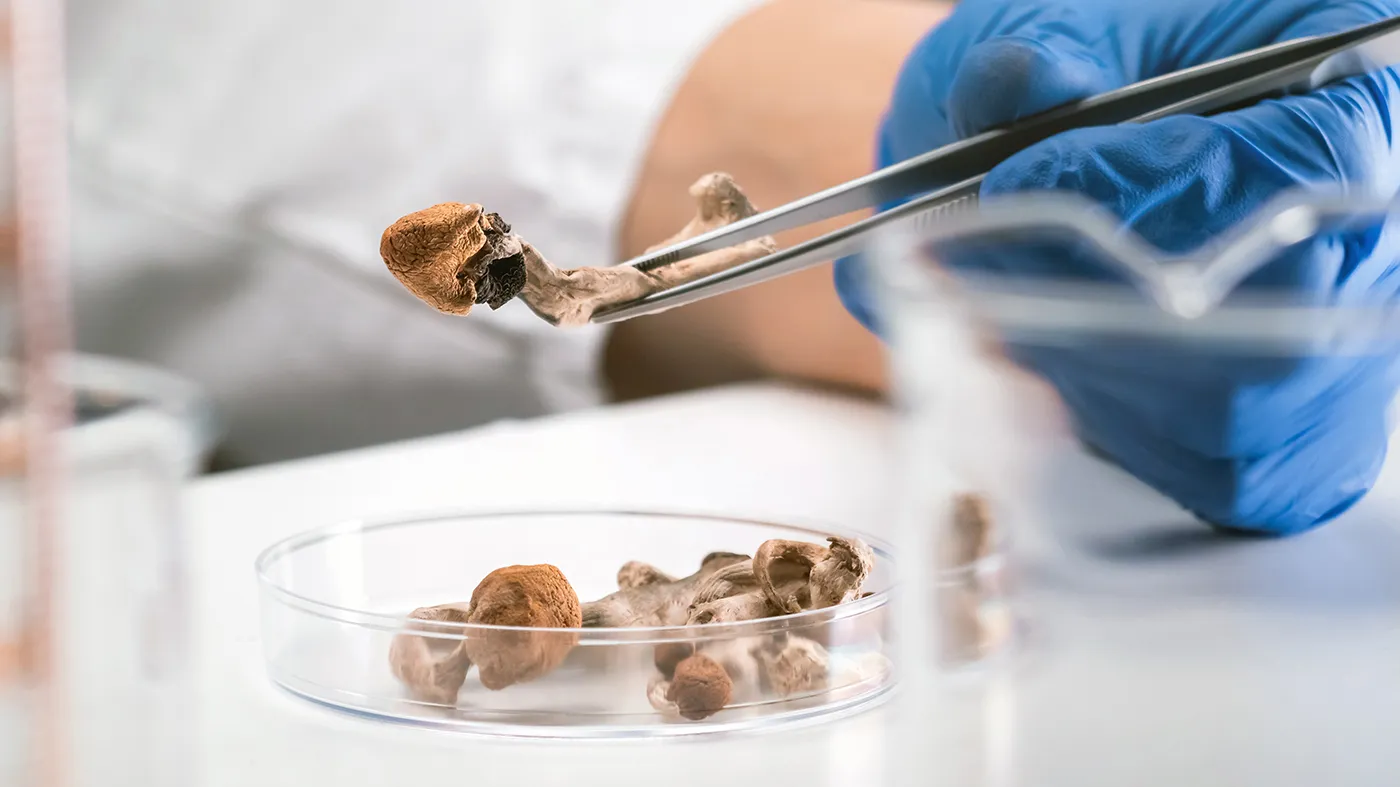
The Trump administration, under the influence of the Make America Healthy Again (MAHA) movement, is exploring the potential use of psychedelic substances in medicine — once a fringe topic that is now being heavily researched and invested in.
The Food and Drug Administration (FDA) held a public hearing in September in which over 200 people requested to comment on the potential uses of psychedelic drugs, with substances like psilocybin, MDMA, ayahuasca and ibogaine discussed.
Simeon Schnapper, managing partner at JLS Fund and self-described psychonaut, argued in front of FDA officials that psychedelic research was the next frontier in medicine.
“The agency has done this before three times in my lifetime: biologics, cell and gene therapy, cannabinoid medicines,” Schnapper said.
“Each began as fringe and became medicine, but only after the agency chose to close the gap between the patients or what patients needed and what they could reach. Closing the gap is not a slogan. It is a set of choices,” he added.
Commenters at the meeting expounded on the potential uses psychedelics could have for conditions like PTSD, treatment-resistant depression and substance use disorder.
Here’s what to know about the growing openness to psychedelics in health.
Health and Human Services (HHS) Secretary Robert F. Kennedy Jr., who has been in recovery from addiction for several decades, has expressed support for psychedelic use in mental health despite admitting to some reservations about using substances, given his history.
In a 2024 interview , Kennedy credited his support for psychedelic decriminalization to one of his sons having positive experience with ayahuasca and experiencing improvements in his behavior as a result.
Potential regulatory approval for psychedelics got a major boost in April when President Trump signed an executive order directing HHS to accelerate access to treatments for serious mental illnesses. As part of this order, the FDA announced accelerated actions to research and approve psychedelic therapies like ibogaine.
This support was all the more evident at the MAHA Summit hosted in Washington, D.C., at the end of September, where the first panel of the day focused on psychedelic use. The CEOs of three separate companies developing psychedelics for use in mental health care were joined HHS deputy general counsel Matthew Zorn for the discussion.
These company leaders painted a picture of a mental healthcare system that’s grown stagnant and complacent.
Rob Barrow, CEO of Definium Therapeutics that is currently developing LSD as a potential psychiatric medication, said in the panel, “For the last 30 years, we’ve basically lived in an SSRI world where you show up to the primary care physician and say ‘I’m not feeling good, I’m feeling sad everyday,’ and you’re going to get put on Zoloft, Prozac, put on SSRI.”
“One of the unfortunate realities is that those products are not particularly effective. They are for some patients but for many they are left far, far underserved and what we have to offer them beyond that is virtually nothing.”
Substances like psilocybin, LSD and MDMA are Schedule I substances under the Controlled Substances Act, meaning they do not currently have any accepted medical uses and are believed to have a high potential for abuse. This places psychedelics within the same category as illicit drugs like heroin and bath salts.
This distinction has limited psychedelic research, but companies and universities are actively investigating related substances. None have yet to receive FDA approval and, according to researchers, the evidence is promising but still in development.
“A lot of the research is still in development, so we’re still learning. But the studies that have been published show promising results for a variety of mental health indications; PTSD if we’re talking about MDMA, and then for psilocybin, major depressive disorder and treatment-resistant depression,” said Alia Lilienstein, a research physician at the UC Berkeley Center for the Science of Psychedelics.
Lilienstein’s research involves looking into the effects of psilocybin, including how it affects the aging brains of people between 60 and 85 years of age. She noted that because the U.S. uses FDA regulatory pathways to define indications and the safety of drugs, and there are no FDA-approved psychedelics today, it’s difficult to definitively say what the risk and benefits of these substances are.
According to David Yaden, an associate professor and the Roland Griffiths Professor of Psychedelic Research at Johns Hopkins University School of Medicine, distinguishing between individual substances is important when discussing psychedelics as the risk-benefit profiles can vary widely.
“When we’re talking about something like psilocybin, for example, it’s not necessarily nascent anymore,” said Yaden. “There’s big Phase II and Phase III studies across multiple sponsors with many hundreds of participants.”
There have been no recorded deaths linked to psilocybin toxicity, in contrast to another commonly discussed psychedelic like ibogaine.
It’s unclear whether any psychedelic substance will ultimately gain FDA approval. But the pharmaceutical industry seems to think there’s high potential for it.
In July, pharmaceutical giant Eli Lilly announced it had acquired the biotechnology company AtaiBeckley, which is developing psychedelic drugs like DMT as potential treatments for treatment-resistant depression and MDMA for social anxiety disorder.
Topics in this story
Gathered from external sources. Rights to this text belong to whoever originally published it.