Pentagon, under Hegseth, expands war on drug cartels with troops on ground in South America
The Pentagon is expanding the U.S. military’s multifront war against drug cartels in South America. For more than a year, the U.S. military has been blowing up alleged drug boats on both sides of the continent. Forces have also begun interdicting refueling vessels off the coast of Ecuador before destroying them. And recently, U.S. special…
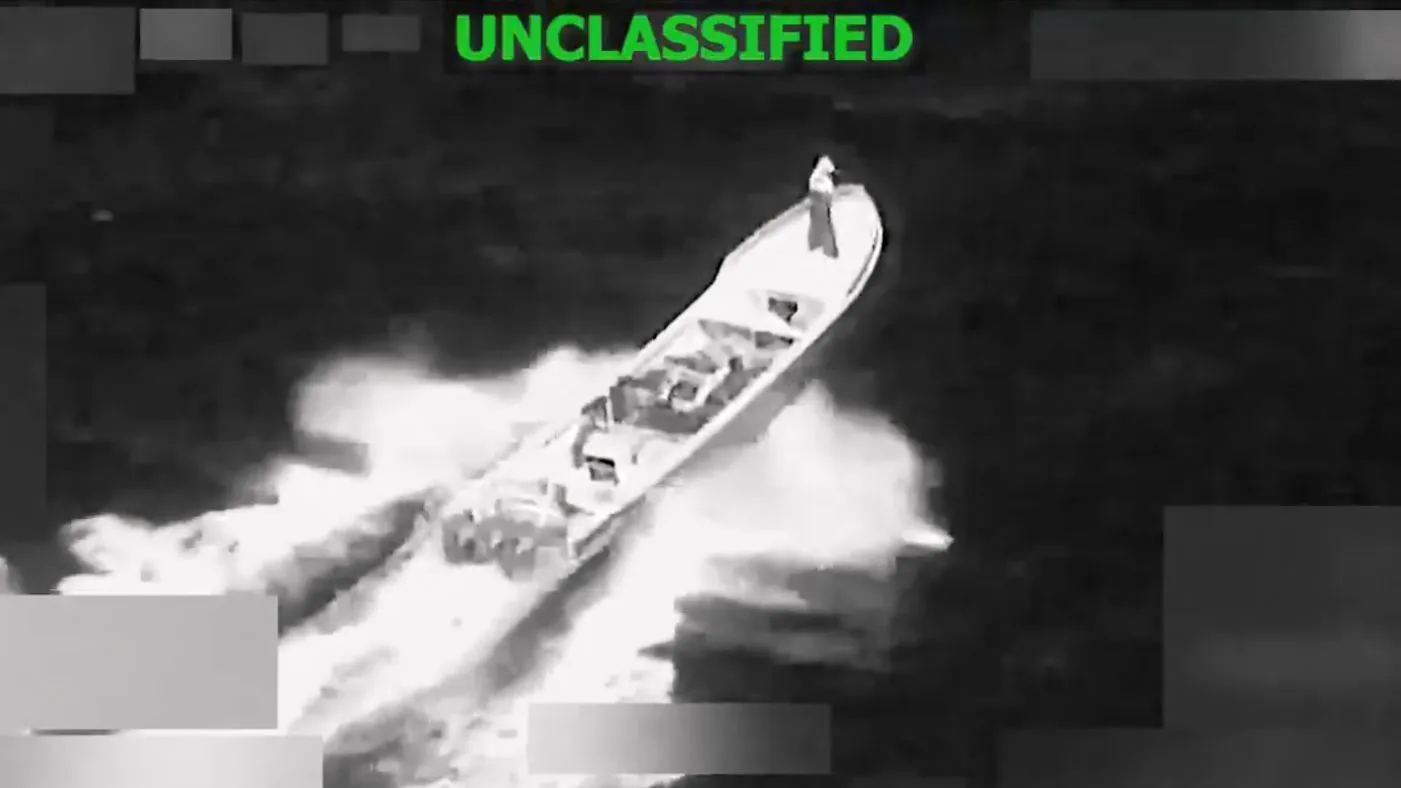
The Pentagon is expanding the U.S. military’s multifront war against drug cartels in South America.
For more than a year, the U.S. military has been blowing up alleged drug boats on both sides of the continent. Forces have also begun interdicting refueling vessels off the coast of Ecuador before destroying them.
And recently, U.S. special forces started embedding on the ground with Ecuadorian authorities in raids against alleged drug traffickers, introducing a new front in the Trump administration’s campaign against criminal groups designated as foreign terrorist organizations.
“Based on our assessment of what needs to be done, this plan focuses on five core lines of effort: dismantling illicit networks, attacking network logistics, preventing adversary regeneration, bolstering partner sovereignty and security, and building a strong coalition,” U.S. Southern Command (Southcom) Commander Gen. Francis L. Donovan said in a recent interview with The Hill when discussing Southcom’s “Offensive Campaign Plan” that addresses regional threats to security and stability.
Since returning to the White House last year, President Trump has pressured drug cartels in the Western Hemisphere, warning that their drug trafficking is directly contributing to the deaths of Americans.
The U.S. has labeled 20 Latin American-based cartels and other criminal groups as foreign terrorist organizations and began kinetic actions across the continent last fall. The administration has also deepened its defense cooperation with countries, establishing the 19-member Americas Counter Cartel Coalition (ACCC) to counter transnational organized crime.
The cooperation has borne fruit in Ecuador, where the government has wanted to aggressively partner with U.S. forces to help take out criminal syndicates such as Los Choneros and Los Lobos, which have ties to Mexico’s Jalisco New Generation Cartel.
Two weeks ago in Ecuador, about 50 U.S. service members and law enforcement personnel took part in raids carried out by Ecuadorean police against alleged drug traffickers.
The U.S. military collaborated with Drug Enforcement Administration (DEA) counterparts and the Ecuadorian military in the lead-up to the raids, according to a senior U.S. official.
Going forward, the U.S. special operations forces will help train partner forces to aid in “command and control” operations on the ground, but they “are not on target until the target’s clear,” the senior official said.
“Then we bring our special operations forces with their abilities to do sensitive site exploitation to develop the intelligence for the next operation,” the official said.
Benjamin Gedan, a senior fellow and the director of the Stimson Center Latin America program, said the U.S. in the past has fought organized crime in the region by strengthening criminal justice institutions, including courts, prosecutors and police. He argued today’s Pentagon strategy principally relies on “mislabeling drug gangs as terrorists and blowing things up.”
“That approach generates content for social media, but it will do little to disrupt the drug lords responsible for the mayhem in Latin American communities and the region’s epic struggle with public corruption,” Gedan told The Hill.
Previously, the U.S. has given Ecuador and other allied countries gear, training and intelligence support to go after criminal groups.
The U.S. conducted the first joint operation with Ecuador in early March. The U.S. Southern Command (Southcom) conducted an attack alongside Venezuela that killed a Tren de Aragua gang leader.
Ecuador’s relationship with Washington has evolved and on-the-ground raids will resume.
“That’s kind of like a graduation of how we’ve been able to work with that country, but certainly not the endpoint. Just kind of like progress along the way. So I think you will expect to see more operations, especially as capabilities begin to start to develop,” a senior Pentagon official, who spoke on condition of anonymity to discuss internal military matters, told The Hill on Tuesday.
Guatemala and Honduras have sent letters to the U.S. requesting joint operations, according to the senior Pentagon official.
Former acting DEA Administrator Derek Maltz said the Trump administration has recognized that synthetic drugs have “destroyed” American communities and families at “levels that we’ve never seen in the history” of the U.S.
“A lot of people that seem to think some of these tactics are a little aggressive,” said Maltz, who spent nearly 30 years in law enforcement. “Well, you have to be aggressive against terrorists because they’re destroying our future.”
Maltz said the administration has recognized it needs to decimate the cartels’ supply line, funding streams, operations and manufacturing labs throughout the region. He predicted there soon could be operations inside Colombia, which has been overflowing with cocaine trafficking.
“I would anticipate that they will provide any type of support that the Colombians or Ecuadorians or Hondurans the leadership requests,” he said, calling the U.S. special forces “best in the business.”
Donovan said Southcom’s objective is to apply “total systemic friction” against the narco-terrorists groups.
“To reflect this, we have shifted our terminology from isolated lists of terrorist organizations to hemispheric threat networks. These networks span from the points of origin, such as cocaine production in Colombia or Northern Peru, as well as other illicit activities, and move north toward the United States through Mexico, along the eastern and western coasts, or across the Atlantic and Pacific oceans,” Donovan said in the interview. “We are now actively tracking these alternate logistics flows.”
The U.S. military continues to carry out deadly strikes against alleged drug-trafficking vessels in the Caribbean and Eastern Pacific. American forces have conducted at least 71 strikes and killed 239 people the U.S. alleges are “narco-terrorists” since Sept. 2, 2025.
Critics, including some law-of-war experts, have panned the attacks as summary executions.
Since late August, the U.S. military has zeroed in on another target off the coast of Ecuador — “floating refueling stations” — taking a more humane approach. A helicopter hovers over the water, and U.S. Marines board the large fishing vessel to remove the crew on board, handing them over to Ecuadorian authorities. And then the boat is blown up.
The multifront campaign has curbed the flow of cocaine heading toward the U.S.
The movement of vessels with U.S.-bound cocaine has been reduced between 30 percent and 60 percent in the Eastern Caribbean, Western Caribbean and the two lanes in the Eastern Pacific, south Galapagos and north Galapagos, according to the senior Pentagon official.
Central Caribbean was the only maritime corridor that has seen an increase, and the U.S. is working with the Dominican Republic, Jamaica, the Bahamas and other nations to develop an “island chain of homeland defense” to halt the flow, the official said.
The U.S. is pouring more resources into Latin America as the Trump administration continues executing its pivot to the Americas.
The Pentagon has moved a few MQ-9 Reaper drones, which can cost up to $50 million each, from the U.S. Africa Command to Ecuador and Colombia, the New York Times reported on Tuesday. Southcom declined to comment.
“The U.S. is kind of saying we’re going to provide you with the tools, not only maybe to actually strike at some of these gangs, but really I think first and foremost to surveil your territory and try to identify illicit activity that’s going on, and you have that capability as opposed to going to us,” said Henry Ziemer, a fellow with the Americas Program at the Center for Strategic and International Studies, adding that Colombia and Ecuador have historically had limited long endurance UAV capabilities.
Latin America has a diverse terrain — from jungles to mountains to plains — posing a challenge in tracking down narcotraffickers on the ground. It’s a task that MQ-9 drones, which are equipped with precision weapons, wide-range sensors and multimode communications suite, can help with.
“Many times these sites are out in the middle of the jungle, and they’re very large scale, like industrial-size sites,” Maltz said. “We know where a lot of these operations are, so they can completely decimate them without putting anybody at risk.”
Defense Secretary Pete Hegseth said over the weekend that some U.S. troops could be redeployed from Europe to the Western Hemisphere, reiterating the U.S. military is at “war” with drug cartels.
“So we’re going to posture and base as necessary to ensure that we have our foot on the pedal and are taking the fight to those ISIS and Al Qaeda of our hemisphere,” he said Saturday.
There is an effort to surge resources to Southcom, including personnel, assets and other financial resources. Additionally, there have been recent discussions within the Pentagon about moving more troops to the Southcom region, according to the senior Pentagon official.
Adam Isacson, the director for Defense Oversight at the Washington Office on Latin America, said the Pentagon’s drug war will look different than 30 years ago with the joint operations and that U.S. personnel are present in several Latin American countries.
“What could happen, though, is like what happens often, and certainly happened a lot 20 years ago in Colombia, where there’s no formal arrangement, but if you go to many military bases in Colombia at any given moment, then there will be U.S. troops there doing some mission: training, intelligence, logistics, construction.”
U.S. Marines have been at Taura Air Base east of Guayaquil, Ecuador’s biggest city, since August. Marines have launched AeroVironment RQ-20 Puma, a small unmanned aircraft system, for unit-level training.
“Well, we’re conducting joint operations now. We don’t necessarily need to have a base here in order to do that. They had a referendum vote last year,” Secretary of State Marco Rubio said last month during his visit to Ecuador, referring to last year’s referendum in Ecuador in which voters rejected a reversal to a provision that bars building foreign military bases.
Isacson said land strikes are very much a possibility and could come at the border between Ecuador and Colombia.
“I would look for a ramp-up of U.S. assistance and some level of participation in joint operations. If I had to pay money, I would say near the Ecuador border because they’re already doing things on the other side of the Ecuador border, and it’s the same armed groups,” he said.
In late August, U.S. Southern Command (Southcom) Commander, Marine four-star Gen. Francis Donovan met with Colombian Defense Minister Jorge Eduardo Mora in Tumaco, a port city located in the southwest corner of Colombia.
Isacson said those areas are more likely to be targeted than anything near Colombia’s border with Venezuela, where National Liberation Army (ELN), a far-left guerrilla force, is “very good” at bombing oil pipelines.
“If they start kicking the hornets’ nests with the armed groups that operate in the Venezuela border region…those groups could get riled up on the Venezuelan side.”
The Pentagon is looking at the Guatemala-Mexico border and the U.S. border with Mexico as possible areas for future military operations, according to the senior Pentagon official.
“Instead of firing a bunch of arrows and a bunch of targets, you fire a bunch of arrows at the same target, right? And so some of these arrows are law enforcement finishes. Some of these arrows are kinetic finishes. Some of these arrows are maritime strikes,” the official said. “Some of these arrows are land strikes.”
Gathered from external sources. Rights to this text belong to whoever originally published it.