Trump backs diesel export ban; Bessent says admin ‘examining that’
The Trump administration is considering a ban on exports of diesel as high prices of the fuel put a crunch on American agriculture and trucking. Asked Tuesday whether he was considering a ban on diesel exports, as some Republican lawmakers have called for in recent days, President Trump said, “I’ve called for that, too.” “I’ve…
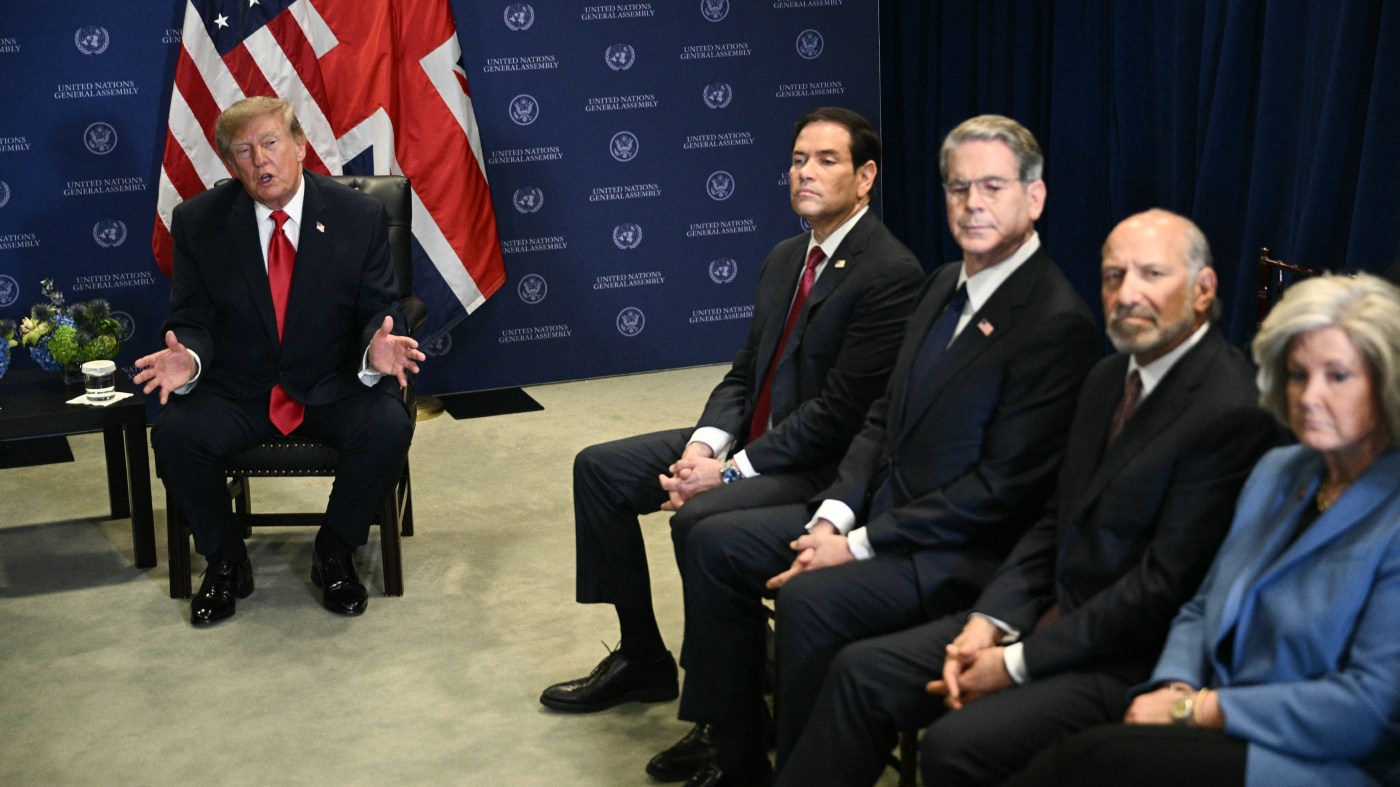
The Trump administration is considering a ban on exports of diesel as high prices of the fuel put a crunch on American agriculture and trucking.
Asked Tuesday whether he was considering a ban on diesel exports, as some Republican lawmakers have called for in recent days, President Trump said, “I’ve called for that, too.”
“I’ve said, ‘Let’s not send out the diesel.’ We make a lot of diesel,” Trump said during a bilateral meeting with Ukrainian president Volodymyr Zelensky on the sidelines of the United Nations General Assembly.
“I’ve called for it within my people. I’ve been talking about it,” he added, then called upon Treasury Secretary Scott Bessent to expound on the issue.
“We’re examining that, whether it’s feasible in terms of the overall refining capacity and whether a full or partial ban would work,” Bessent said.
It’s not clear how soon, if ever, the administration could come to a decision on whether to actually restrict exports of diesel. The White House declined to answer follow-up questions from The Hill, referring back to the president’s remarks.
Over the weekend, several Republicans, particularly those from agriculture-heavy states such as Iowa, expressed support for barring diesel exports as prices hit record levels .
The option divides GOP lawmakers, with members from more oil-producing states dismissing the idea as “a gimmick.”
The average price of diesel, which powers tractors and trucks alike, was averaging about $6.53 cents per gallon on Tuesday, according to AAA , up about 93 cents from this time last month and $2.84 from this time last year.
Experts recently told The Hill that high diesel prices were due to both higher prices of oil — stemming from instability over the U.S.-Iran conflict — and damage to refineries that turn oil into fuels caused by both the U.S.-Iran and Russia-Ukraine wars.
Topics in this story
Gathered from external sources. Rights to this text belong to whoever originally published it.