Oil prices up after new strikes on Saudi infrastructure
Oil prices on Monday leaped more than 4 percent after Yemen-based militant Houthis struck Saudi Arabia’s infrastructure and ships, leaving one crucial pipeline out of service for weeks. The global benchmark for crude oil, Brent crude, settled at $105.66 per barrel as of Monday afternoon. West Texas Intermediate (WTI), the benchmark in the U.S., rose…
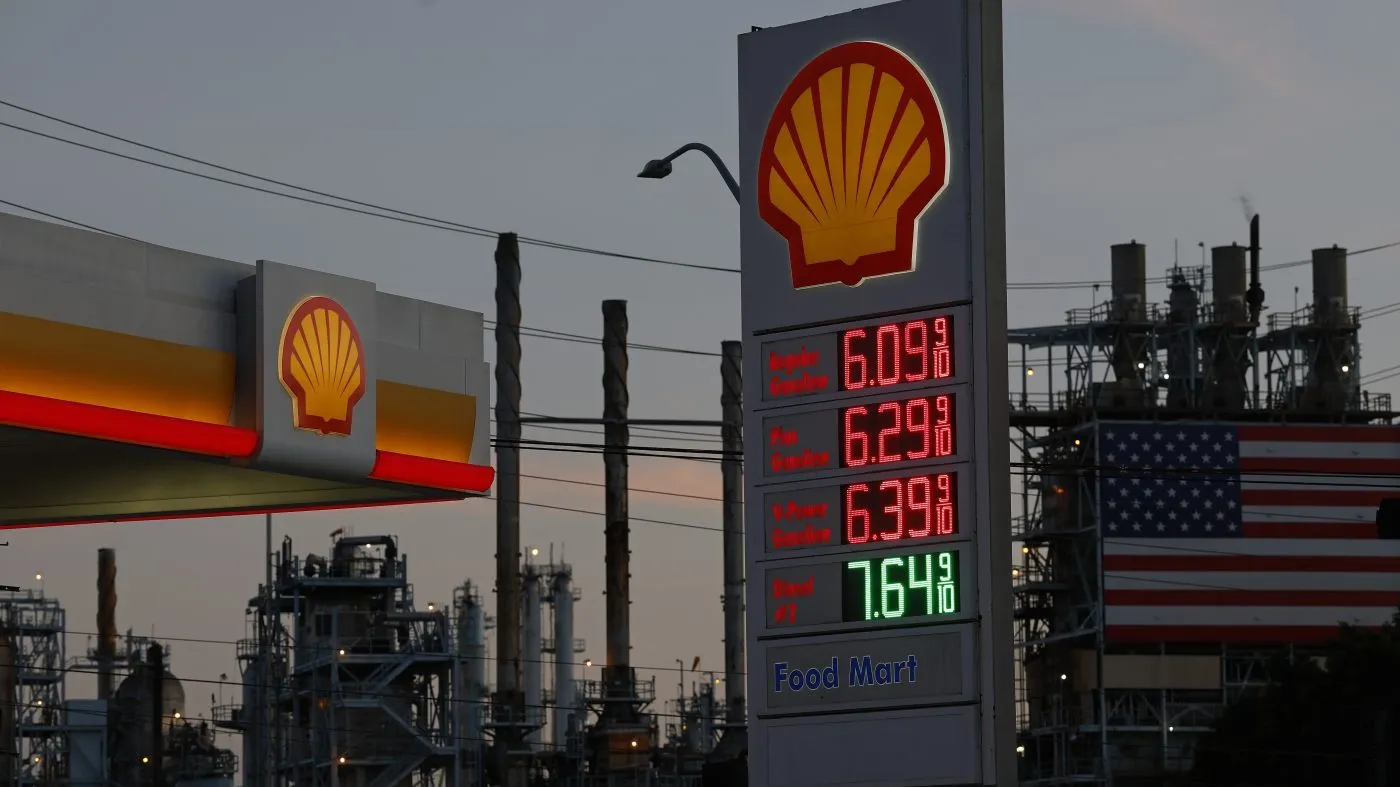
Oil prices on Monday leaped more than 4 percent after Yemen-based militant Houthis struck Saudi Arabia’s infrastructure and ships, leaving one crucial pipeline out of service for weeks.
The global benchmark for crude oil, Brent crude , settled at $105.66 per barrel as of Monday afternoon. West Texas Intermediate (WTI) , the benchmark in the U.S., rose to $101.28.
The average price of gas in the U.S. reached $4.32, a 7-cent increase since last week, and the average price for diesel reached $6.23, a new record, both according to data from AAA .
Saudi Arabia’s 745-mile-long East-West Pipeline has helped the government move crude production from the Persian Gulf ports to the port of Yanbu on the Red Sea, where tankers can export oil.
Saudi officials familiar with the Thursday attack on the pipeline told the Associated Press that it could take 3-5 weeks to repair, though it could partially work while crews work to fix it. The pipeline moved a weekly average of 2.6 million to 4 million barrels a day since late August.
The Norway-based energy analyst Rystad Energy said Monday that the increase in the price of Brent crude “is a clear signal that the market is increasingly pricing in a significant loss of supply.”
The Houthis, a proxy of the Iranian regime, entered the U.S.-Israeli conflict in Iran to retaliate against Gulf state attacks on Iran after calling on Persian Gulf countries, the U.S. and Israel to seek a path to diplomacy and peace with Iran. They warned that they would retaliate if the conflict escalated.
The Houthis also captured the crucial islands of Greater and Lesser Hanish, which are both located 100 miles north of the Bab el-Mandeb Strait, which connects the Red Sea to Saudi Arabia’s key Asian markets. The islands are also 20 miles from a U.S. military base in Djibouti in the Horn of Africa.
The rebels also took over the port city of Mokha, another Red Sea port crucial to shipping, risking opening up a new front in the Iran war. The Saudis have reportedly urged President Trump to launch strikes on the Houthis, while the U.S. has sent more than 100 advisors to help the Saudis in their fight with the rebel forces.
Oil exports through the Red Sea after passing through the East-West Pipeline have been an alternative to exporting oil out of the Strait of Hormuz. The Iranian regime has effectively cut off the transit of oil out of the region in response to U.S. strikes, causing gas and oil prices to skyrocket.
Diesel prices have soared to record highs as Ukraine carries out its drone strikes on Russian refineries . Trump urged Ukrainian President Volodymyr Zelensky to call off further attacks on these refineries.
“He has to stop knocking out diesel fuel in Russia,” Trump told reporters on Sunday. We spoke to Mr. Zelenskyy about it. There are plenty of other targets. Don’t hit diesel fuel, because that’s hurting the world.”
Topics in this story
Gathered from external sources. Rights to this text belong to whoever originally published it.