Ruiz: ‘Medicare for All’ not a ‘realistic expectation’ in next Congress
Rep. Raul Ruiz (D-Calif.) indicated on Tuesday that passing “Medicare for All” may not be an attainable goal for the next Congress, despite a progressive push to institute a universal single-payer health insurance system after Democrats take control of both chambers in January. “I don’t think it’s going to be realistic, and I don’t think…
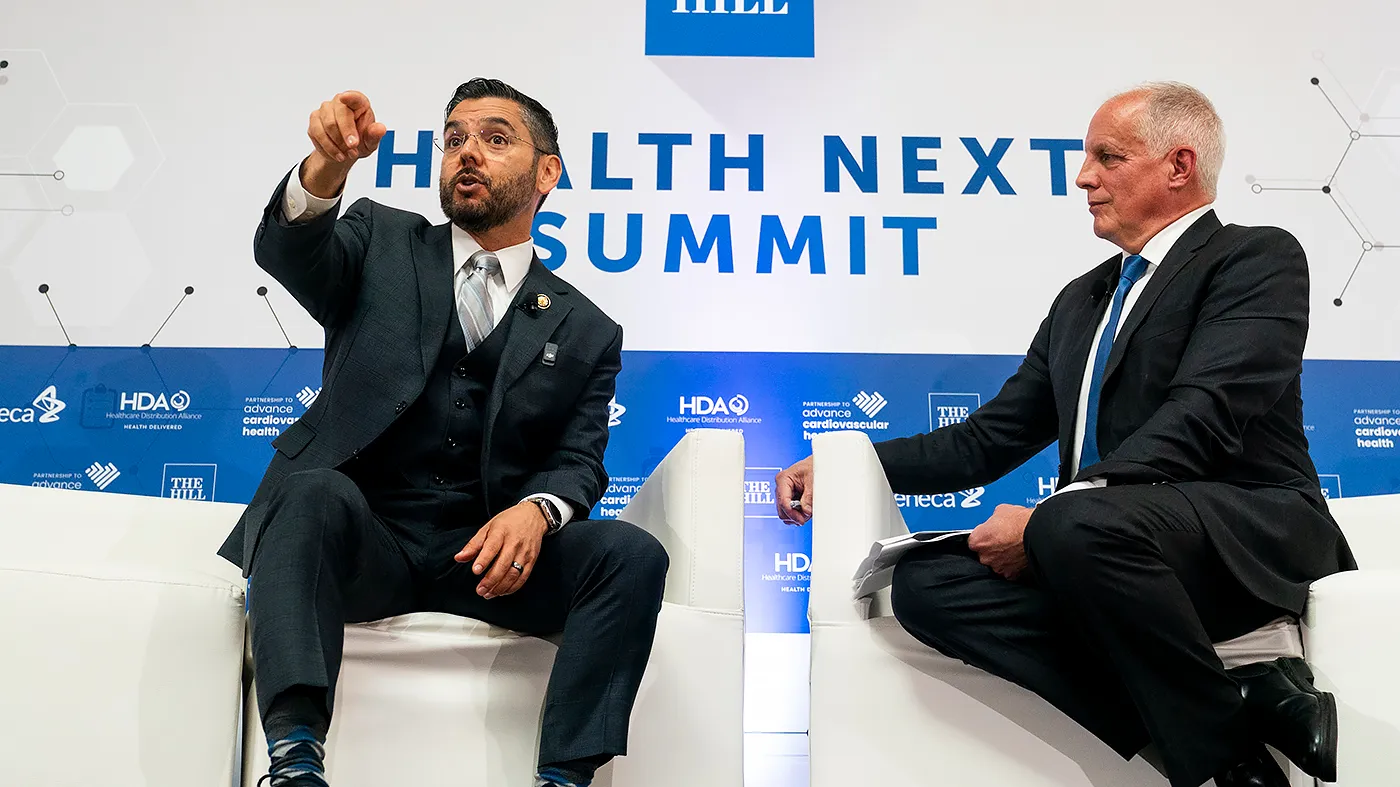
Rep. Raul Ruiz (D-Calif.) indicated on Tuesday that passing “Medicare for All” may not be an attainable goal for the next Congress, despite a progressive push to institute a universal single-payer health insurance system after Democrats take control of both chambers in January.
“I don’t think it’s going to be realistic, and I don’t think there’s consensus right now,” he told NewsNation’s Washington bureau chief, Mike Viqueira, at The Hill’s Health Next Summit .
Ruiz, who is vying for the top spot on the House Energy and Commerce Subcommittee on Health, noted President Trump’s veto power over legislation passed by a Democratic-controlled legislature. Ahead of the midterm elections, the president threatened to “become Mr. Veto” if his party lost control of Congress.
“So we need to do bite-sized approaches to remedy the current crisis while we work on legislation that will help us reach universal coverage for every American,” Ruiz said at the summit, which was sponsored by AstraZeneca, the Healthcare Distribution Alliance and the Partnership to Advance Cardiovascular Health.
Healthcare was a top issue for voters this election cycle, and several newly elected progressive lawmakers campaigned heavily on promises to push for a single-payer healthcare system. Party leaders vowed to make health costs a major priority if they flipped control of Congress.
Sen. Bernie Sanders (I-Vt.), a longtime proponent of Medicare for All, re-upped his calls for passing the legislation after Democrats secured majorities in both chambers of Congress last week.
Sanders, who caucuses with Democrats, is expected to be the next chair of the Senate Health, Education, Labor and Pensions Committee, where he will have a platform to push for the legislation.
He said Thursday that Democrats’ “immediate first step” after taking control of the Senate should be to lower the Medicare eligibility age from 65 to 55 years, expand Medicare coverage and guarantee universal health care coverage for children younger than 19 years.
At Tuesday’s event, Ruiz urged a focus on the “emergency at hand,” echoing House Minority Leader Hakeem Jeffries’s (D-N.Y.) repeated calls to reverse the cuts under the GOP’s One Big Beautiful Bill Act, which shaved nearly $1 trillion from Medicaid programs.
Additionally, Ruiz also stressed the importance of reinstating the Affordable Care Act’s premium tax credits, which expired at the end of last year, and supporting rural hospitals.
“I think that the American people really sent a big message that they need some relief,” he said.
Ruiz noted that some Republicans may be willing to support a reversal to Medicaid cuts after facing tough reelection battles in the midterms.
“There are some Republicans that were willing to vote against the Medicaid [cuts] — unfortunately none of them eventually did — but these are the sole survivors in their districts now that are looking for 2028, when President Trump’s not going to be on the ballot,” he said. “And so we’re going to do our damnedest to move those forward as well.”
The California Democrat also identified an opportunity to achieve bipartisan collaboration on nutrition legislation, referencing a bill he introduced in April to expand federal “Food as Medicine” programs that target nutrition-related illnesses and food insecurity.
“Currently, our healthcare policy is about who’s going to pay for what services. … We need to start doing actual health policy that will incentivize improved health,” Ruiz said.
Topics in this story
Gathered from external sources. Rights to this text belong to whoever originally published it.