White House seeks to pressure Democrats to move faster on permitting reform deal
As a key Democratic negotiator says a deal to speed up infrastructure projects could be months away, the Trump administration is saying it may not be willing to wait that long. Sen. Sheldon Whitehouse (D-R.I.) told reporters Thursday that a permitting reform deal could pass in the lame duck, but the White House is indicating…
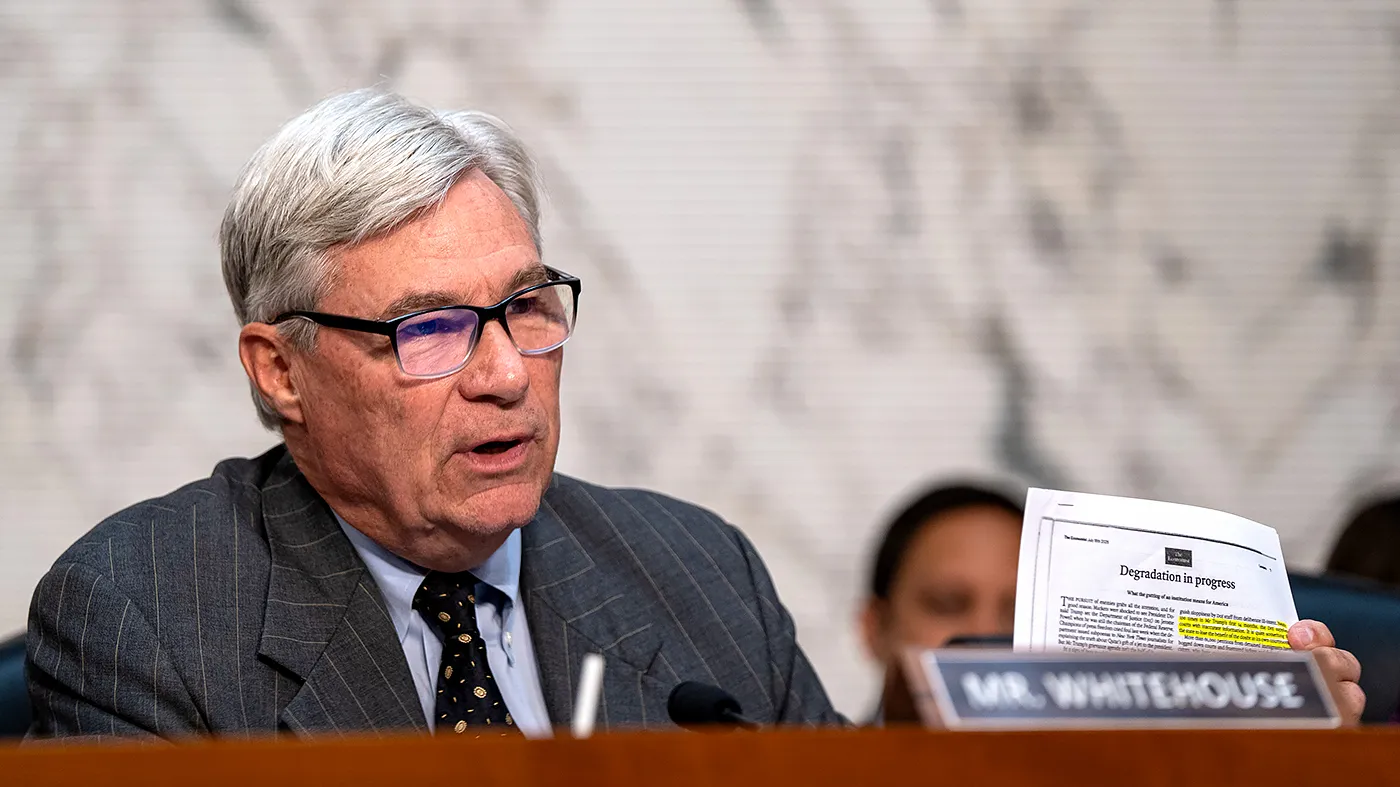
As a key Democratic negotiator says a deal to speed up infrastructure projects could be months away, the Trump administration is saying it may not be willing to wait that long.
Sen. Sheldon Whitehouse (D-R.I.) told reporters Thursday that a permitting reform deal could pass in the lame duck, but the White House is indicating that the concessions it is offering Democrats could expire by that point.
“The Administration and congressional Republicans agreed to a strong bipartisan offer. The Democrats have since refused to take yes for an answer. If they think that the administration is going to freeze these concessions until the lame duck, they are severely mistaken,” a White House official said via email.
The administration’s message comes ahead of the heavily watched midterm elections, where Republicans are expected to lose seats as high fuel prices hamper the economy and an increasing number of Americans are expressing disapproval of President Trump.
Getting an infrastructure deal done by that point could be a significant win for the administration to point to as it makes its case that voters should support the GOP.
Whitehouse, meanwhile, described the wait until after the midterms as necessary to give lawmakers enough time to digest the agreement and adequately campaign ahead of the November contest.
“I think there is consensus that the House is not likely to come back before the election, and that the time that is necessary for these ordinary Senate procedures to take place is a bit inconsistent with the rush by Republican senators to get the hell out of here and home campaigning, so I think that is moving us towards votes after the election as the best avenue for passage of this bill,” he told reporters.
A Senate Democratic aide told The Hill that the vote’s timing was an agreement between Senate Majority Leader John Thune (R-S.D.) and Minority Leader Chuck Schumer (D-N.Y.).
For years, Democrats and Republicans have been trying to come to an agreement to speed up the buildout of infrastructure, particularly energy projects, a process that has become known as permitting reform.
Democrats have pushed for bolstering renewable power and the electric grid, while Republicans have pushed for fossil fuels and cuts across the board to environmental reviews and legal challenges.
Disagreements have been exacerbated in recent years by the Trump administration’s efforts to block or otherwise hamper renewable energy projects.
Whitehouse told reporters that the White House has indicated better treatment for solar and wind could come with the deal.
“There has been a general agreement that with this bill will come improvements in the treatment of wind and solar,” he said.
“Some assurances have been fairly specific; others still need to be clarified. I appreciate very much what the Trump administration has done to move in this direction, but in order to brief colleagues on what this really means, we need just a bit more clarity on exactly what return to regular order for wind and solar projects looks like,” he added.
Whitehouse indicated, however, that a deal was in reach.
“We are over the hump on the deal-breaker issues, so we’re in a very good place on the substance of the bill,” he said, adding that text could be finalized in “days, maybe even hours,” which could kick off the process of allowing senators to consider the bill and suggest changes.
Topics in this story
Gathered from external sources. Rights to this text belong to whoever originally published it.