Pentagon turns on the jets in $1.5 trillion defense budget push
Pentagon officials have ramped up their efforts in recent weeks to help Congress carve a path toward President Trump’s record $1.5 trillion Pentagon budget request. But some GOP senators are worried the Defense Department deployed its closed-door offensive too late, undercutting its prospects of building a coalition necessary to move the record-breaking defense budget. Sen.…
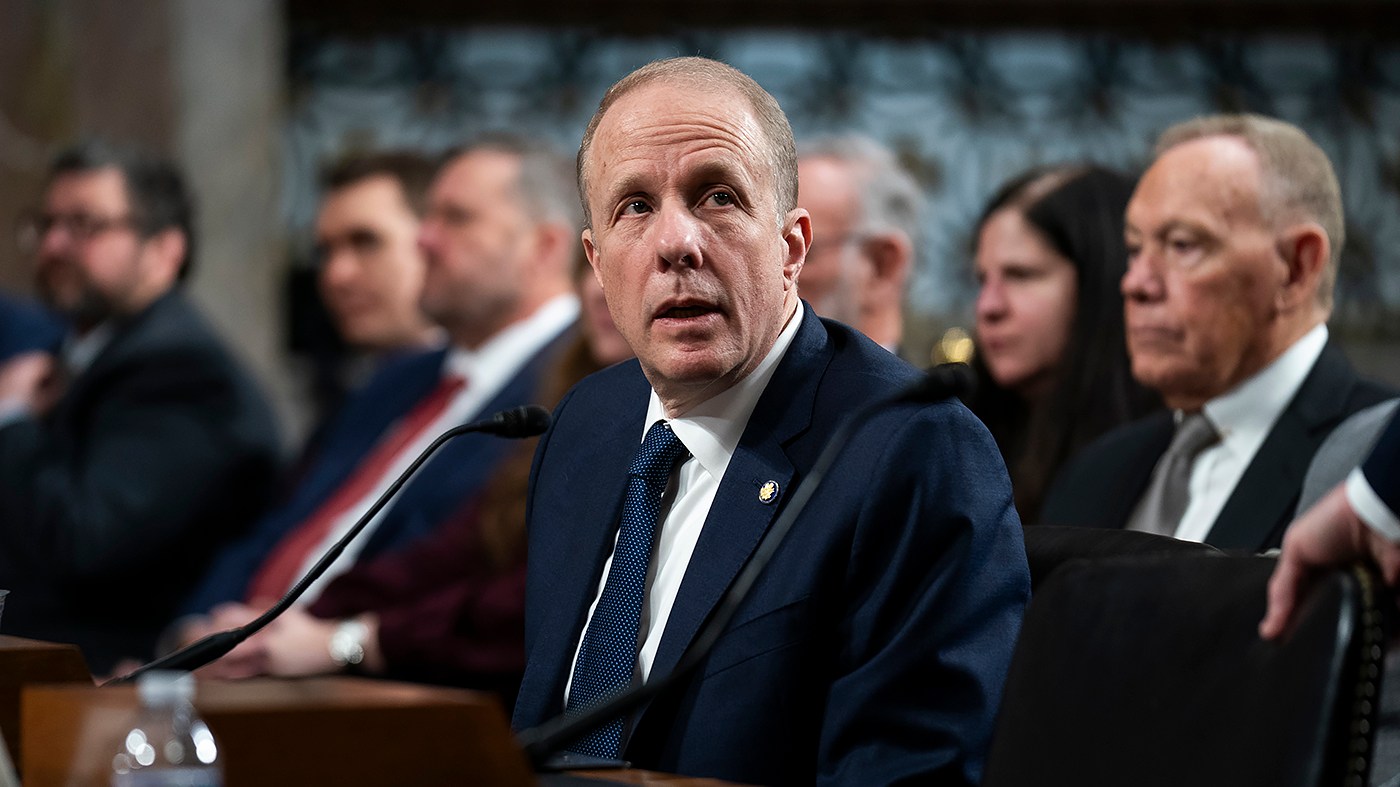
Pentagon officials have ramped up their efforts in recent weeks to help Congress carve a path toward President Trump’s record $1.5 trillion Pentagon budget request.
But some GOP senators are worried the Defense Department deployed its closed-door offensive too late, undercutting its prospects of building a coalition necessary to move the record-breaking defense budget.
Sen. Mike Rounds (R-S.D.) praised the briefers for answering questions at a “very high level” about the Pentagon’s needs in the massive budget request.
“We’ve had a problem with that,” Rounds told reporters Thursday on Capitol Hill following the Senate Armed Services Committee session. “And the administration has not done a good job of understanding that even on the basic underlying appropriations bill — not even the supplemental — still takes 60 votes in the Senate to get it done. And I thought today’s discussion went a long ways towards starting to cure that problem.”
Sen. Tim Sheehy (R-Mont.), a former Navy SEAL, said the Thursday classified briefing was “good” and that Pentagon officials tailored the pitch to Democrats who are skeptical of the war against Iran. But the Montana senator wished the department held similar sessions earlier in the year.
“I think [it] would have been better had we started this seven, eight months ago and building up and building that coalition.”
Sen. Mark Kelly (D-Ariz.), a former Navy pilot, said there seemed to be a level of triage given the limited window to pass the budget this year.
“I mean, what we saw there was there’s no time to talk about everything — Defense Department and the number of weapon systems that we have — and what we’re building is a very comprehensive list,” he said. “I think they were trying to focus on some of the bigger challenges, and that’s an appropriate thing to do.”
The Thursday morning briefing was held by several Pentagon officials, including Steve Feinberg, deputy Defense secretary; Jules Hurst, Pentagon comptroller; and Christopher Mahoney, vice chair of the Joint Chiefs of Staff.
Feinberg and Mahoney briefed the Senate Appropriations defense subcommittee on the Pentagon’s spending Wednesday and the House Appropriations defense subcommittee last week on the department’s fiscal 2027 budget request.
Sen. Deb Fischer (R-Neb.) said the briefings are “always useful,” regardless of timing, and that Senate Armed Services Committee senators would attend classified sessions in their subcommittees in which “they could gain a lot of this information on the threats that are there, and what’s needed.”
“It’s our responsibility to be active as well,” she noted.
Fischer said the Pentagon must provide Congress with a list of priority items it needs to be funded.
“I’m going to keep pushing for that,” she told reporters. “I think when something is a main priority for this country and for the Pentagon as well, something that we need, we need to prioritize it so that we have long-term funding and it gets the attention that it needs.”
The recent slate of Pentagon briefings comes as the administration’s push for additional funding from Congress remains at a standstill.
The White House requested a $87 billion supplemental in June, which includes $67 billion to replenish munitions used up during the Iran war and other military operational costs.
The White House and the Pentagon are pushing for a $1.5 trillion defense budget for fiscal 2027, arguing it is necessary for long-term national security and to boost a lethal fighting force. The administration has looked to pass $350 billion through the partisan process of reconciliation, but the window is getting narrower as the midterm elections creep up.
In July, the Republican-controlled House passed a $95 billion package to fund the Iran war and other administration priorities, but the deal has not made much progress in the upper chamber.
Sen. Rick Scott (R-Fla.) said there was still ample time to work on the defense budget, praising the Pentagon officials for doing a “good job” explaining how the department is spending money and what they need the additional funding for.
Some Democrats on the committee were not convinced.
Sen. Richard Blumenthal (D-Conn.) said the argument made by Feinberg and others was “less than convincing” and members of his party will keep asking the department for more transparency on the cost of the conflict in the Middle East.
“There seems to be a lot of confusion in their message, and frankly, lack of candor,” Blumenthal told reporters. “Still, I’m very disappointed in the lack of specificity, and I think that we have some really tough challenges ahead in reconciling these requests with the reality of what is happening on the ground.”
“I think the best way to put it is: We’re going to be demanding much more information to justify these apparently excessive requests in some areas, and certainly all of it is colored by the lowballing and undercounting of the costs of the Iran war,” the Connecticut senator said.
Democratic Sen. Gary Peters (Mich.) said after the briefing that the Pentagon has not “done the type of engagement they need” to justify the $1.5 trillion budget request.
Republican Sen. Kevin Cramer (N.D.) said initially he was a “little bit concerned” about the Pentagon relying on reconciliation to get through some high-priority items but gained an understanding of the choice after a lack of cooperation from Democrats in the appropriations process.
“I mean … come on. We haven’t done an appropriation bill yet all this year, and because [Sen.] Patty Murray [(D-Wash.)] is not going to be cooperative with [Sen.] Susan Collins [(R-Maine)], because after all, we’ve got a big election. It’s insane to me,” he told reporters. “So, given that, it’s not surprising to me that they would lean on … the Republicans to pass the reconciliation package, for some of the highest priorities of modernization.”
Cramer said Pentagon officials outlined “very specific” priorities during the classified session that need funding.
“There was a very specific chart that he provided for that,” he said. “I think we have a good sense from the services themselves as well.”
When asked if the Pentagon officials made a persuasive case, Kelly said he is always “open” and willing to supporting U.S. armed forces but noted that the Pentagon budget is “twice the size of when I first got here.”
“Now they’re asking for $1.45 trillion, and I think they want a supplemental on top of it,” the Arizona Democrat told reporters. “It is an extraordinary amount of money, and they have their systems in there that things that I’m convinced won’t work. There’s stuff we don’t need.”
Topics in this story
Gathered from external sources. Rights to this text belong to whoever originally published it.