Meta settlement backs competitors into a corner on kids safety
Meta’s settlement with nearly every state in the country is putting some of its biggest competitors on notice as the Instagram and Facebook parent firm tries to steer an industry standard on kids online safety. After years of scrutiny, the company agreed to pay billions of dollars to states and make significant changes to better…
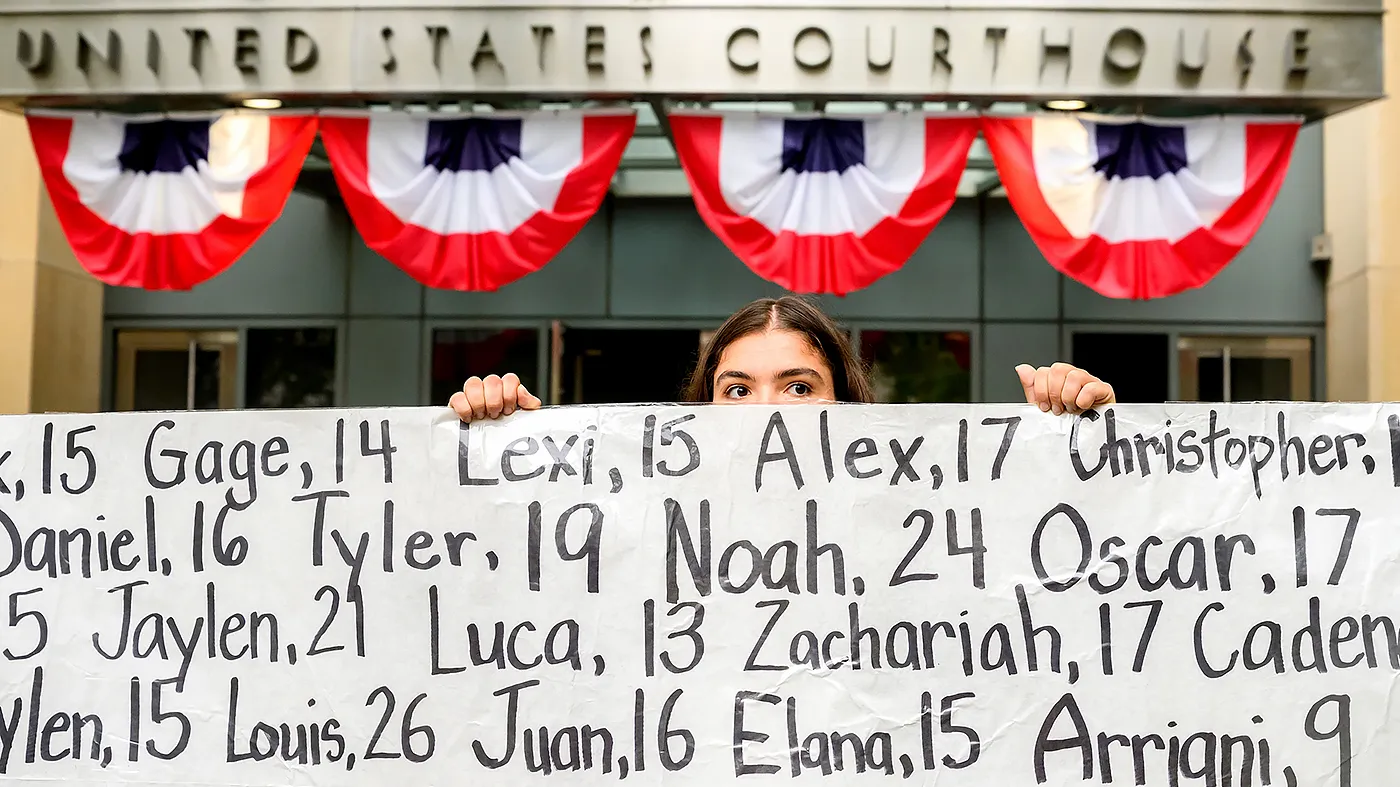
Meta’s settlement with nearly every state in the country is putting some of its biggest competitors on notice as the Instagram and Facebook parent firm tries to steer an industry standard on kids online safety.
After years of scrutiny, the company agreed to pay billions of dollars to states and make significant changes to better protect kids on its platforms, but not without putting the spotlight on competitors TikTok and YouTube to do the same.
In announcing the settlement, Meta published an open letter calling on YouTube and TikTok to “follow their lead,” arguing it is the way for “meaningful progress to happen.” Full-page print advertisements on the letter are running in major newspapers throughout the weekend .
While the letter publicly calls out the company, multiple platform changes and monetary awards in the settlement are contingent on other platforms’ responses.
“If you are a target, you want to show that this is a much larger, insidious challenge, and that you are one of many and that you shouldn’t alone be called out,” said Eric Schiffer, CEO of Patriarch Organization, a technology and media private equity firm.
“And in the process, you are ensuring that others may contribute financially, as well as influence resolving the matter as a whole,” Schiffer added, calling the move “strategically sound.”
This past week’s settlement effectively ended a high-profile trial in California deciding whether Meta knowingly designed its platforms to keep minor users addicted and misled the public about the apps’ risks.
The settlement allows Meta to position itself in the national kids online safety fight more favorably after being hammered by parents and lawmakers for years over its platforms’ impact on young users’ physical and mental health.
“Meta wants to control the variables,” Schiffer said.
Under the settlement with 47 states, the District of Columbia and some U.S. territories, Meta will pay up to $17 billion in the next decade. Separately, Meta will pay Texas more than $1 billion over similar allegations , bringing the company’s total potential sum to just more than $18 billion.
This money will go to state efforts to prevent or reduce mental health or other harms associated with social media use.
But nearly a third — about $5 billion — of Meta’s payment rests on whether YouTube and TikTok match this figure and implement the same daily usage limits, nighttime blocks and age assurance measures.
It comes as Meta, YouTube and TikTok are facing thousands of similar lawsuits over their platforms’ impact on youth mental health. Other social media platforms not named in the letter like Snap , the parent company of Snapchat, and Roblox are also up against these types of challenges.
The changes set by the settlement include implementing a default daily time limit of two hours and a nighttime block on use between midnight and 6 a.m. for users under 18, both of which can only be turned off by a parent.
Should other social media firms agree, the daily time limit will drop to one hour, and the nighttime block will be expanded to cover 10 p.m. to 7 a.m., according to Meta and the state attorneys general.
“For meaningful progress to happen, we urge TikTok and YouTube to join us and state attorneys general in adopting this new standard, to ensure teens use social media in a healthy and responsible way,” the company wrote in a blog post Wednesday.
TikTok and YouTube have not publicly commented on the settlement and did not immediately respond to The Hill’s request for comment. YouTube is owned by Alphabet, which also owns Google.
Meta also agreed to block notifications from its platforms from 10 p.m. to 7 a.m. and during the school day — 8 a.m. to 3 p.m. from Aug. 15 to June 15. Teens will also receive prompts every 15 minutes they continuously spend on Facebook or Instagram, along with prompts when daily use hits 60 and 90 minutes.
Teens will also be able to turn off autoplay of content and will no longer see the number of likes and reactions on their own or others’ posts or have the option of cosmetic surgery or makeup filters. The company added it is using “stronger” age assurance technology to better detect users lying about their age, an issue that has split lawmakers in Washington.
Meta, which told The Hill it reached out to “nearly every state” to collaborate on the changes, hopes the changes create a national framework for other social media firms to agree on.
The appetite for following Meta’s framework is unclear; TikTok and YouTube have not publicly commented on the settlement or letter.
The informal framework was met with mixed opinions across the technology policy landscape.
Some observers argued kids safety features cannot be a “one-size-fits-all” approach given significant platform differences. Should other firms agree, it is unclear what these changes could look like in practice.
“The way that a young person or a family may think about YouTube and the consumption of it may be very different than the way they think about something like Instagram or Facebook, as is the way the platform operates,” Jennifer Huddleston, a senior fellow in technology policy at the libertarian think tank Cato Institute, told The Hill.
Huddleston used the example of autoplay on YouTube playlists, which are often used for how-to videos, documentaries or other information clips. On Meta platforms, autoplay is through content like video posts or Instagram stories continuously playing without a user scrolling.
“Does it make sense for Meta to be pushing to make these industry standards?” Huddleston asked. “It just goes to show why it’s actually better that this develops not from a top-down approach, whether it’s legislation or litigation, but rather through platforms responding to the demands that their particular consumers need.”
While Congress has repeatedly hammered the tech firms in dramatic hearings or investigations, little legislation on youth online safety has passed, prompting the majority of action to come through court settlements or verdicts.
Earlier this year, Meta lost two back-to-back verdicts in bellwether kids online safety cases in New Mexico and California, marking the first time juries found the social media company liable for its impact on children and teens. Lawyers at the time predicted the verdicts created a playbook for states and parents to successfully sue Big Tech companies in the future.
Since then, several social media companies started settling similar cases before they hit trial. Other advocates of kids online safety welcomed the settlement as a sea change for the social media industry at large.
“Meta’s contingent penalty really recognizes a fundamental reality, which is kids do not live on a single platform,” said Dona Fraser, the senior vice president for privacy initiatives for BBB National Programs, a nonprofit that separated from the traditional Better Business Bureau network in 2019.
“We know that we’ve seen that for years. If we restrict safety feature mandates to one company, they’re just going to migrate their attention to competitors,” Fraser added.
Notably, the majority of the terms are required to remain in place for 10 years, though the time and night limitations will start with a five-year commitment, according to Meta. Should other tech firms sign the agreement, it will extend this commitment to 10 years.
Both Fraser and Huddleston stressed these platforms could rapidly change in years given the pace of Silicon Valley development, opening up more unknowns about the settlement’s implications.
“Any kind of [consent decree] is static, and we know that technology is often quickly evolving,” Huddleston said. “Is it possible for platforms, if they come up with a better solution later on, to change and respond to those demands, or have they locked themselves into the solutions of 2026?”
Topics in this story
Gathered from external sources. Rights to this text belong to whoever originally published it.