Why Trump chose these leaders to head his ‘Super Intelligence Force’
President Trump’s selection of four administration officials to head up his new “Super Intelligence Force” is offering a window into how the White House will approach AI in the face of pressure over its risks. The group of government leaders each reflect different priorities of the Trump administration after months of mixed messaging on the…
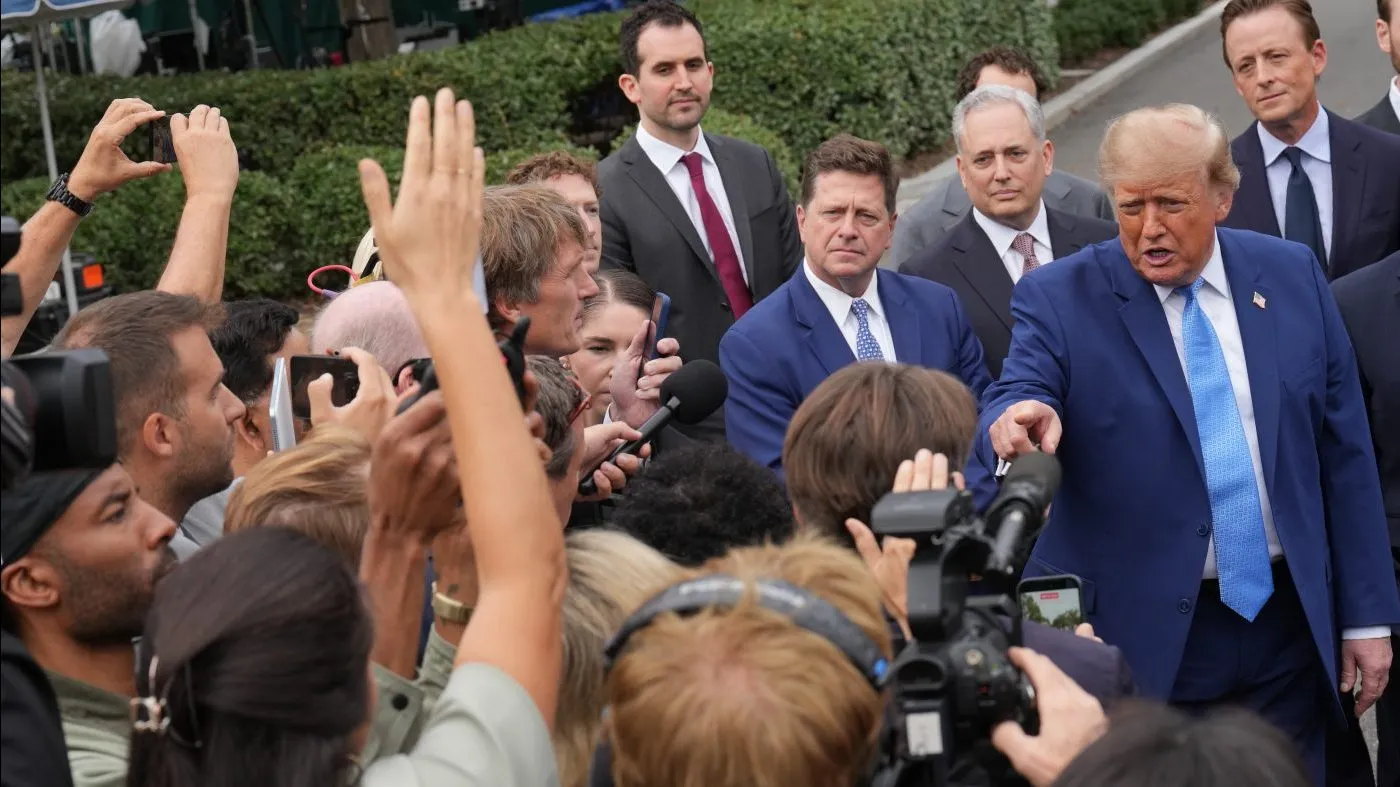
President Trump’s selection of four administration officials to head up his new “ Super Intelligence Force ” is offering a window into how the White House will approach AI in the face of pressure over its risks.
The group of government leaders each reflect different priorities of the Trump administration after months of mixed messaging on the White House’s AI policy.
Now referring to artificial intelligence as “super intelligence,” the president announced last weekend he tapped Director of National Intelligence Jay Clayton to lead the Super Intelligence Force (SIF), which aims to explore the benefits and risks of the technology, and “ensure” America’s lead in the development race.
Clayton will be joined by Emil Michael, the Pentagon’s chief technology officer; Andrew Ferguson, chair of the Federal Trade Commission (FTC); and Scott Kupor, the director of the Office of Personnel Management, to serve as vice chairs .
Here’s what to know about the SIF officials:
Clayton, who became director of national intelligence in August after serving as U.S. attorney for the Southern District of New York, has long been praised by Trump, who once described the Cabinet member as a “strong fighter for the truth.”
As national intelligence director, Clayton oversees the U.S.’s 18-agency intelligence community, which is increasingly playing a role in the testing and evaluations of AI systems.
While Clayton has not worked directly in tech, his ties to both the legal world and Wall Street are likely to play a role. Trump previously tapped Clayton, a longtime lawyer, to chair the Securities and Exchange Commission (SEC) in his first term.
The president said Sunday the group “will coordinate the Federal Government’s engagement with Consumers, Public Interest Groups, Religious Organizations, Critical Infrastructure Providers, and Super Intelligence Companies.”
The White House said the group will have 120 days to report on AI’s risks and benefits, and the role of government in managing it.
After attending the White House’s meeting last week with more than two dozen tech industry executives and administration officials, Clayton doubled down on Trump’s commitment against slowing down AI development.
“To take a pause … in some way, not try to drive forward inside the United States with companies that are regulated in the United States … to somehow say, ‘We should back away from this and let the rest of the world develop these models and implement these models,’ I don’t think anyone in that room, anyone in America should think that’s a good strategy,” Clayton told CNBC , referring to the AI luncheon.
In the wake of multiple incidents of AI models going “rogue” and researchers warning the technology could harm humans, a handful of industry executives like Anthropic CEO Dario Amodei and OpenAI CEO Sam Altman called for a slowdown in development to manage the risks.
Trump dismissed these concerns as a “hoax,” remaining steadfast in his view that the U.S. should charge forward on AI development to stay ahead of China.
Clayton emphasized last week that he sees AI as a “ national security issue ” and kept the door open to government intervention through the Justice Department or the FTC if needed.
Michael, a former Uber executive, currently serves as the undersecretary of Defense for research and engineering. He has taken a hard-line approach to AI, arguing the Pentagon should have expansive authority over how it uses the technology.
He was at the center of the Pentagon’s dispute with Anthropic, repeatedly slamming Claude’s creator over its push to establish safety guardrails in its contract with the Defense Department.
After negotiations with Anthropic fell apart earlier this year, the Pentagon took the rare step of labeling the AI firm a supply chain risk — a designation typically reserved for foreign adversaries. The company challenged the decision in court with mixed results.
Even as Trump and the White House have at times sought to cool tensions with Anthropic, Michael has kept up his adversarial stance toward the company.
After an Anthropic policy official voiced support for an administration official’s criticism of Chinese distillation of U.S. models in July, the Pentagon’s tech chief slammed the firm , arguing there “is no AI company more hostile to the warfighter.”
Like Trump, Michael advocates for a hands-off approach on AI regulation.
“At the @DeptofWar [Department of Defense] we have seen what is possible when red tape is removed and America’s best technology is rapidly put into action,” he wrote on social media after the president tapped him for the task force.
“Working alongside America’s leading technology companies, we are putting the most advanced SI [super intelligence] capabilities into the hands of our warfighters at speed and scale,” he continued.
Ferguson, a former antitrust litigator, represents a contingent of Republicans who often favor light-touch regulations but are much less friendly toward Big Tech on issues around consumer protection or kids’ online safety.
Trump touted Ferguson’s “proven record of standing up to Big Tech censorship” when nominating him as chair of the FTC, one of two agencies tasked with enforcing antitrust laws. This area has increasingly focused on major tech firms in recent years, with Ferguson inheriting cases against both Meta and Amazon.
Despite reported efforts by Meta CEO Mark Zuckerberg to settle the case last year, the FTC went forward with a high-profile trial against the social media giant. After a judge found Meta did not have a monopoly, the agency appealed the decision in January.
Ferguson has also sought to crack down on tech companies over kids’ online safety, warning in June 2025 that officials “cannot stand idly by and invoke innovation as a reason not to take steps to protect children.”
The FTC chair has aligned himself with Trump on AI regulations — maintaining the government already has laws on hand to keep the technology in check and warning new rules could allow companies to “build a moat” around themselves.
“It’s not like the government has no tools to protect Americans today,” he told Fox News last month. “We have the product liability laws. We have the consumer protection laws. We have a host of rules that apply to every industry, not just AI.”
While some critics have knocked this approach as ineffective, Ferguson doesn’t appear to be pulling punches. The FTC confirmed last week it is investigating both OpenAI and Anthropic over the potential dangers their models pose to consumers.
Kupor brings nearly three decades of experience in the technology and venture capital spaces, previously working as managing partner at Silicon Valley-based venture capital firm Andreessen Horowitz and the web hosting company HP.
As director of the Office of Personnel Management (OPM), Kupor has made the government’s adoption of AI a priority , while emphasizing the technology is not intended to replace humans. He spearheaded OPM’s Tech Force program , a hiring initiative to bring tech talent to the government.
He told Fox Business Network this week the group plans to produce a “comprehensive plan” that both positions the U.S. to stay ahead of China and addresses the risks of the technology.
“Nobody’s going to get a free pass here,” Kupor said. “The question, though, is do you want to make sure you don’t introduce a regulatory scheme that will slow down or impact the ability of the inventiveness of this country to win in what is an incredibly important technology?”
Topics in this story
Gathered from external sources. Rights to this text belong to whoever originally published it.