Appeals court hears bid to curtail access to medication abortion
A federal appeals court Wednesday heard arguments in a case that could eventually wipe out access to medication abortion, even in blue states that protect abortion. A three-judge panel of the 5th U.S. Circuit Court of Appeals peppered questions on attorneys for Louisiana, the Food and Drug Administration (FDA) and two manufacturers and distributors of…
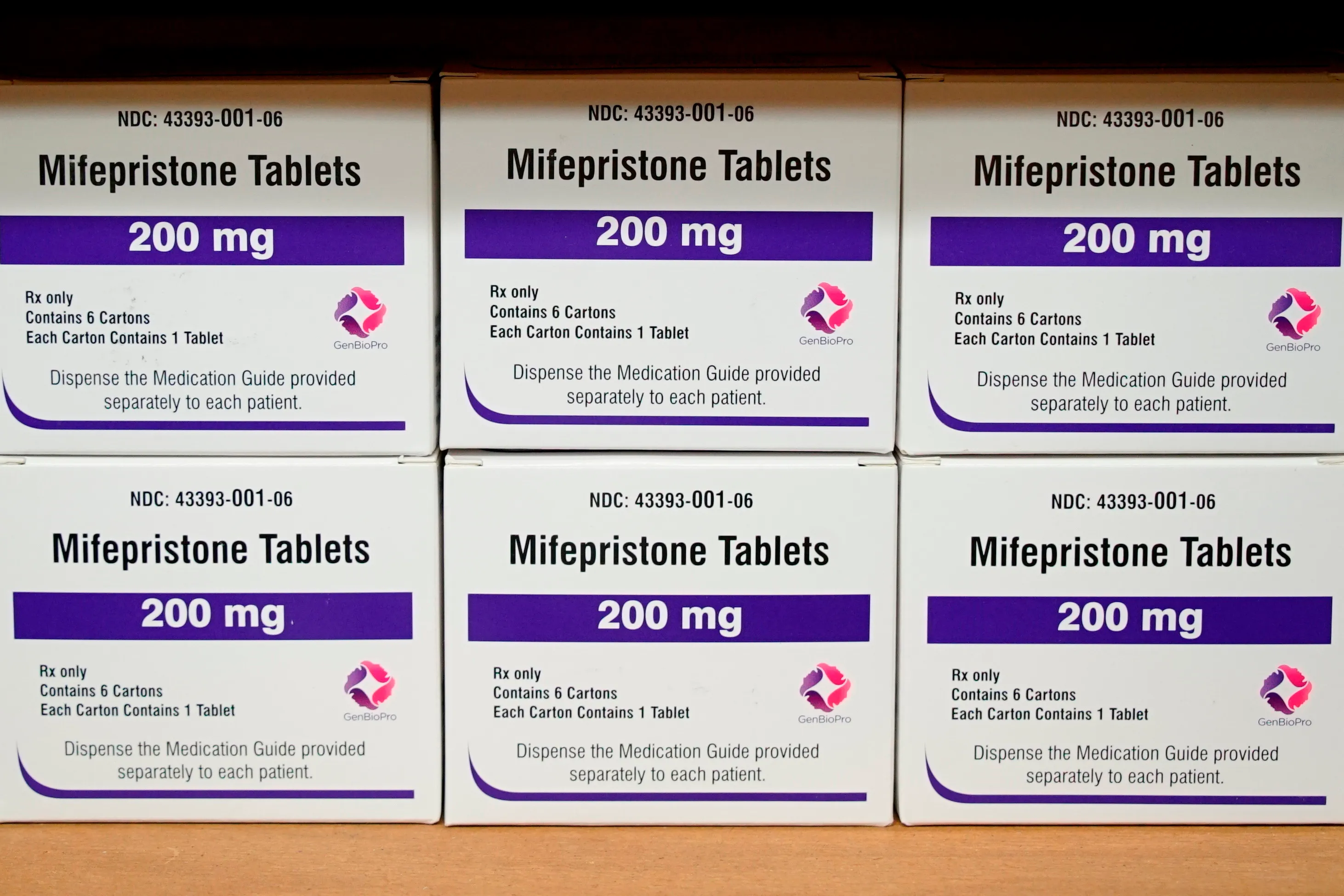
A federal appeals court Wednesday heard arguments in a case that could eventually wipe out access to medication abortion, even in blue states that protect abortion.
A three-judge panel of the 5th U.S. Circuit Court of Appeals peppered questions on attorneys for Louisiana, the Food and Drug Administration (FDA) and two manufacturers and distributors of mifepristone, a drug used in nearly two-thirds of abortions in the United States.
Many of the arguments focused on whether Louisiana has standing to sue, and whether the state had exhausted all its other administrative options before turning to the courts.
Attorneys for Louisiana argued that when the FDA in 2023 lifted a requirement that mifepristone must be dispensed in person, the agency infringed on the state’s right to ban abortion.
“There’s no dispute that Louisiana is experiencing 1,000 abortions a month due to mifepristone mailed into the state,” Louisiana Solicitor General Ben Aguiñaga said.
Aguiñaga argued that telehealth and mail access to the pills poses a concrete threat to the state’s budget, as well as its sovereignty.
The state cited two instances in which women who had complications after taking the drugs needed follow-up treatment paid for by Medicaid.
The state also argued that the Biden administration was targeting Louisiana when it lifted the restrictions temporarily in 2021 and permanently in 2023. The Supreme Court did not overturn Roe v. Wade until 2022.
At least one member of the panel, Judge Stephen Higginson, an appointee of former Presidentk Obama, seemed skeptical of the harm.
“I’m looking at six different steps … and we’re going to attribute that to the federal government?” Higginson asked. “There are too many independent actors to say that actually the government’s assessment of safety is what’s causing your 1,000 abortions a month,” he added.
The case argued before the New Orleans-based court is one of three brought by anti-abortion attorneys general from red states, challenging the legality of federal rules that allow abortion pills to be mailed to states where it’s largely illegal to terminate a pregnancy.
The Louisiana case has put the Trump administration in an awkward political bind: It won’t defend moves made by the Biden administration, but it also says Louisiana doesn’t have standing to sue.
Justice Department attorney Daniel Winik declined to stray from the narrow standing argument and made no argument about the merits — much to the frustration of the judges.
“That to me, I don’t find that very satisfactory that the agency won’t give an opinion on its own regulations,” Higginson said.
The Justice Department has been urging courts to put mifepristone lawsuits on hold until the FDA finishes a safety review.
“They seem to have taken a hard line, no engagement whatsoever on anything related to FDA’s process itself,” said Katie Keith, director of the health policy and law initiative at Georgetown University’s O’Neill Institute for National and Global Health Law.
Winik said he had “no idea” what action the FDA may ultimately take but that the agency should have final say.
“The whole point of our position in this case is that it’s the FDA’s job in the ongoing consideration of mifepristone to address all of these issues,” Winik said.
Keith said Louisiana’s argument about its own sovereignty undermines the premise of the Dobbs v. Jackson Women’s Health Organization decision and tramples on the rights of other states.
“This is much more about the states where abortion is lawful and access in blue states,” Keith said. “Louisiana has some of the harshest abortion laws in the country … and the idea that if you sort of change the [FDA regulation], that stops women from getting medication abortion in those states, is not correct. This idea that we’ll just make it illegal and then that will stop the activity, I think is not there.”
An administration official said in June the review is likely to take six months to complete, but initial results could be released earlier.
A district court judge in Louisiana set an Oct. 7 deadline for a status update, just weeks before the election, though it’s not clear how detailed the update might be.
The agency review is looming over the proceedings.
The Supreme Court has already blocked changes to the prescribing rules until it sees the case again, which legal experts believe is extremely likely to happen, especially given the various other mifepristone-related lawsuits.
After its review, the FDA could make changes sought by red states without court approval, but such an action would almost certainly be challenged in court.
Bella Pori, associate director of state policy at Reproductive Freedom for All, said the lack of arguments from the FDA defending the safety of mifepristone was expected but troubling, and it did not engender confidence about what she said is a politically motivated safety review.
“They were making a lot of procedural arguments about why this case should be thrown out of court, but … there are hundreds of studies backing up [mifepristone’s] safety, and this should not be something that a single state can question when we have all of the scientific data to back it up,” Pori said. “They chose not to make those arguments because Trump’s FDA is cowing to anti-abortion extremists who are demanding a baseless and unscientific review of mifepristone.”
Topics in this story
Gathered from external sources. Rights to this text belong to whoever originally published it.