Washington balks at giving AI firms waiver to create safety standard
Anthropic CEO Dario Amodei’s call for an antitrust waiver for AI firms to work together on a safety standard is being met with skepticism in Washington, where policymakers are questioning tech leaders’ intentions. Congress has failed repeatedly to pass AI regulations for years, but some lawmakers are balking at the idea of technology companies taking…
Anthropic CEO Dario Amodei’s call for an antitrust waiver for AI firms to work together on a safety standard is being met with skepticism in Washington, where policymakers are questioning tech leaders’ intentions.
Congress has failed repeatedly to pass AI regulations for years, but some lawmakers are balking at the idea of technology companies taking the lead amid Washington’s inaction.
Both Washington and Silicon Valley are facing mounting pressure to do more to prevent the catastrophic risks of AI, but neither sector has enough consensus, resulting in a blame game.
Multiple lawmakers, agency heads and smaller technology leaders came out against Amodei’s idea this week, suggesting it could be used to shield the biggest firms from liability and allow them to steer long-sought regulations.
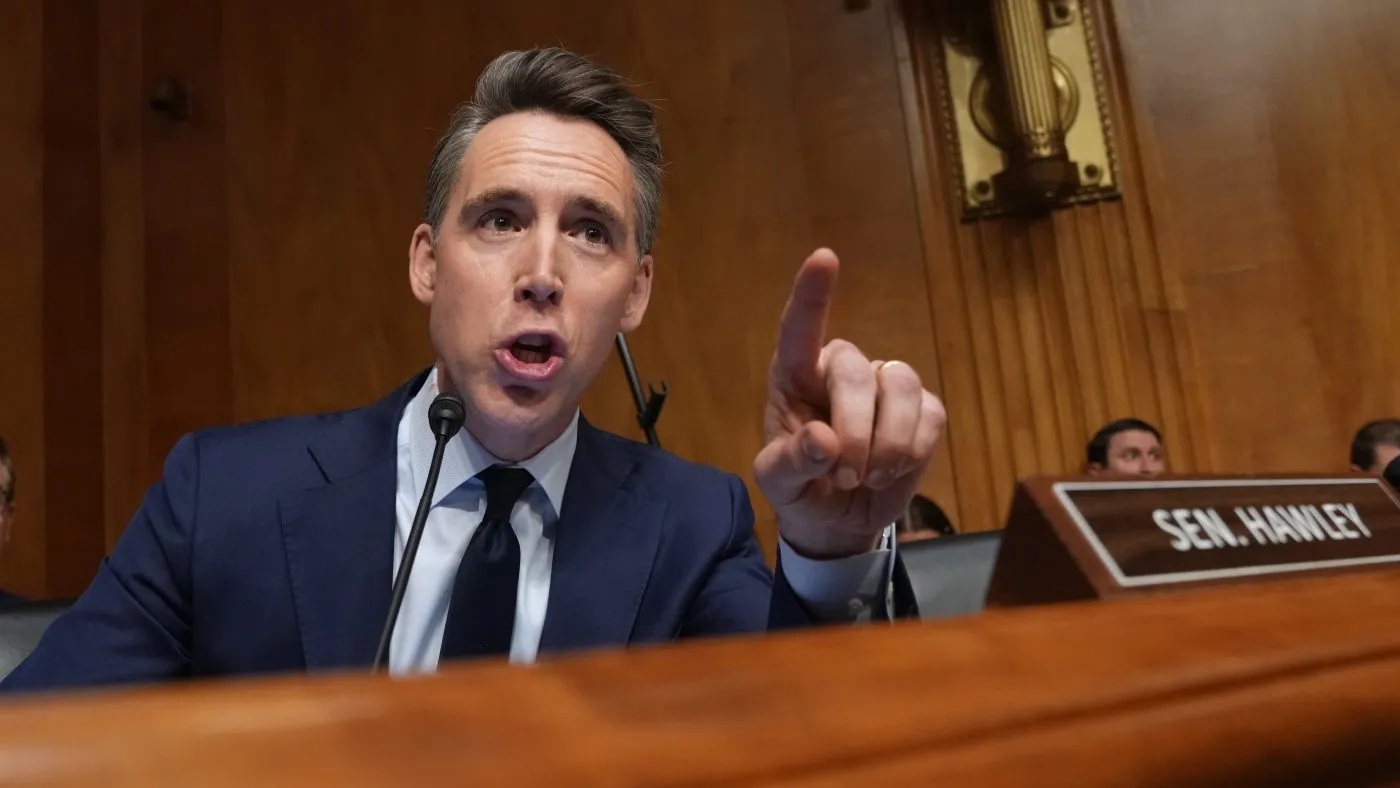
“There is absolutely no world in which I will consent to giving the most powerful companies in the history of the world — a small group of three or four of them — antitrust exemptions so they can what … collude together? Absolutely no way that’s happening,” Sen. Josh Hawley (R-Mo.) said during a Senate Judiciary Committee hearing with FBI Director Kash Patel on Tuesday.
Amodei’s suggestion of an antitrust waiver was part of his broader blog post last weekend, where he called for a slowdown of the technology’s development in response to a flurry of panic caused by an ominous warning from former Anthropic researcher Jacob Coxon last week.
Coxon, a previously little-known AI researcher who has also worked at OpenAI, went viral on social media after claiming researchers at frontier firms “believe AI could kill humans” but have not slowed development toward superintelligence, a hypothetical AI agent that could outperform all of humanity’s cognitive ability.
Days later, Amodei suggested in his blog that AI companies should collaborate to set standards as federal regulations stall.
“Unfortunately, passing laws can take time, and AI is advancing very quickly,” Amodei wrote. “Therefore, in parallel with the regulatory route, AI companies can and should voluntarily work together to set standards — a process that I believe will go better with the verifiability provided by permanent embedded evaluators. “
“For antitrust reasons, it’s helpful for the US government to mediate or at least enable these discussions,” Amodei added.
He clarified that the government does not need to participate but does need to issue a “narrow waiver for certain kinds of safety conversations.”
But some policymakers such as Federal Trade Commission (FTC) Chair Andrew Ferguson and Sen. Ted Cruz (R-Texas) quickly pushed back.
Cruz, the chair of the Senate Commerce, Science and Transportation Committee, echoed Hawley during a Tuesday hearing, stating, “To watch AI CEOs saying, ‘We’re about to destroy the world, so give us control of the government so we can lock in our monopoly status and prevent any innovation from challenging us,’ is just lunacy.”
“By the way, if you’re about to destroy the world, how about we don’t? How about stop?” Cruz continued.
Ferguson, who leads the agency tasked with endorsing federal antitrust and consumer protection laws, said Tuesday in his personal capacity that President Trump sets AI policy for the federal government, Reuters reported .
“I will say generally, though, that if companies are simultaneously coming to Washington and asking for a host of regulations and an antitrust exemption, all of my alarm bells go off,” he said at an event Tuesday at Georgetown University.
“They’re asking for barriers to entry that will insulate their incumbency from challenge. And I think if you combine that with the requested antitrust exemption, everyone should be deeply suspicious about this,” he added.
The situation underscores the scramble on Capitol Hill to lead the charge on AI policy, even as Trump doubles down against heavy regulations.
Former FTC Chair Lina Khan emphasized on Sunday there are already laws that give the government the power to charge companies and their leaders for making and releasing “dangerous, unvetted or defective products.”
Khan, who took an aggressive approach to antitrust enforcement during her tenure in the Biden administration, said the release of an unvetted AI model could violate consumer protection laws, while existing laws also apply when firms “pursue dangerous behavior, aware that doing so may compel rivals to do the same.”
The Sherman Antitrust Act, passed in 1980, bans joint actions and agreements between separate entities that harm market competition. But separately, the FTC and Justice Department also issued a statement in 2014 saying formal cyber threat information is not likely to raise antitrust concerns.
For their part, OpenAI CEO Sam Altman and xAI CEO Elon Musk joined the call to slow down development, but the leaders stopped short of endorsing Amodei’s waiver request.
Altman emphasized OpenAI wants a federal framework for safety requirements, but he argued the industry does not need to wait for legislation or an antitrust exemption to create “consistent rules” and shared values among the firms.
Chris LeHane, OpenAI’s head of global affairs, later told reporters Tuesday that the company has been operating “under the premise there is no need for an antitrust exemption.”
“We do believe there is a real way to be able to work with other AI frontier labs on sharing information on standards,” LeHane said. “We’ve already been doing work for several weeks on that front with a number of other labs.”
Other leading technology companies like Nvidia are still not in favor of the idea.
Nvidia CEO Jensen Huang acknowledged AI companies need to take safety seriously, but he added in a Tuesday CNBC interview that government intervention shouldn’t be needed.
“The fact that we need new laws, new antitrust laws, or new regulations, so that these companies could do their fundamental engineering and do it properly before they release products, that is just completely unnecessary,” Huang said on CNBC’s “Mad Money.” “We have plenty of laws. We have plenty of regulations that govern the reliability and the functionality of products.”
The CEO of the Canada-based company Cohere, Aidan Gomez, separately expressed concerns in a blog post on Sunday.
“Should a handful of select, market-dominant AI companies from Silicon Valley get to define the rules and safety standards of a generational technology for the entire world? All while simultaneously determining how fast this technology progresses?” Gomez wrote.
“Once again using fear under the pretext of protecting the public, these oligopolies are now requesting to bend competition rules and be permitted to dictate the terms for everyone else. A wolf in sheep’s clothing, a cartel by any other name,” he added.
Topics in this story
Gathered from external sources. Rights to this text belong to whoever originally published it.