Hegseth indicates some US troops could be redeployed from Europe to Western Hemisphere
Defense Secretary Pete Hegseth indicated on Saturday that some U.S. service members could be redeployed from Europe to the Western Hemisphere as the Trump administration ramps up its deadly campaign against drug cartels in South America. “Well, we’re definitely expanding our presence and our footprint in Central and South America with partners, and because of…
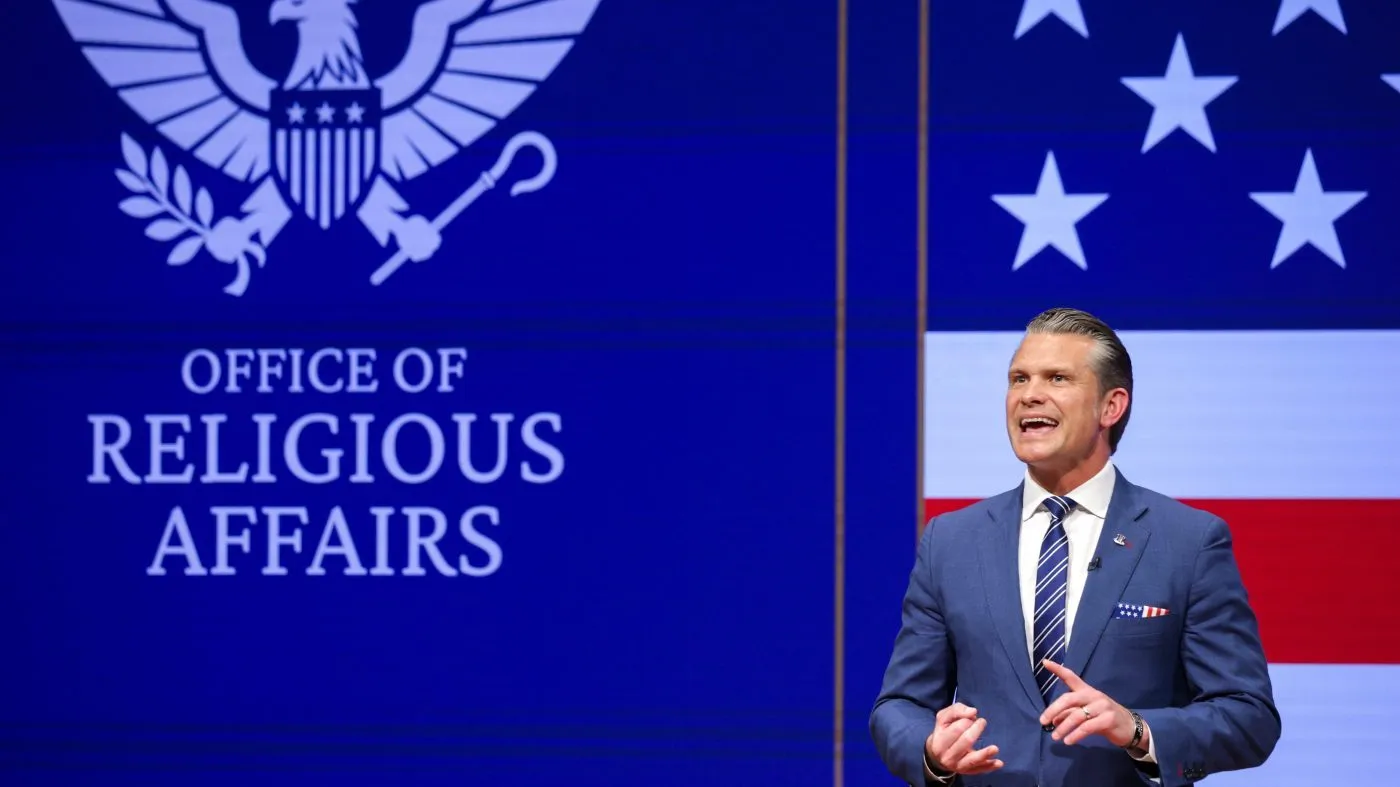
Defense Secretary Pete Hegseth indicated on Saturday that some U.S. service members could be redeployed from Europe to the Western Hemisphere as the Trump administration ramps up its deadly campaign against drug cartels in South America.
“Well, we’re definitely expanding our presence and our footprint in Central and South America with partners, and because of the bold move the president made in Venezuela,” Hegseth told reporters, referring to the U.S. military’s successful capture of former Venezuelan leader Nicolas Maduro. “We have a whole new suite of options economically and militarily with partnerships.”
The defense secretary mentioned the partnerships the U.S. has with Ecuador, Honduras, Guatemala, Panama and that part of his job is to institute the national security strategy and the national defense strategy “which makes [it] very clear that we want more burden sharing” in Europe.
“And as we do that, a lot of…some of those capabilities are going to move elsewhere, either back home to the big, beautiful base that we’re going to build that we announced a couple of days ago, or to a different posture in the Western Hemisphere as we get after these designated terrorist organizations,” the Pentagon chief told reporters in Colorado Springs, Colo.
During his State of Force speech on Wednesday, Hegseth invited governors to bid for their state to be the home of the “next great American” base.
“We’re calling on every governor in the country and adjutant general, every tag across this great republic, to step up to the plate and bring us their best sales pitch,” the defense secretary said on Wednesday.
The Pentagon is conducting its six-month review of U.S. military posture in Europe to shift conventional defense responsibilities to NATO allies on the continent. The review is set to conclude in December.
The U.S. currently does not have a large military base in South America. But since the fall of last year, the Pentagon has been escalating the military’s efforts against drug cartels in Latin America.
The U.S. forces have continued to blow up alleged drug boats in the Caribbean and Eastern Pacific. Since Sept. 2 last year, the U.S. military has carried out a minimum of 70 strikes and killed 234 “narco-terrorists” on both sides of South America.
In recent weeks, the U.S. military has zeroed in on another target – “floating refueling stations” – taking a more humane approach of interdicting large fishing ships off the coast of Ecuador, removing the crew on board before blowing up the vessel.
The administration has billed both approaches as being part of an effort to curb the flow of illicit drugs in the region and to quash the drug cartels they view as threats to the homeland.
In recent months, the U.S. has expanded its defense partnerships with Latin American countries and last week, around 50 U.S. service members and law enforcement personnel were part of raids on the ground in Ecuador against alleged drug traffickers.
The raids, which were carried out by Ecuadorean police, indicate further U.S. military involvement on the continent as President Trump and Hegseth press to go after drug cartels, many of whom have been labeled as terrorist organizations by the U.S. government.
Previously, the U.S. has given Ecuador and other allied countries gear, training and intelligence support to go after criminal groups.
The U.S. military worked with its Drug Enforcement Administration counterparts, Ecuadorean police and military in the lead-up to the raids, according to a senior U.S. official.
The U.S. special operations forces will help train partner forces to help “command and control” operations on the ground, but “are not on target until the target’s clear,” the senior official recently told The Hill.
“Then we bring our special operations forces with their abilities to do sensitive site exploitation to develop the intelligence for the next operation,” the official said.
Hegseth on Saturday reiterated that the U.S. military is at “war” with drug cartels.
“The president’s been clear about that,” the defense secretary said. “So we’re going to posture and base as necessary to ensure that we have our foot on the pedal and are taking the fight to those ISIS and Al Qaeda of our hemisphere.”
Topics in this story
Gathered from external sources. Rights to this text belong to whoever originally published it.